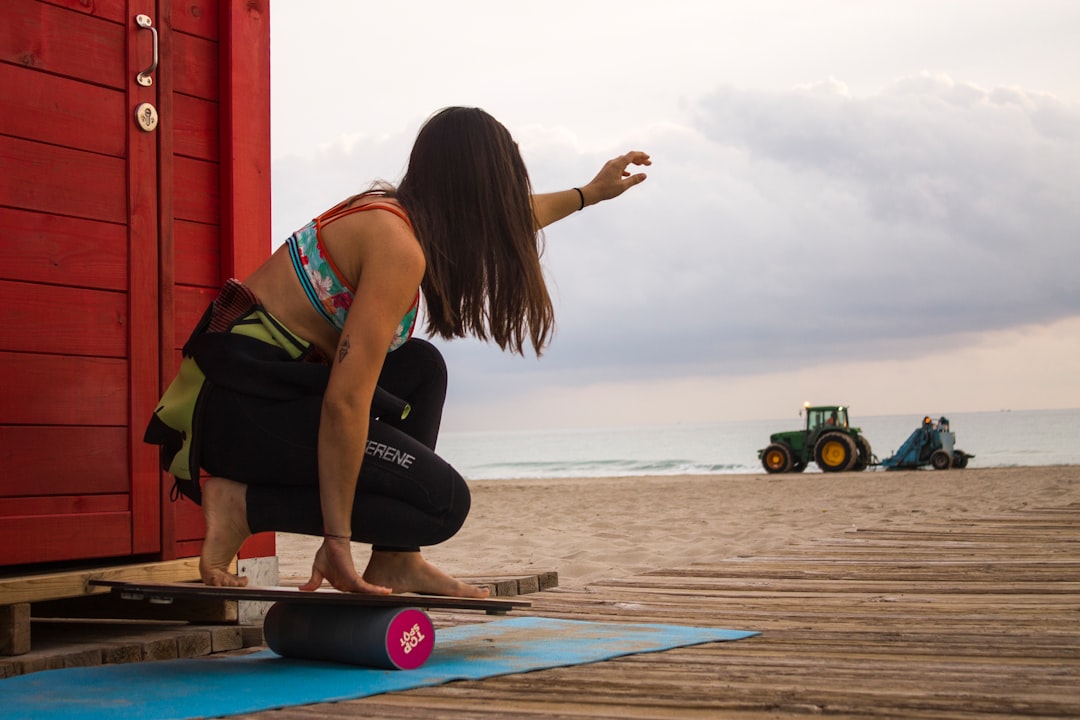
I used to bounce out of bed at 5:30 AM, lace up my running shoes, and hit the track before my brain even registered that I was awake. That was in my twenties, when my body forgave everything. These days, if I even think about going from horizontal to sprinting without warming up first, my hips send me a very strongly worded letter by noon. A few years ago, I started doing something that sounds almost too simple to matter: fifteen minutes of mobility work before anything else. Before coffee. Before checking my phone. Before the world starts making demands. And honestly? It has changed more about how I feel than any supplement, gadget, or training program I have ever tried.
I am not exaggerating when I say this little ritual has been the single most transformative habit I have added to my life in the past decade. And I have tried a lot of things. So let me walk you through exactly what I do, why the science backs it up, and the gear that makes it actually enjoyable instead of a chore you quit after three days.

Why Morning Mobility Matters More Than You Think
Here is something most fitness influencers will not tell you: your body loses mobility while you sleep. Not flexibility — mobility. There is a difference. Flexibility is how far a muscle can stretch passively. Mobility is how far a joint can move actively, with control and strength through its full range. Eight hours of lying mostly still in one position means your joints get stiff, your fascia gets sticky, and your nervous system essentially powers down communication to your extremities. When you wake up and immediately start loading those cold, stiff joints with walking, lifting, or running, you are asking for trouble.
A 2024 meta-analysis published in the Journal of Bodywork and Movement Therapies looked at 49 studies on self-myofascial release (that is the technical term for foam rolling and similar techniques) and found that even short sessions of just five to ten minutes significantly improved joint range of motion without reducing muscle performance. Translation: rolling out for a few minutes does not make you weaker before a workout — it makes you more ready for one. And the longevity researchers I have been following, including Dr. Peter Attia and Dr. Andrew Huberman, consistently emphasize that joint mobility is one of the strongest predictors of healthy aging. The people who stay active and independent into their eighties and nineties are not necessarily the ones who ran marathons — they are the ones who never lost the ability to move well.
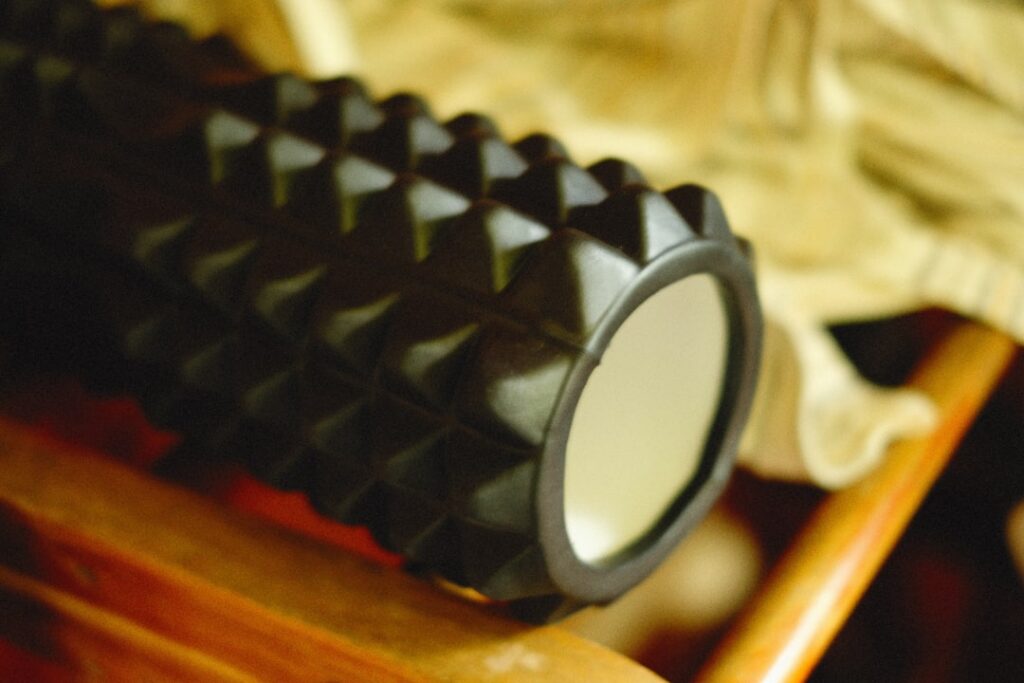
I carry a foam roller with me when I travel. I have one in my living room, one in my home gym, and one that lives in my car for after trail runs. If you do not own a good one yet, start here — you want something firm but not rock-hard, and at least 18 inches long so you can roll your full back.
My Exact 15-Minute Morning Mobility Sequence
I have refined this routine over about three years. It is not complicated. You do not need to be flexible. You do not need to wear workout clothes. You literally just need a patch of floor and about fifteen minutes. I do this every single morning, even on rest days, even when I am traveling, even when I stayed up too late reading research papers. Here is the breakdown:
Minutes 1-3: Diaphragmatic Breathing and Pelvic Tilts

I start on my back with my knees bent, feet flat on the floor. Hands on my belly. Five deep breaths where I intentionally expand my belly, my ribs, and my low back — not just my chest. Most of us breathe shallowly all night, and your diaphragm is the master muscle of your core. Waking it up first thing sets the tone for everything that follows. After the breaths, I do ten slow pelvic tilts, pressing my low back into the floor, then arching slightly. This gets my lumbar spine moving gently and fires up my deep core stabilizers without any effort.
Minutes 3-6: Foam Rolling the Big Zones
This is where the magic happens. I grab my foam roller and hit four areas: upper back and thoracic spine, quadriceps, IT band (outer thigh), and calves. Each area gets about 30 to 45 seconds of slow, deliberate rolling. I am not speed-rolling here. I find the tender spots, pause on them, take a deep breath, and let my body relax into the pressure. The research shows that slow, sustained pressure on fascial tissue is what actually creates change — not rapid back-and-forth scrubbing. For my thoracic spine, I drape over the roller with my arms crossed and gently extend backward, opening up my mid-back, which gets compressed from sitting and sleeping curled up.
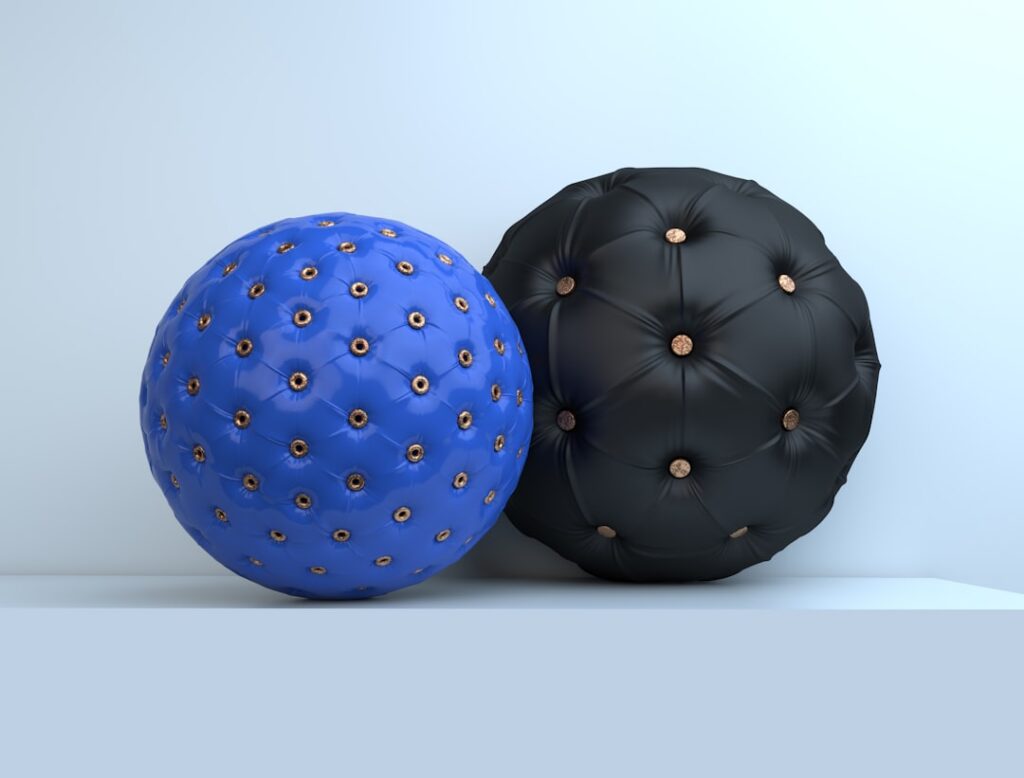
If you want to go deeper on specific trigger points, a set of therapy massage balls is a game-changer. I use lacrosse balls for my glutes and psoas, and softer spikey balls for my feet. Rolling the arches of your feet for sixty seconds each morning does more for your overall mobility than you would believe — everything connects through your plantar fascia up the posterior chain.
Minutes 6-10: Active Stretching and Joint Circles
After rolling, my tissues are warm and receptive, so I move into active stretches. This is not holding static poses for minutes — it is controlled movement through full ranges. I do worlds greatest stretch (look it up, it is real and it is amazing), hip 90/90 switches, deep squats with reaches, and ankle circles. I also do wrist circles and neck circles because I spend an embarrassing amount of time typing on my laptop and my cervical spine deserves some love. The goal here is not to push into pain. It is to remind my joints that they have a full range of motion available to them.
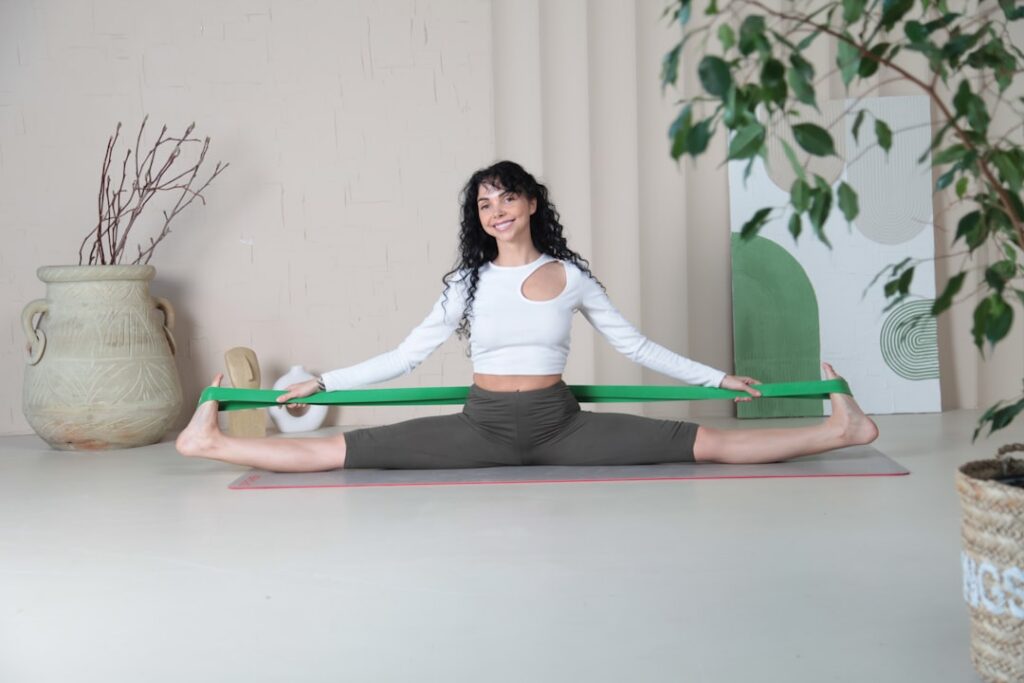
A yoga stretching strap helps me get deeper into my hamstring and shoulder stretches without forcing anything. I loop it around my foot for lying hamstring stretches and use it for shoulder dislocates (that is the actual name of the exercise, and no, it is not as scary as it sounds). Having a strap means I can pull gently into a stretch using my arms instead of momentum, which is safer and more effective.
Minutes 10-15: Dynamic Activation
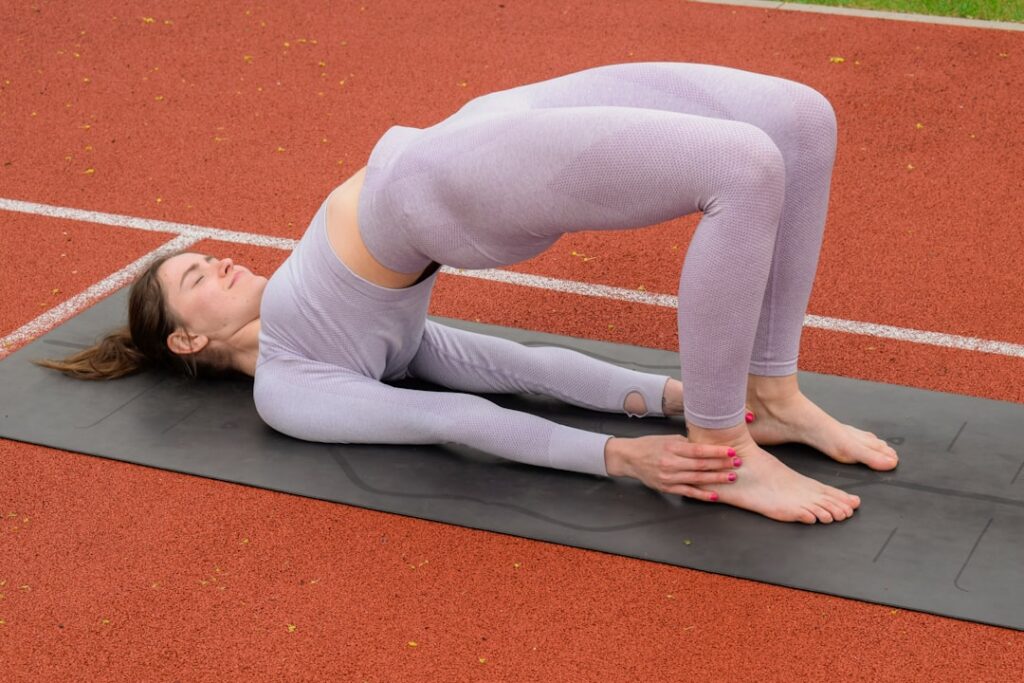
The final five minutes are about waking up the muscles that tend to fall asleep overnight. I do glute bridges (ten reps, squeezing hard at the top), bird-dogs (five per side, slow and controlled), dead bugs (eight per side), and a brief Downward Dog to Upward Dog flow borrowed from yoga. These movements fire up my glutes, my deep core, and my shoulder stabilizers — all the muscles that keep me moving well and pain-free throughout the day.
I end with about thirty seconds of standing on one leg with my eyes closed. Try it right now — it is harder than you think. Balance is one of those things that declines silently as we age, and research from the British Journal of Sports Medicine found that people who could not balance on one leg for ten seconds had nearly double the risk of dying within seven years. That sounds dramatic, but it makes sense: balance is a whole-body skill that requires strength, proprioception, and neurological coordination. Practicing it daily is one of the smartest longevity investments you can make.
The Gear That Makes This Routine Stick
Here is my honest take: you can do this entire routine with nothing but a floor and your body weight. I did, for months. But investing in a few key pieces of equipment made the experience so much more enjoyable that I actually looked forward to it every morning instead of white-knuckling through the habit-building phase. And consistency is everything with mobility. One perfect session a month does nothing. A decent session every day? That changes your life.
My foam roller of choice is a textured one with ridges — the smooth ones are fine, but the texture gets deeper into the fascia without needing to press as hard. These textured rollers are a great place to start. I also keep a small mini massage gun next to my mat for days when my muscles are extra stubborn — thirty seconds on each calf and quad before rolling makes everything feel more productive.

A good thick exercise mat is non-negotiable if you are doing this on hard floors. I learned this the hard way when I bruised my spine rolling on tile during a hotel stay. Never again. I use a half-inch thick mat that rolls up small but provides enough cushion for my back and knees.
What Happened After 90 Days
I want to be real about what changed, because I am not going to pretend this routine gave me superpowers. What it did do is more subtle and honestly more valuable.
My chronic low-back stiffness — the thing that had me doing that awkward old-person lean every morning — disappeared within the first three weeks. My hips, which had been progressively tightening over the years from running and sitting too much, opened up enough that I could sit in a deep squat comfortably for the first time since college. My shoulders stopped clicking when I reached overhead. And my sleep improved, which I was not expecting at all. According to my sleep tracking wearable, my deep sleep increased by about twelve minutes per night after about six weeks of consistent morning mobility. Researchers think this might be related to reduced sympathetic nervous system activation — starting the day with calm, deliberate movement instead of a stress response sets your nervous system up for better recovery at night.
I also noticed that my regular workouts felt better. My warm-ups were shorter because my body was already partially warmed up from the morning session. I could hit deeper squats, reach further in overhead presses, and recover faster between sets. It was like someone had oiled all the joints in my body. And on days when I could not fit in a full workout, I at least knew I had done something meaningful for my body before eight in the morning. That mental shift — from “I need to exercise” to “I already started” — is surprisingly powerful for maintaining momentum.
If you want to dive deeper into recovery science, I wrote about how hot and cold therapy complements mobility work in a previous article, and our complete guide to recovery tools covers more gear that pairs perfectly with a daily mobility habit. And if you are looking to round out your wellness tech, this deep dive on AI sleep gadgets from our tech team is a great companion read.
How to Build This Habit Without Quitting
The number one reason people abandon morning routines is that they try to do too much too fast. I see this with my coaching clients all the time — they go from zero to a thirty-minute elaborate ritual on day one, hate it by day four, and quit by day seven. Do not do that.
Start with five minutes. Just the breathing and pelvic tilts. Do that for a week. Then add foam rolling for two minutes. The next week, add the active stretches. Build it in layers over a month until you are at the full fifteen minutes. Your body adapts faster when you layer stimulus gradually, and your brain is far less likely to rebel against a tiny commitment than a big one. If you want some accountability, the habit tracking journals I recommend to my clients are simple, motivating, and take about thirty seconds to fill in each day.
The other thing I always tell people is to leave your gear out the night before. Foam roller on the floor. Mat unrolled. Strap draped over a chair. The less friction between you and your habit, the more likely you are to do it. This is basic behavioral science — reduce the activation energy and compliance skyrockets. My foam roller lives next to my bed. I literally have to step over it to leave my bedroom. That is not an accident.
Why This Might Be the Most Important Thing You Do All Day
We live in a culture that celebrates intensity. The harder the workout, the better. The more you sweat, the more impressive. But intensity without mobility is like driving a car with the parking brake on — you can force it, but you are grinding down the machinery every time. Mobility work is not glamorous. Nobody is posting their pelvic tilts on Instagram. But the research keeps piling up that joint health, tissue quality, and movement variability are the foundation that everything else sits on top of.
I think about my Olympic training days sometimes, and I wonder how different things might have been if I had understood this sooner. I was strong. I was fast. But I was also stiff as a board and constantly nursing some small injury that could have been prevented with consistent mobility work. It took me years of coaching others and watching my own body age to figure out that the fifteen minutes I spend on the floor every morning are not a luxury — they are the most important part of my training.
So tomorrow morning, before you reach for your phone, before you start the coffee, before you start thinking about everything you have to do that day — just get on the floor. Five minutes. Breathe. Roll. Move. Your future self will thank you. And if you need a little help making it a real habit, I put together some mobility tool kits that have everything you need to get started without guesswork.
Your body is the only house you will ever live in. Might as well keep the doors opening smoothly.





2 Comments on “The 15 Minutes Before Coffee That Changed How My Body Feels All Day”