Every November my phone fills up with the same kind of photo. It’s an ankle, usually on a couch, sometimes on a hotel duvet, with a sock line pressed into it like a tan line. The caption is a version of “Is this normal?” or “Do I need lymphatic drainage?” The pictures come in after the first long drive to see family, the first cross-country flight of the season, and the first week of salty party food. And now that lymphatic drainage pulls something like 450,000 searches a month (up almost 400% in a year), half of those messages also include a link to a dry brush, a jumping routine, or a $300 pair of leg boots that promise to “detox” you.
So let’s do this properly before Thanksgiving travel starts. My team and I went through the research, the trends, and what I’ve actually watched work with clients and on my own legs after years of track meets, red-eye flights, and twelve-hour coaching days. Here’s the honest version. Your lymphatic system is real and fascinating. It does not need a detox. And the thing that moves it best is almost embarrassingly simple: your own muscles, used often, plus a little smart compression and gravity.
The System That Has No Heart of Its Own
Your blood has a pump. Your lymph doesn’t. Lymph is the clear fluid that leaks out of tiny blood vessels into your tissues all day long, picking up proteins, cell debris, and immune cells on the way. A network of thin vessels collects it, filters it through lymph nodes (in your groin, armpits, neck, and belly), and returns it to your bloodstream near your collarbones. Around two to three liters make that trip every day.
With no central pump, lymph depends on three things: small squeezing segments in the vessel walls, the pressure changes of breathing, and, most of all, skeletal muscle. Every time your calf contracts, it squeezes the vessels around it and pushes fluid upward through one-way valves. That’s why the ankles are where trouble shows first. They’re the farthest point from the return, gravity is working against them, and when you sit still for hours, the calf pump mostly switches off.
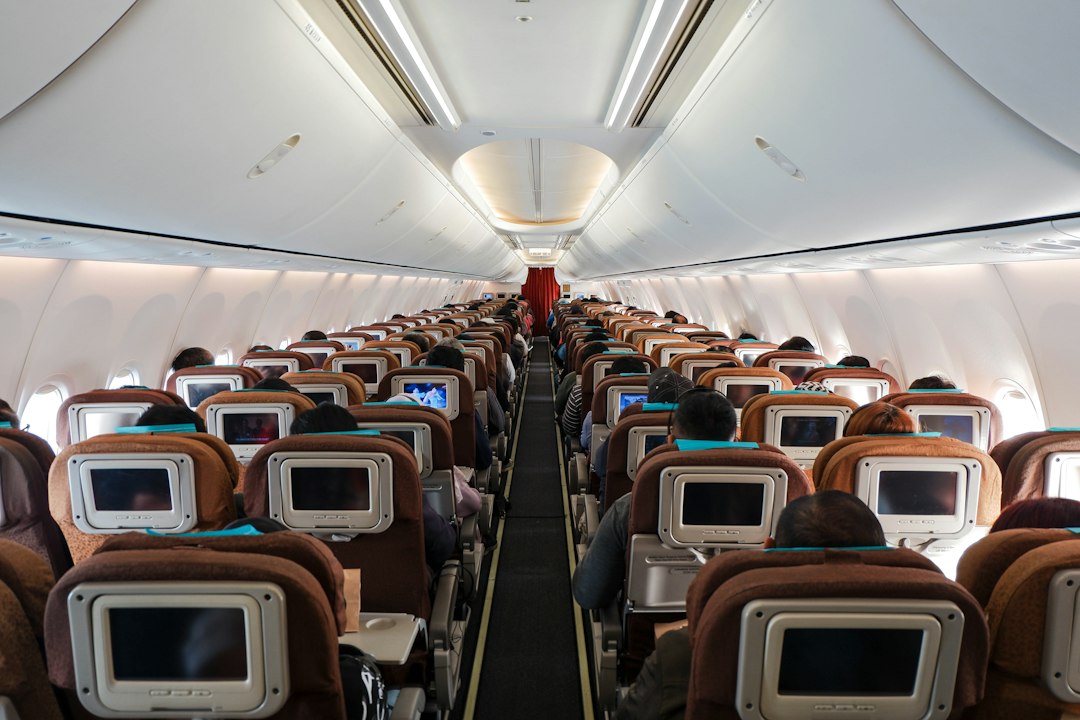
That’s the whole story behind “holiday-travel legs.” Four hours in a car seat or a 31-inch airline pitch, knees bent, a bag under the seat in front of you, a salty airport pretzel and a glass of wine: fluid pools, the sock line digs in, and your shoes feel half a size smaller at baggage claim. For most healthy people, that swelling is temporary and harmless. It goes away overnight. But it’s also very preventable, and I hate wasting the first day of a visit feeling heavy and stiff.
Where the Evidence Is Strong, and Where It’s Mostly Vibes
Here’s the sorting I do whenever a new “lymphatic” product crosses my desk.
Strong evidence: movement and muscle contraction. Walking, cycling, calf raises, and strength training all drive lymph flow, and stronger muscles are better pumps. Clinicians who specialize in lymphatic health give the same baseline advice they give for general health: about 150 minutes of moderate activity a week and two strength sessions. Nothing magic, which is why nobody makes viral videos about it.
Good evidence for a specific use: graduated compression on long trips. A Cochrane review of airline passengers on flights of five hours or more found that knee-high compression stockings reduced leg swelling and sharply cut the rate of symptomless clots picked up on ultrasound. That’s not a reason to panic about every flight, but it’s a solid reason to pack a pair.
Real but clinical: manual lymphatic drainage (MLD) done by a trained therapist. It has a legitimate place in treating lymphedema, usually alongside compression garments, and after certain surgeries. In sports medicine the research is thin. A few small trials suggest it can reduce swelling after an acute ankle sprain or wrist fracture, but there’s no strong evidence that it speeds routine recovery from a hard workout.
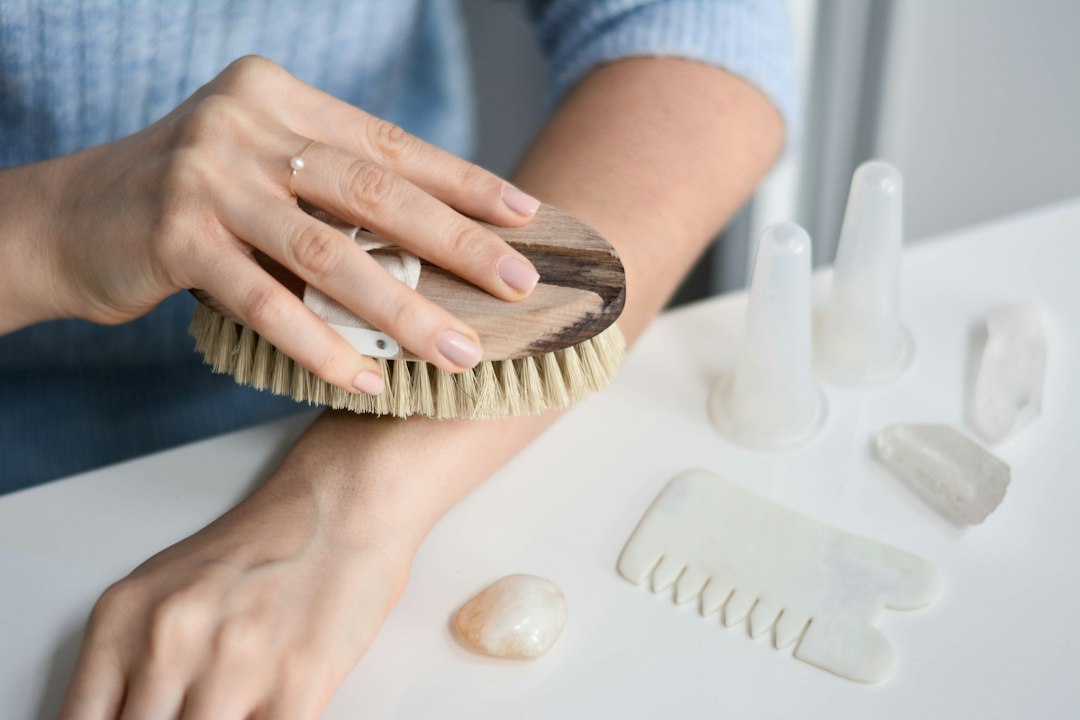
Mostly vibes: dry brushing as “drainage,” “lymphatic detox” teas, and any claim that a product removes “toxins.” Your liver and kidneys already handle detox. Dry brushing has never been shown to change lymph flow. It’s a nice exfoliating ritual, not a treatment.
My Travel-Day Leg Protocol
This is the routine I give clients for Thanksgiving trips, whether they’re flying to see grandparents or driving six hours with a car full of pie. It costs almost nothing and covers the evidence-based pieces.
Before you leave the house
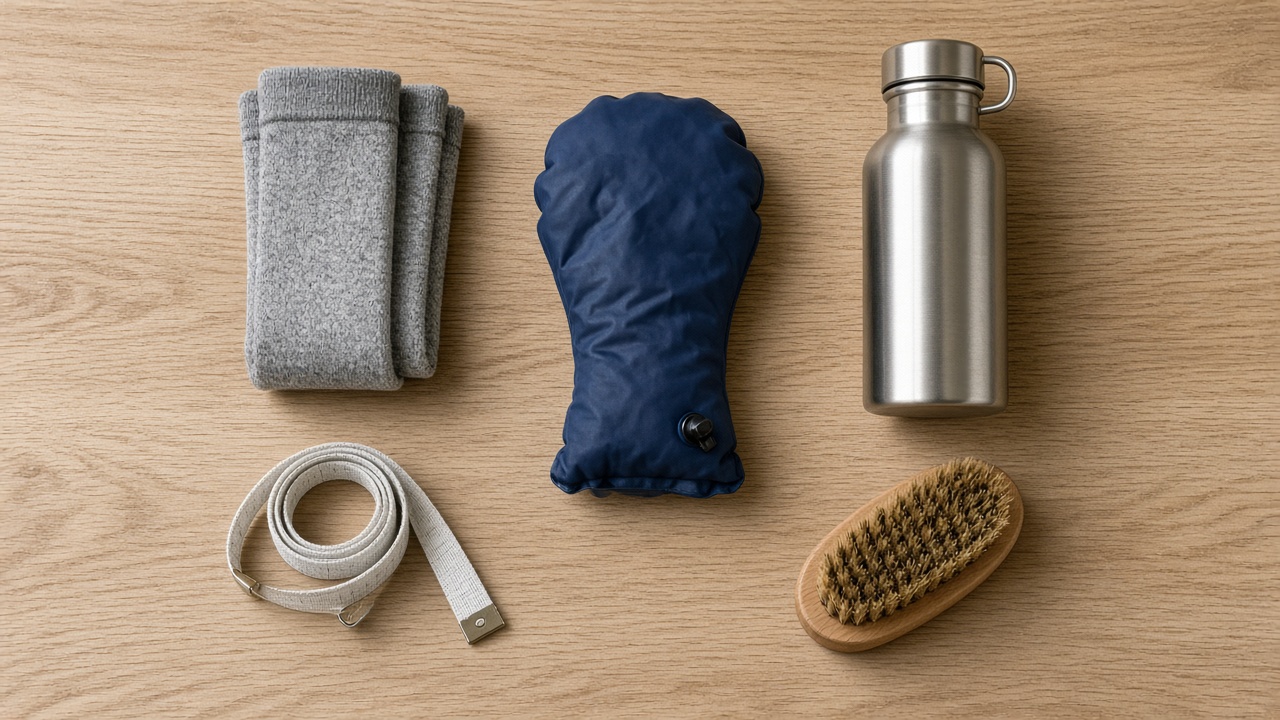
Put your compression socks on in the morning, before your legs have started to swell. For most healthy travelers I like graduated compression socks in the 15–20 mmHg range: firm enough to help with swelling, gentle enough to wear all day without a fitting. If you have a history of clots, recent surgery, active cancer, pregnancy, or use estrogen, talk to your doctor before your trip. Higher-risk travelers are often told to use 20–30 mmHg, and some need more than socks.
Fill a bottle you’ll actually drink from. I carry an insulated stainless steel water bottle through security empty and fill it at the gate. Being slightly dehydrated doesn’t cause swelling on its own, but it usually comes with more coffee, more salty snacks, and fewer trips to the restroom. Those restroom trips are free walking breaks.
On the plane or in the car
Every 30 to 45 minutes, do the seat routine: 20 ankle pumps (toes up, toes down), 10 ankle circles each way, then 10 seated calf raises with your heels pressed hard into the floor. On a plane, get up and walk the aisle every hour or two when the seatbelt sign is off. In a car, make every fuel stop a five-minute walk around the lot. That’s not optional in my family. The kids know the drill.
Under-seat bags steal your foot space, and cramped feet don’t pump. Keep the floor in front of you as clear as you can. A small inflatable travel footrest lets you shift your knee angle and gives your calves something to push against. If you want a full carry-on plan built around leg room, our travel team’s one-bag holiday carry-on system is the packing list I’d hand you.

The first hour after you arrive
Here’s the trick most people skip. Don’t go straight from the car seat to the couch. Take a 10- to 15-minute walk first, even just around the block, then lie down with your legs up. Movement first, gravity second. That order matters because walking restarts the calf pump, and elevation lets gravity finish the job while the pump is primed.
The Ten-Minute Evening Reset
This is my favorite part of the whole system, and it’s the same routine I use on the night after a race or a double coaching day. Do it on your hosts’ living-room floor, in a hotel room, or at home when the trip is over.
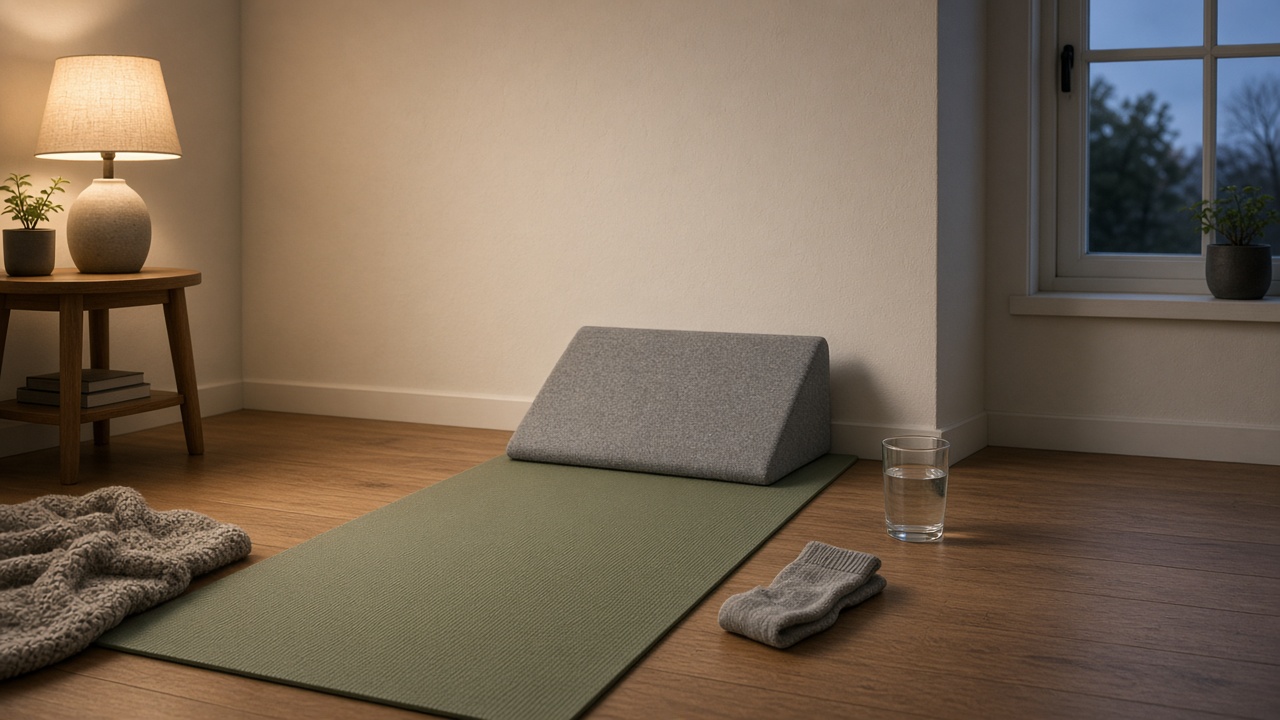
- Belly breathing, 2 minutes. Lie on your back, one hand on your belly. Slow breaths in through your nose and long exhales. The deep pressure changes in your chest and abdomen help pull lymph toward the big return vessels.
- Legs up, 5 minutes. Rest your calves on the wall or on a leg elevation wedge pillow so your ankles sit above your heart. Keep pumping your ankles slowly every 30 seconds.
- Gentle self-massage, 3 minutes. Start at the top, not the ankle. Use light, skin-stretching strokes from your knee toward your groin, then from the ankle up to the knee. Think “move the skin,” not “knead the muscle.” Lymph vessels sit just under the skin and respond to light pressure. A few drops of unscented massage oil keeps it from tugging.
The top-down order is the bit people get backwards. You clear the upstream channel first so the fluid you move from below has somewhere to go. It’s the same principle therapists use in clinical MLD, simplified for a healthy person on a living-room floor.
Dry Brushes, Rebounders, and Boots: My Honest Verdicts
You can probably guess my stance by now, but each of these trending tools deserves a fair hearing. Some are worth it, just not for the reasons the ads give.
Dry brushing
I own a natural bristle dry body brush and I like it. It exfoliates, it wakes me up before a shower, and two minutes of brushing toward my heart is a pleasant ritual on a gray morning. But there are no clinical studies showing that it moves lymph or reduces swelling, so I don’t sell it to clients as drainage. Go gently, skip broken skin, eczema, or varicose veins, and if you have a deeper skin tone, keep the pressure light to avoid irritation and dark spots.
Rebounding
Mini-trampoline workouts are all over social media as “lymphatic jumping.” Here’s the twist: rebounding does help lymph, but only because it’s exercise. Your calves and thighs contract over and over, you breathe harder, and fluid moves. A brisk walk does the same job. That said, if bouncing is what gets you moving in the dark months, I’m all for it. A mini trampoline rebounder with a handle is easy on the joints and fun enough that clients actually use it. The handle matters. Balance gets tricky when you’re tired, and I’ve watched people wobble right off the edge.
Compression boots
I’ve written about my own experience with compression boots borrowed from the physical-therapy world, and I still use them after long runs and travel days. Sequential air compression leg boots inflate in waves from foot to hip, which feels fantastic and does push fluid upward while you’re in them. What they won’t do is replace walking, “flush toxins,” or noticeably speed muscle repair for most people. Think of them as a comfort tool for heavy legs, not a medical upgrade. And if you have known heart failure, an active clot, or an open wound on your legs, don’t use them without your doctor’s okay.
Heat is another one I get asked about. A sauna session can feel draining in the good sense, but heat actually widens blood vessels and can make swollen ankles a little puffier at first. If you love the sauna, I walked through what heat does and doesn’t do for recovery in my infrared sauna blanket experiment. On a swollen-ankle day, though, I’d choose the walk and the wall.
Desk Days Are Travel Days in Disguise
The client who swells on a flight is often the same client who swells at a desk on a deadline. Long hours of sitting are long hours with the calf pump switched off. December adds year-end projects, holiday shopping in the evenings, and dark mornings that make walks easy to skip.
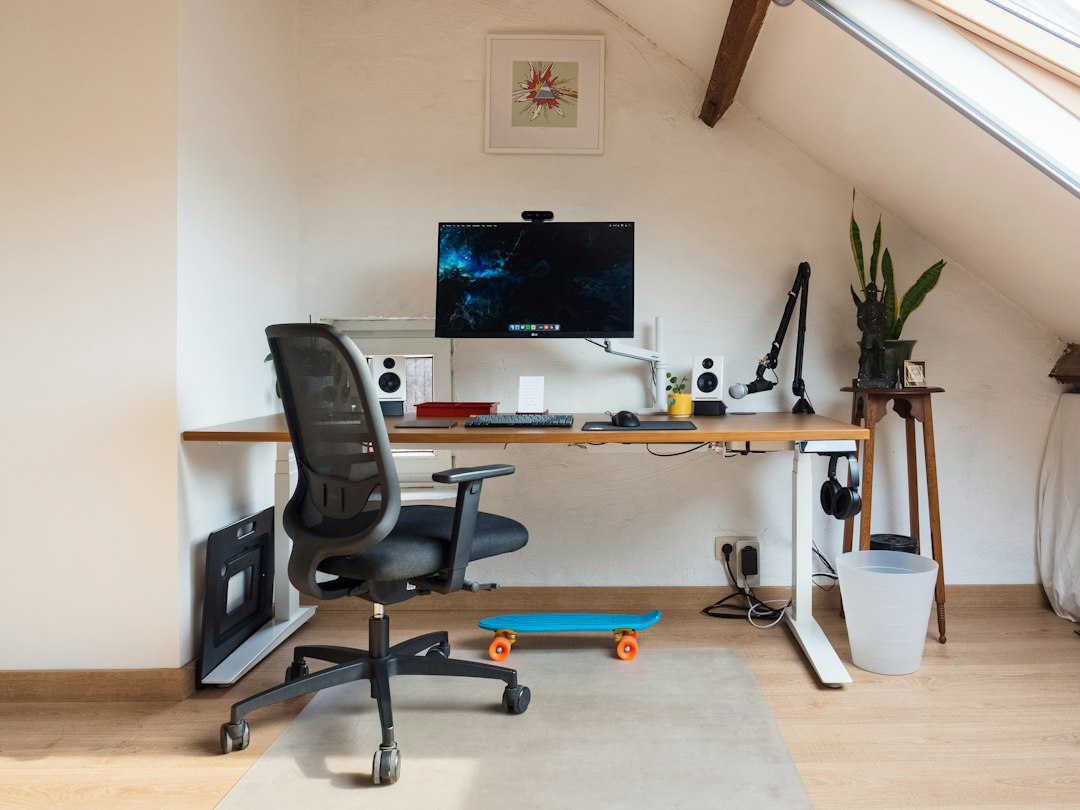
Two inexpensive changes make a big difference. First, put something under your desk that keeps your feet moving without thinking about it. An under-desk rocking footrest turns mindless fidgeting into steady ankle pumps. Second, if you have the space and budget, an under-desk walking pad is the most effective “lymphatic tool” in this entire article, because it’s just walking, done for hours. My own month at two miles an hour changed my afternoons, and I wrote up the whole walking-desk experiment if you want the details.
The no-gear version: set a timer for every 50 minutes, stand up, and do 20 slow calf raises while you refill your water. That’s a few hundred extra pumps by quitting time.
Measure, Don’t Guess
Puffiness is subjective, and the scroll feeds on that. One person’s “bloated” is another person’s normal Tuesday. When a client tells me her legs feel swollen, I ask her to measure. Wrap a soft body measuring tape around the narrowest part of each ankle and the widest part of each calf in the morning, and again in the evening on a travel day. Write it down. It’s the same habit I teach in my circumference rule for knee swelling: numbers beat feelings.
Normal travel swelling affects both legs about equally, shrinks overnight, and doesn’t hurt much. If both ankles are a centimeter bigger by evening and back to baseline by breakfast, your system is working exactly as designed.
When Swelling Isn’t a Wellness Problem
This is the part I’d tattoo on the inside of every dry-brush box if I could. Please don’t massage, brush, or bounce your way past these signs:
- One leg only: swelling, pain, warmth, or redness in one calf, especially after a long trip, can be a deep vein clot. Get seen the same day.
- Chest symptoms: sudden shortness of breath, chest pain, or coughing up blood after travel is an emergency. Call 911.
- Swelling with breathlessness or rapid weight gain: both legs puffing up along with trouble breathing when you lie flat, or a few pounds gained in a few days, can point to your heart, kidneys, or liver. Call your doctor.
- Swelling that doesn’t go down: a limb that stays swollen for weeks, especially after cancer treatment, lymph node removal, or surgery, may be lymphedema. Ask for a referral to a certified lymphedema therapist. This is exactly where real manual lymphatic drainage shines.
- New medication: some blood pressure drugs, hormones, and anti-inflammatories cause ankle swelling. Mention it to your prescriber before you stop anything.
The Everyday Stuff That Quietly Does the Most
Holiday food isn’t the enemy, but it helps to know the swelling math. A heavy-salt evening (ham, gravy, stuffing, a cheese board) can mean a little fluid retention for a day or two. That’s normal physiology, not a sign you’ve “ruined” anything. Drink water, eat something with potassium (beans, squash, potatoes, bananas, leafy greens), and walk after the big meal. The post-dinner family walk might be the most underrated lymphatic tool in America.

Sleep matters too. Lying flat for seven or eight hours lets gravity redistribute fluid, which is why most travel swelling disappears overnight. And strength training is my long game. Stronger calves and thighs make a stronger pump, which is one more reason I keep clients lifting straight through the holidays instead of “taking December off.”
My Lymph-Friendly Holiday Travel Kit
If you only take one list from this piece, here’s the short version, from most to least important:
- The essential: Graduated Compression Socks (15–20 mmHg) for any trip over four hours.
- The habit-builder: an Insulated Stainless Steel Water Bottle that earns you aisle walks.
- The seat upgrade: an Inflatable Travel Footrest for cramped rows and long drives.
- The evening reset: a Leg Elevation Wedge Pillow for the ten-minute routine.
- The reality check: a Soft Body Measuring Tape so you track numbers, not feelings.
- The desk fix: an Under-Desk Rocking Footrest for the long workdays in between trips.
Everything else, the boots, the rebounder, the brush, is optional. Nice to have if you enjoy it. Never a replacement for getting up and moving.
The Bottom Line Before You Pack
Your lymphatic system doesn’t need a cleanse, a tea, or a trend. It needs you to move. Squeeze your calves while you sit, walk when you land, put your legs up when you get there, and wear the socks. Save professional drainage for the people who truly need it, and save your money for the tools that make movement easier.
I’ll be doing ankle pumps somewhere over the middle of the country in a couple of weeks, probably with a pie carrier wedged between my feet. If your ankles are behaving at baggage claim this year, send me that photo instead. That’s the one I want in my inbox.