Here’s something I don’t say at parties: the most important workout of my week is also the least impressive one. Nobody films it. Nobody cheers. On paper, it’s a 47-year-old woman marching up a gentle hill while a podcast plays in her ears, occasionally reciting Shakespeare out loud to nobody. And yet this unglamorous session — and three others like it — did more for my health than any gut-busting interval set I’ve done in the last decade.
I spent my twenties chasing an Olympic berth in the heptathlon and missed it by a margin so small I can still feel it in my chest. You’d think a near-Olympic sprinter-jumper-thrower would worship intensity. But my old coach had a saying taped inside her clipboard: the medals are won in the easy miles. For years I thought it was just coach-speak for “don’t be a hero on Tuesday.” Turns out she was describing one of the most powerful longevity tools we know of — an intensity the exercise-science world calls zone 2, and the rest of us call “the pace you can hold a conversation at.”

Two decades later, I’ve built my coaching practice around a simple hierarchy: consistency first, easy volume second, intensity a distant third. This year my research team pulled the latest studies on easy aerobic training for a client presentation, and what we found made me completely restructure my own week. So let me walk you through what zone 2 cardio actually is, why the research on it is so startling, and how to build the habit without buying a single gadget you don’t need.
The Pace Where Your Body Burns Fat and Builds Engines
Zone 2 is the second of five exercise intensities, sitting at roughly 60 to 70 percent of your maximum heart rate. The physiology is elegant: it’s the highest effort you can sustain while staying just below your first lactate threshold, which means your muscles are fueled almost entirely by fat, your breathing stays rhythmic, and — this is the part I love — your mitochondria, the tiny power plants in your cells, are being trained to multiply and work better. Faster intensities burn more calories per minute. Zone 2 teaches your body to produce energy. Those are different jobs.
The field test is almost comically simple. You should be able to speak in full sentences, comfortably, for thirty seconds or more. You can talk — but you can’t sing. If you’re gasping between phrases, you’ve drifted out of it. If you could belt a chorus, you’re strolling too easily. My clients call it the “gossip pace,” and honestly, that’s a better name than anything the journals have come up with.
What makes zone 2 special isn’t one mechanism, it’s the stacking. Better fat metabolism, more and healthier mitochondria, improved capillary density, a gentler load on joints and nervous system — and because it feels easy, you can do a lot of it, frequently, for decades. Which is exactly what the longevity data rewards.
Why Slow Miles Build the Longest Lives
If you want a single number to obsess over for lifespan, exercise physiologists keep pointing to the same one: VO2 max, your body’s maximum capacity to consume oxygen. The landmark analysis in JAMA followed tens of thousands of patients and found aerobic fitness was inversely associated with death from all causes — and the gap wasn’t subtle. The difference between being in the “elite” fitness bracket and the “low” bracket showed survival differences bigger than the ones between smokers and non-smokers. Cardiorespiratory fitness, the researchers concluded, was one of the strongest predictors of how long people live.
Here’s the encouraging part. My team flagged a study from Dr. Konopka’s lab showing that just twelve weeks of endurance training — three 45-minute sessions a week, at genuinely easy intensities — measurably increased VO2 max and improved mitochondrial function in the muscle tissue of the volunteers. Twelve weeks. Three modest sessions. That’s one television drama per session. Current reviews of the evidence suggest three to four sessions of 45 to 90 minutes per week as the effective dose for building that aerobic base.
I’ve watched this play out in my own numbers. My resting heart rate dropped four beats over a season of deliberately easy volume. My recovery between hard gym sets got faster — because between sets, your aerobic system is the one paying down the oxygen debt. Even my sleep improved, likely because easy training doesn’t flood your evening with the stress chemistry that killer workouts can. Slow is not the absence of training. Slow is training that compounds.
Finding Your Line: The Talk Test and Its Honest Caveats
The talk test is validated in sports-medicine research, and it’s free, which is why I start every client there. Recite something — the Pledge of Allegiance, a poem, a voice memo to a friend — for thirty seconds mid-workout. Steady, unbroken sentences: you’re in the zone. Clipped phrases: too hard. Operatic: too easy.
Now the caveats, because this is where good advice goes wrong. Do not anchor zone 2 to a specific pace — your easy pace changes daily. And don’t assume a universal heart rate exists for it. Heart rate swings with age, fitness, medications, heat, humidity, sleep debt, and even caffeine, which means “120 to 140 beats per minute for everyone” is folklore, not physiology. The formulas (like 60 to 70 percent of max heart rate) get you into the right neighborhood on a good day, but the talk test is the ground truth that keeps you honest.
Where gear genuinely helps is trending your data over months, and wrist optical sensors can be hit or miss at easy paces. When I ran a month of dual heart-rate data, watch versus chest strap, the watch wandered by as much as forty beats on easy efforts — I wrote up the whole saga here: what a month of dual heart rate data taught me about my watch. My chest strap, a Polar H10, is still the gold standard I trust for intervals and easy-pace verification alike, and if you want one device that covers both GPS and honest daily guidance, the Garmin Forerunner 165 has become my default recommendation for anyone starting structured training. For people who can’t stand the feeling of a strap, my testers have had good luck with the COOSPO armband — same sensor philosophy, worn on the forearm.
The No-Man’s-Land Trap
Before we talk gear and schedules, a warning, because I promise you will meet this trap in week two. It’s the murky intensity between easy and genuinely hard — zone 3, the “comfortably uncomfortable” effort. It feels like work. It looks like effort on your watch. And it delivers the worst of both worlds: too hard to efficiently train your mitochondria, too easy to force the big cardiovascular adaptations. Exercise scientists have unflattering names for it. My coach called it no-man’s-land, because you spend a lot of time there and gain very little ground.
Why does everyone fall in? Because zone 2 feels suspiciously easy, especially for driven people. On day one, going slower than your ego wants is genuinely uncomfortable — psychologically, not physically. I’ve had executives practically beg me to let them run faster by week three. The fix isn’t willpower. It’s making easy genuinely pleasant, which is a design problem, not a discipline problem.
Remove Every Excuse From the Room
When my coaching crew builds zone 2 habits for busy clients, we don’t start with motivation — we start with logistics. The habit survives on the days it’s raining, the kids are home, and you have 40 minutes. The single most effective purchase I’ve seen is a walking pad that slides under the sofa: no commute, no weather, no excuses, and you can knock out an easy session during a podcast or a committee call. I ran my own two-miles-an-hour desk experiment last year and the afternoon energy shift was real — here’s how that experiment fixed my afternoon crash. One small add: put a padded treadmill mat underneath it. Your downstairs neighbors and your floorboards will thank you.
If walking doesn’t appeal, the bicycle is zone 2’s other best friend, because the bike makes “easy” genuinely easy to hold. A simple folding stationary bike in the corner of a bedroom costs less than two months of boutique fitness and removes the skill barrier entirely. Outdoors, a padded seat and a flat rail trail are all you need. My only strong opinion on shoes: cushion them. Thousands of easy steps on dead foam is how knees start complaining. A well-cushioned daily trainer like the Hoka Clifton is the workhorse I keep buying, and my walking clients log their happiest miles in them. For long weekend hikes — which absolutely count as zone 2 when you keep them conversational — a hydration vest turns a water-logistics problem into a non-issue. And if you’re training through summer heat, do what I did and run a simple sweat-rate test to dial in your drinking; here’s the protocol that rewired my hydration strategy.
Make It the Best Hour of Your Day

Here is the habit-building secret nobody puts on a poster: reserve your favorite audio for zone 2 only. That gripping true-crime series, the audiobook you can’t stop thinking about, the podcast your sister recommended — none of it gets played in the car or on the couch. It lives on the walk, the ride, the treadmill. Within two weeks, a part of your brain starts wanting the session, because the session is where the story continues. Behavioral scientists call it temptation bundling. I call it the reason I’ve never missed a Thursday in eleven months.
For outdoor sessions, I’m loyal to bone-conduction headphones like the Shokz OpenRun Pro 2, which leave your ears open to traffic, cyclists, and the general soundtrack of the neighborhood. Indoors, any comfortable pair works — my only rule is that the content is something you genuinely look forward to. Zone 2 is the rare corner of fitness where being entertained improves the training effect instead of undermining it.
A Week of Boring Brilliance
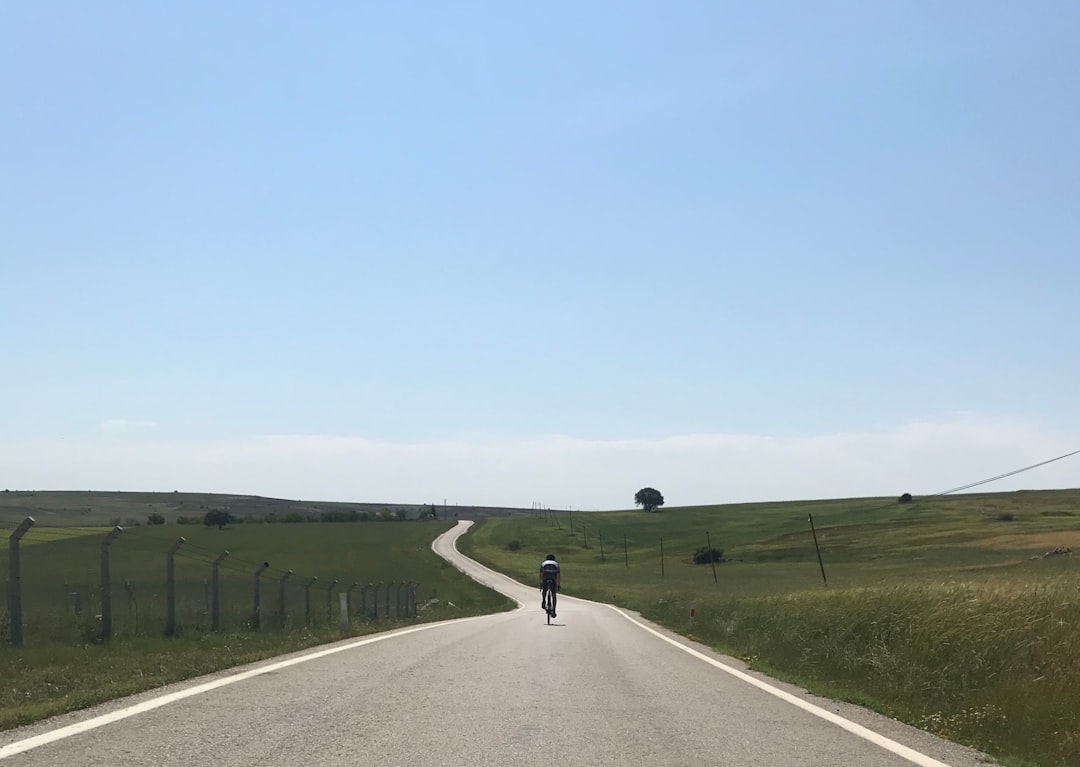
My current week, at 47, looks like this. Monday: 45 minutes on the walking pad while a podcast plays, first thing, before the day argues with me. Wednesday: an easy 60-minute bike ride on flat trails, conversational the whole way. Thursday: treadmill hike — incline at 8 percent, speed modest — with an audiobook chapter. Saturday: a two-hour hike with my husband, which is our standing date and honestly the highlight of the week. Sunday: nothing. Rest is part of the training. Sprinkled through it all are two strength days, because aerobic base without muscle is a house without framing, and the research on aging keeps telling us the same thing: preserve the muscle, protect the engine.
Notice what’s missing: suffering. Notice what’s present: other people, stories, mornings, and a schedule loose enough to bend without breaking. That’s not an accident — it’s the design. The best training week is the one you’d still follow on a stressful, overscheduled, motivation-free week, because it doesn’t require motivation in the first place.
Your Eight-Week On-Ramp
If you’re starting from the couch or coming back after years away, here’s the ramp I give my own clients, adapted from the research dose that showed mitochondrial gains in twelve weeks. Weeks one and two: three sessions of 20 to 30 minutes, gossip pace, no watch judgments allowed. Weeks three and four: stretch each session to 35 minutes and add a fourth short one if life allows. Weeks five and six: three 45-minute sessions plus one 30-minute walk anywhere in your day. Weeks seven and eight: aim for the research-backed pattern — three to four sessions of 45 to 60 minutes, with one of them stretching toward 90 on a weekend when the weather cooperates.
Two rules for the whole on-ramp. First, if you can’t talk, slow down — there is no cheating the talk test, only delaying your progress. Second, miss a session without ceremony and return the next day. A missed workout is a rounding error; a quit is the only real loss. And no, you don’t need a single gadget to begin. The talk test is free, a pair of supportive shoes is enough, and stairs, hills, and sidewalks are already installed.
The Long Game

I think about my heptathlon days differently now. The speed was real, but the trophy shelf went quiet the season I stopped competing. The easy miles never did. They’re the sessions I still do at 47, the ones my mother now does at 73 on her own treadmill, the ones my most stubborn clients were finally able to keep — because easy is the only intensity a real human life can afford forever. I keep a running list of the boring habits that quietly outperformed every wellness gadget I tested this year, and zone 2 sits at the top of it, unglamorous and undefeated.
Somewhere out there is a version of you at 80, climbing stairs without a second thought, carrying groceries like they’re nothing, keeping up with grandchildren who can’t believe your age. That person is built — mitochondrion by mitochondrion — at a pace where you could tell a friend about it the whole way. Slow is a skill. Go learn it.