I need to be honest with you. For years, I was that person who defended gym memberships like they were a personality trait. “You can’t replicate the energy of a gym,” I’d tell anyone who’d listen. “The equipment variety alone is worth the monthly fee.” And then my schedule imploded — between coaching clients, volunteer sessions at the Y, and life generally happening — and I found myself paying for a membership I used maybe eight times in three months. That’s when I started paying attention to cable machines.
Not the massive, bolt-to-the-floor commercial units that look like they belong on a construction site. I’m talking about the new breed of compact cable trainers and pulley systems that have quietly revolutionized home strength training over the last couple of years. Six months after setting one up in my spare bedroom, I cancelled my gym membership and haven’t looked back. Here’s what I learned — and what you need to know if you’re considering making the same switch.
Why a Cable Machine Changes Everything
The magic of cable training isn’t hype — it’s physics. Unlike free weights, which rely on gravity pulling in one direction, cable systems provide constant tension throughout the entire range of motion. That means your muscles are working during both the concentric (lifting) and eccentric (lowering) phases of every single rep. If you’ve ever felt like your shoulders were giving out at the bottom of a lateral raise but coasting at the top, cables fix that problem instantly.
What sold me was versatility. With a single cable machine, I can hit my chest with crossovers, sculpt my back with rows and pulldowns, torch my core with woodchoppers, isolate my shoulders with lateral raises, train my triceps with pushdowns, and even do bicep curls — all without changing stations. It genuinely replaces a dozen single-purpose machines you’d find at a commercial gym, and it does it in a footprint smaller than a coffee table.
The Three Categories You Need to Understand
Before you start shopping, it helps to know that cable machines for home use fall into three distinct camps. Each has its own personality, price point, and space requirement, and choosing the right one depends entirely on how you train and where you’re putting it.
Smart Connected Cable Systems
These are the showstoppers — machines like the Speediance Gym Monster and Tonal that use digital weight instead of physical plates. You tap a screen, select your resistance, and the machine handles the rest. Many include AI-driven form coaching, guided workouts, and progress tracking that connects to your phone. They’re sleek, wall-mounted, and genuinely impressive — but they come with premium price tags and usually require a monthly subscription to unlock their full potential.
I tested a connected system for six weeks, and the form feedback was genuinely helpful, especially on exercises like lat pulldowns where it’s easy to cheat without realizing it. The resistance felt remarkably smooth, and the automatic weight adjustments between sets saved time during supersets. However, if your Wi-Fi goes down or you decide to cancel the subscription, you lose a significant chunk of functionality. If you’re curious about the Tonal smart home gym specifically, it’s worth noting that the wall-mount requirement means you need a sturdy, load-bearing wall.
Plate-Loaded Cable Towers
For people who want commercial-gym feel without the commercial-gym commute, plate-loaded systems are the sweet spot. Machines like the REP Fitness Ares 2.0 and the Inspire FT2 use your own weight plates to create resistance via pulleys. They’re incredibly durable, don’t require electricity or Wi-Fi, and deliver that satisfying, buttery-smooth pull that serious lifters crave.
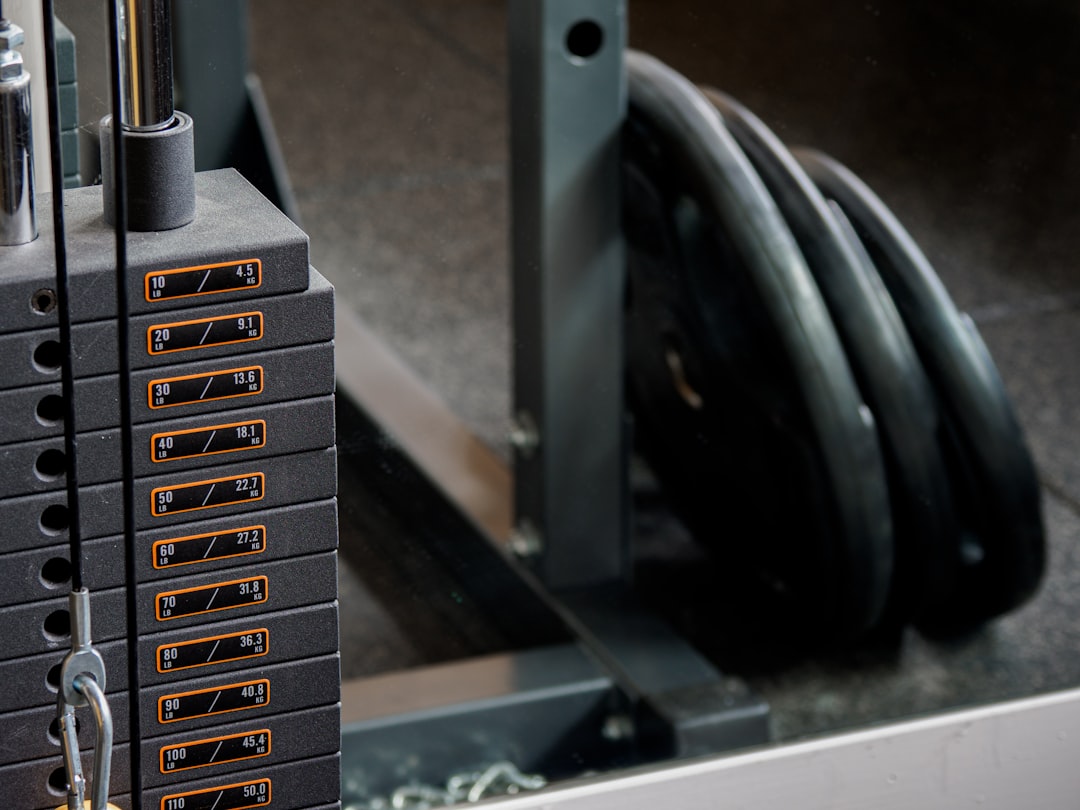
The trade-off is size and assembly. These units are substantial — most require at minimum a 4×4 foot footprint and ceiling clearance of about 7 feet. Assembly took me the better part of a Saturday afternoon with a friend helping, and I strongly recommend having a second person for any plate-loaded tower. But once it’s set up? That thing isn’t going anywhere, and neither is your progress. You’ll also want a set of Olympic weight plates to load it — most systems don’t include them.
Portable Pulley Systems
On the opposite end of the spectrum, portable pulley kits are the budget-friendly gateway drug to cable training. These typically include a pulley wheel, carabiner, loading pin, and cable that you can anchor to a power rack, door frame, or ceiling mount. For under $80, you get a functional cable setup that handles lat pulldowns, tricep pushdowns, and face pulls with surprising effectiveness.
I keep one in my travel bag. No joke. It takes up about as much space as a pair of shoes, and I’ve rigged it to hotel door frames, balcony railings, and even a sturdy tree branch during a camping trip. Is it as smooth or versatile as a dedicated machine? No. But when the alternative is skipping your back training entirely because you’re on the road, a portable pulley system is a lifesaver.
What Six Months of Cable-Only Training Taught Me
Here’s where I get personal. When I transitioned from a gym-heavy routine to primarily cable-based home training, I was skeptical that I’d maintain my strength levels. I’d been doing barbell squats, deadlifts, and bench press for years — the sacred trinity of compound lifts. Would cables really be enough?
The short answer: yes, with a creative approach. Cable squats and lunges with the pulley set low replicate the resistance pattern of goblet squats beautifully. Cable pull-throughs became my new favorite posterior chain exercise, replacing conventional deadlifts without the lower back fatigue I’d been battling. And for upper body, cables might actually be superior — the constant tension on chest flyes, lateral raises, and face pulls created a stimulus that free weights simply can’t match.
After six months, my pull-up max increased by two reps, my shoulder mobility improved noticeably, and I was spending roughly 35 minutes per workout instead of 75 (no more waiting for equipment or driving to the gym). My home gym setup went from a yoga mat and some resistance bands to a fully functional strength-training station.
The Accessories That Make It Click
A cable machine on its own is powerful, but the right attachments take it from good to extraordinary. After months of experimentation, these are the add-ons I reach for every single session.
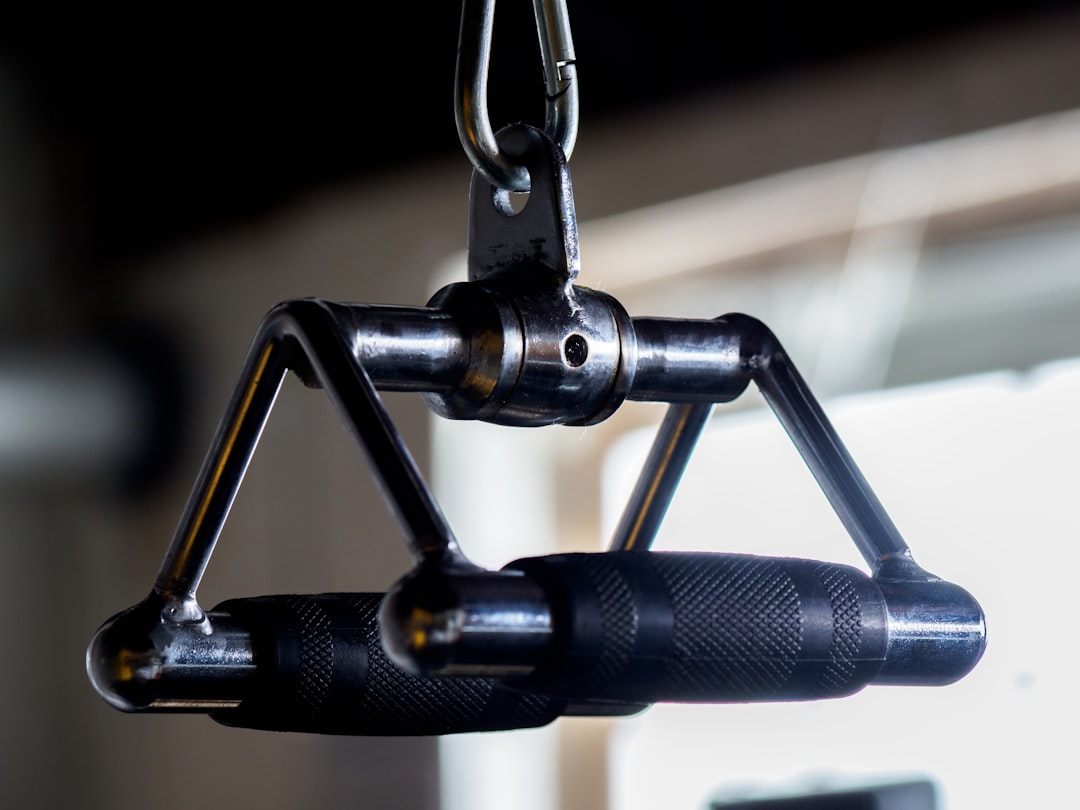
First, invest in a quality set of handles. The cheap plastic ones that come with most systems will dig into your palms and limit your grip options. I switched to padded rotating handles within the first week and the difference was immediate — smoother wrist action, better mind-muscle connection, zero callus pain.
A rope attachment is non-negotiable for tricep work and face pulls. The flexibility of a rope lets you pull apart at the bottom of a pushdown, engaging more muscle fibers than a straight bar ever could. And speaking of straight bars, a revolving straight bar opens up close-grip presses, barbell curls, and straight-arm pulldowns.
Don’t sleep on ankle straps, either. Cable glute kickbacks and hip abductions are two of the most effective lower-body exercises you can do on a cable machine, and they require this one simple $15 accessory. I do three sets of kickbacks every leg day, and they’ve done more for my glute development than barbell hip thrusts ever did. A good cable ankle strap should have reinforced D-rings and dense padding — your skin will thank you.
Setting Up Your Cable Station: Lessons from My Mistakes
I made plenty of setup errors so you don’t have to. The biggest one? Not measuring my ceiling height before ordering. My first cable tower required 92 inches of clearance, and my spare bedroom had exactly 91. Cue the frantic return and reorder. Measure twice, order once.
Flooring matters more than you’d think. If you’re going with a plate-loaded system, you need something between the machine and your floor. I used rubber stall mats — the kind designed for horse stalls — and they’ve been bulletproof. Thick enough to protect the floor from dropped plates, stable enough to keep the machine from wobbling during heavy rows.
Anchor your machine if possible. Most quality cable towers include bolt-down options, and even in a rental, there are non-permanent solutions like sandwiching the base between your floor mats and the machine’s own weight. Stability equals safety equals better lifts. It’s that simple.
Who Should (and Shouldn’t) Make the Switch
Cable machines aren’t for everyone, and I want to be straightforward about that. If you’re a competitive powerlifter who needs to practice the specific groove of a barbell squat, bench, and deadlift, a cable machine is a supplement — not a replacement. If you thrive on the social energy of a packed gym floor, training at home might feel isolating.
But if you’re someone who wants effective, efficient strength training without the commute, the crowds, or the ongoing monthly cost, a cable setup is genuinely transformative. It’s perfect for busy parents who can only grab 30 minutes between school drop-off and Zoom calls. It’s ideal for anyone who feels intimidated by the free weight section at commercial gyms. And it’s a game-changer for people rehabbing injuries, because cables offer controlled, adjustable resistance that’s gentler on joints than free weights.
Pair your cable machine with some kettlebells for ballistic work and a set of resistance bands for warm-ups and mobility, and you’ve got a complete training arsenal that fits in a corner of your living room.
My Honest Take After Half a Year

Six months in, I’m stronger, more consistent, and honestly just happier with my training than I’ve been in years. The convenience of walking ten feet to my workout space instead of driving fifteen minutes to a gym has eliminated the number one excuse I used to skip sessions. The quality of my workouts has improved because I never have to wait for equipment or modify my plan because someone’s hogging the cable crossover station.
The financial math sealed the deal. My cable machine setup cost roughly what I was paying for a year of gym membership. Everything after month twelve is pure savings. And unlike a gym membership, this equipment holds its value — I could resell it tomorrow for a significant portion of what I paid. If you want to see what’s currently available, browsing cable machines for home gyms on Amazon gives you a solid sense of the price range and features.
If you’re on the fence, start with a portable pulley system for under $100. Use it for a month. See if cable training clicks with your body and your schedule. If it does — and I suspect it will — upgrading to a dedicated machine will feel less like a purchase and more like an investment in the strongest, most consistent version of yourself.
Because here’s the truth I’ve learned after two decades in fitness: the best workout isn’t the one with the fanciest equipment or the most Instagram-worthy setup. It’s the one you actually do. And a cable machine in your home? It removes every barrier between you and that workout. Every single day.





One comment on “I Replaced My Entire Gym Membership with a Cable Machine — Here’s Why It Was the Smartest Fitness Decision I’ve Made”