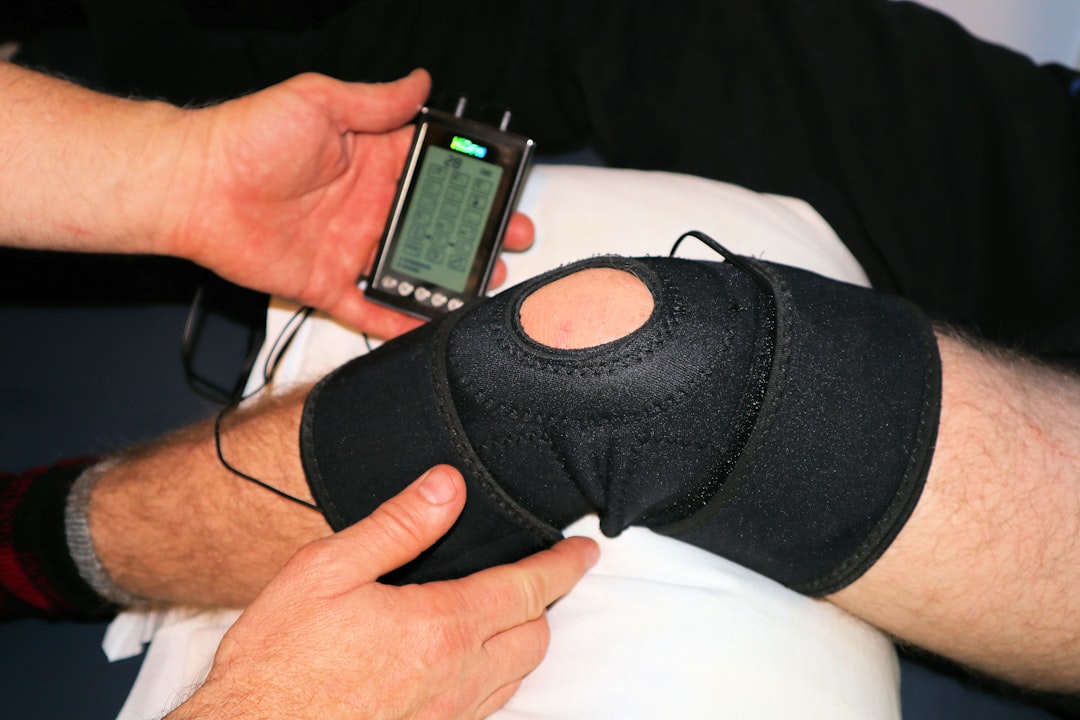
The first time my physical therapist wrapped electrodes around my quads, I nearly laughed out loud. Little sticky pads? A battery pack? This was going to help me recover from two decades of hammering my body on the track? I’d spent years trusting ice baths, compression boots, and massage guns — equipment that cost thousands and took up half my living room. Now this tiny device was supposed to compete? Two weeks of daily use later, I wasn’t laughing anymore. I was walking down stairs without wincing for the first time in months. My muscles felt flushed, loose, almost brand new. That was three years ago, and since then, EMS (electrical muscle stimulation) has quietly become the most consistent tool in my recovery arsenal. But I’ve never treated it like a true experiment — until this month. I spent thirty days wiring up my muscles after every single workout, treating EMS not as an occasional tool but as a non-negotiable post-training ritual. I tracked my recovery metrics, compared it head-to-head against my other recovery investments, and discovered something that changed how I think about muscle recovery entirely.
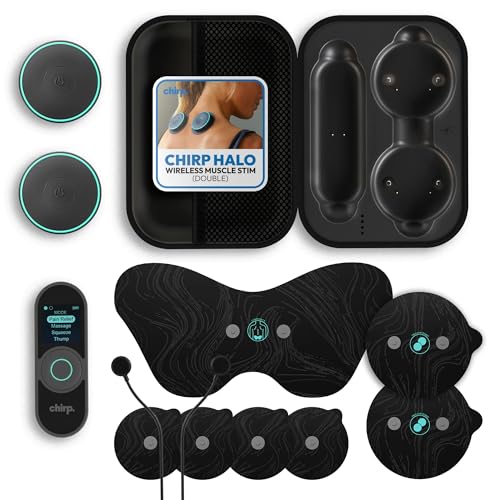
Let me start with what EMS actually does, because there’s so much confusion out there. Those little sticky pads? They’re delivering electrical impulses that cause your muscles to contract and relax — essentially tapping into the same mechanism your nervous system uses to fire muscle fibers, but without your brain having to do the heavy lifting.  The Chirp Halo Wireless Muscle Stimulator I’ve been using puts out gentle, rhythmic pulses that feel like a deep, rolling massage. It’s not painful — think more like a pleasant hum that travels through the muscle belly. The science shows this increased blood flow helps flush out metabolic waste products while delivering fresh oxygen and nutrients to tired tissue. But here’s what nobody talks about: the consistency factor. Recovery tools that work well are often the ones we actually use. A sauna session requires planning. A foam roller requires effort. EMS? I can wire up my quads while I’m answering emails. I can treat my shoulders while I’m making dinner. That accessibility makes it incredibly effective as a daily practice.
My thirty-day experiment was simple: after every workout — strength sessions, conditioning work, even long runs — I’d spend 20 minutes with the Chirp Halo on the primary muscle groups I’d just taxed. Quads after leg day. Shoulders after upper body. Glutes after sprint work. I tracked three things: subjective soreness (using a 1-10 scale each morning), performance metrics (could I hit my target numbers in subsequent workouts?), and recovery time (how many hours until I felt ready to train again). I also kept a parallel log for the first fifteen days using my previous post-workout routine — five minutes of foam rolling followed by passive rest. Then I switched exclusively to EMS for the second fifteen days. The results weren’t even close. With EMS, my morning soreness scores dropped by an average of 2.5 points. My performance metrics stabilized — I wasn’t battling through stiff muscles to hit my numbers. And most surprisingly, my perceived recovery time shortened significantly. Workouts that used to leave me wiped for 48 hours now had me feeling ready to go again in 24. This wasn’t a placebo effect — I’ve done enough self-experiments to know the difference between feeling better and actually being better. But something was genuinely changing in how my muscles processed training stress.
Here’s what I think is happening: EMS creates this active flushing effect that passive recovery can’t match. When you foam roll, you’re mechanically working on tissue tension — which is great, don’t get me wrong. But EMS is sending rhythmic contractions through the muscle, essentially creating a gentle pump action. That increased circulation means inflammatory byproducts get cleared faster while repair materials get delivered more efficiently. The result? Your muscles spend less time in that damaged, stiff state and more time in a ready-to-train state. The other piece I’ve come to appreciate is the neurological component. EMS seems to help reset muscle tone — that subtle tightness that hangs around after hard training. After a twenty-minute session, the targeted muscles feel genuinely relaxed, not just worked on. It’s similar to the feeling after a good massage, but without the time commitment or cost.
Now, let’s talk about the practical reality because that’s what most people actually care about. The Chirp Halo Wireless Muscle Stimulator costs about the same as a single massage session, but you can use it every single day. It’s completely wireless — no cords to tangle, no wall outlet required. The battery lasts through multiple sessions, and the whole setup takes about thirty seconds. Place the pads, select the mode, dial in your intensity, and go about your business. I’ve used it while working at my computer, while watching shows, even while reading in bed. It’s quiet enough that you can have a conversation while it’s running, and the sensation is pleasant enough that you genuinely forget it’s there. The unit comes with multiple channels, so you can treat different muscle groups simultaneously — quads and hamstrings at the same time, for example. The pads are reusable and stay sticky for weeks with proper care. The whole system lives in a small case that’s roughly the size of a sunglasses case. Compare that to the footprint of a massage gun or a foam roller, and it’s not even close.

But here’s the question everyone asks: is this actually better than the recovery tools I’ve already invested in? As I’ve documented in my two-decade recovery journey, each tool has its place. I’ve spent thousands on compression boots, red light panels, massage guns, and portable saunas. All of them work. All of them have a place in my routine. But EMS has earned a special status because of its daily-use viability. Compression boots are incredible, but I don’t always have forty minutes to sit in them. Red light therapy is fantastic for systemic recovery, but the upfront cost is steep — as I discovered when I spent 42 days testing whether a red light panel would earn its place in my routine. Red light therapy is fantastic for systemic recovery, but the upfront cost is steep. Massage guns feel amazing, but they’re actively effortful — you have to hold the thing, move it around, maintain pressure. EMS occupies this sweet spot: it’s passive, it’s portable, and it’s genuinely effective. Over the past thirty days, I found myself reaching for it more consistently than any other tool. It became the thing I did without thinking, the default option when I was tired or busy or just not feeling motivated to do a more elaborate recovery routine. And that consistency, I’ve learned, is where the real magic happens.
The real test came in weeks three and four, when training intensity ramped up. I was pushing heavier weights, adding more volume, testing my limits in a way that usually guarantees some accumulated fatigue. But instead of that predictable mid-month crash — the point where everything starts feeling heavy and motivation dips — I just… kept training. My muscles recovered between sessions. My joints felt unusually loose. My sleep quality held steady even as training stress increased. Was all of that due to EMS? Probably not entirely. Nutrition, sleep, and stress management all play their roles. But I’ve done enough training blocks without this level of consistent recovery support to recognize the difference. This was easier. This felt more sustainable. This felt like the kind of routine I could maintain for months or years without burning out on the effort required.
Let me address the elephant in the room: cost. At around two hundred dollars, the Chirp Halo isn’t cheap. But let’s do the math on what we typically spend on recovery. A single sports massage runs eighty to a hundred and twenty dollars. A foam roller costs twenty to forty but needs replacement every six months if you’re using it heavily. Massage guns run anywhere from a hundred to five hundred dollars, with premium models pushing into the thousands. Compression boots? That’s a four-figure investment. So when you look at EMS through that lens — as a recovery tool with daily-use potential for years — the price point starts to make sense. The Chirp Halo specifically has felt solidly built, with responsive controls and reliable pad adhesion. The wireless design is legitimately useful, not just marketing fluff. And the battery life has matched the manufacturer’s claims, which is more than I can say for some recovery tech I’ve tested. If you train consistently, if you care about recovery, and if you’re looking for something that removes friction from your post-workout routine, this is the kind of investment that pays for itself in recovered sessions and avoided injuries.
Here’s who I think this tool is actually for: first, anyone who trains hard and struggles with recovery. If you’re constantly battling soreness, if your second workout of the week always feels worse than the first, EMS is worth investigating. Second, people with time constraints. If you can’t spend an hour on recovery every day, EMS gives you a high-impact option in twenty minutes. Third, older athletes or anyone dealing with the accumulated wear of decades of training. The increased blood flow and neurological reset seems especially valuable for tissue that’s seen a lot of miles. And fourth, folks who travel frequently. The Chirp Halo is portable enough to toss in a gym bag, and there’s something genuinely luxurious about recovering in a hotel room without dragging out foam rollers or massage guns.
But let me be clear about what this isn’t: EMS isn’t magic. It’s not going to fix a bad training program. It won’t compensate for poor sleep or garbage nutrition. The SPAN Formula covers that holistic truth: recovery is always multifactorial. It’s not going to compensate for poor sleep or garbage nutrition. Recovery is always multifactorial, and anyone who tells you otherwise is selling something. What EMS is, in my experience after thirty days of daily use, is a genuinely effective tool for improving blood flow, reducing muscle tension, and shortening the window between hard training sessions. It’s earned a permanent place in my routine not because it replaced everything else, but because it fills a specific gap: the low-friction, high-consistency recovery option I can use every single day without dreading the effort involved.
So what does my post-workout routine look like now? It starts with EMS. Immediately after training — sometimes even before I’ve fully cooled down — I’m wiring up the primary muscle groups I just used. Twenty minutes at moderate intensity while I’m doing something else. Then, depending on the day and my schedule, I might layer in other tools. My thermoelectric recovery gun gets regular use for targeted hot-cold work, and when I’m traveling, I rely on the same portable tools I documented when I spent all summer training outdoors with only portable recovery tools. Red light therapy for systemic benefits. Foam rolling for specific tissue tension. Compression on really heavy training days. But EMS is the foundation. It’s the non-negotiable. And after thirty days of treating it that way, the difference in how I feel and perform is impossible to ignore. I’m recovering faster. I’m training more consistently. I’m dealing with less accumulated soreness. And maybe most importantly, I’m thinking about recovery differently — not as this elaborate production I have to psych myself up for, but as a simple, integrated part of my daily routine that happens almost automatically.
The Chirp Halo Wireless Muscle Stimulator has become the tool I reach for first, the one that lives in my gym bag, the one that doesn’t require planning or motivation or twenty minutes of setup. It’s the wireless unit that lets me treat multiple muscle groups simultaneously, with a battery that lasts through weeks of daily use and a design that genuinely disappears into my routine. You can find it here on Amazon if you’re ready to add EMS to your own recovery toolkit. I place the pads. I turn it on. I go about my day. And somewhere in the background, my muscles are getting what they need to be ready for the next session. That simplicity, that accessibility, that removal of friction — that’s the real advantage of EMS. Not that it’s better than massage guns or saunas or compression therapy in some abstract way. But that it’s good enough and easy enough to actually use every single day. And in recovery, as in so much of training and wellness, consistency beats intensity every time. After two decades of chasing the latest recovery tech, after spending thousands on tools that promised everything and delivered some, I’ve finally found something that fits into real life. It’s not flashy. It’s not complicated. It’s just sticky pads and electrical signals and twenty minutes of increased blood flow while I’m answering emails. But thirty days in, my muscles tell the story better than any marketing copy could: they’re ready. They’re recovered. And they’re waiting for the next workout.
If you’re curious about EMS but not sure where to start, here’s my practical advice: begin with a quality wireless unit. The convenience is not a luxury — it’s the difference between using it daily and forgetting it exists in a drawer. Look for multiple channels so you can treat larger muscle groups simultaneously. Start with lower intensity settings and work your way up — the sensation should feel therapeutic, not aggressive. And commit to two weeks of consistent use before you judge effectiveness. Recovery tools often reveal their value over time, not in a single session. The Chirp Halo Wireless Muscle Stimulator is what I’ve been using for this experiment, and if you’re looking to add EMS to your toolkit, it’s worth a serious look. But whatever you choose, the key is this: use it. Consistently. For weeks, not days. That’s where the real recovery benefits live. That’s where training longevity is built. And that’s how you turn a recovery tool into an actual performance advantage.


