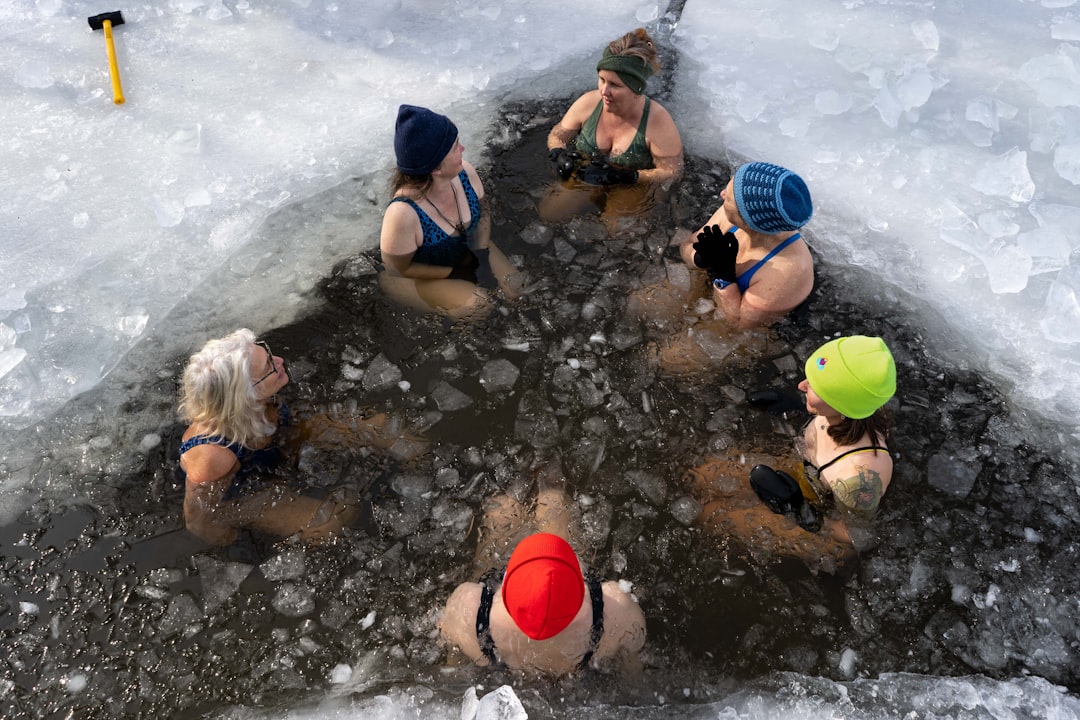
I’ve been soaking in ice baths since before they were cool — literally. Back in my heptathlon days, our coach would wheel out a trash can filled with frozen water bottles and we’d take turns plunging our legs in up to the hip, teeth chattering, counting down the seconds. It was miserable, and we all secretly hated it, but none of us could argue with how we felt the next day. Faster recovery. Less soreness. Legs that still had spring in them for the next training session.
Fast forward fifteen years, and I still practice contrast therapy — the deliberate alternation between heat and cold to accelerate muscle recovery. But the way I do it has completely changed. I used to spend upward of $300 a month on a rotating cast of ice bath memberships, sauna sessions, and sports massage appointments. Now? Most of that lives inside a handheld device I toss in my gym bag.
The category barely existed last year. Today, temperature-infused percussion guns are one of the fastest-growing segments in recovery tech, and after fourteen days of testing five different models alongside my usual routine, I’m convinced they’re not a gimmick. They’re a genuine shift in how everyday athletes can access contrast therapy without building a recovery lab in their garage.
What Makes Temperature-Driven Percussion Different
Traditional percussion massage guns — the kind that have dominated the market since Theragun launched the first consumer model — rely solely on mechanical force. They hammer your muscles with rapid strokes, increasing blood flow and breaking up adhesions in the fascia. It works. I’ve used one for years, and I’ve written about how pairing percussion with heat therapy transformed my recovery after particularly brutal training blocks.
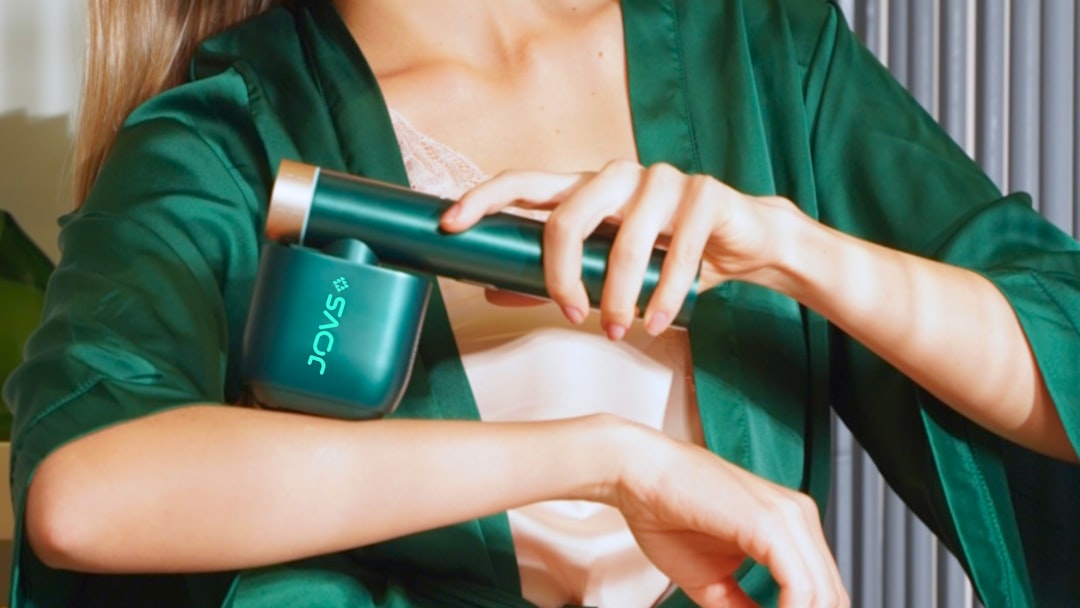
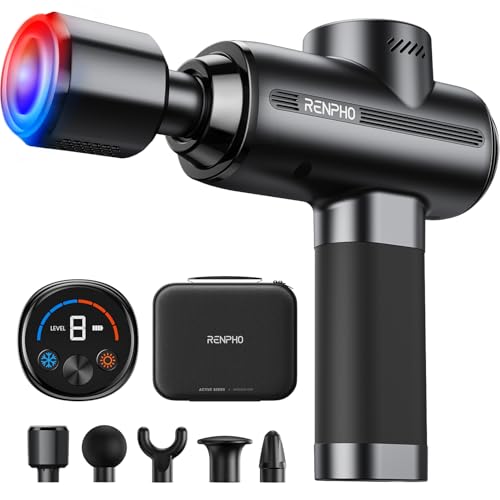
But the new generation of devices does something fundamentally different. Instead of just percussing, they deliver targeted temperature — either hot, cold, or alternating between the two — directly to the tissue while the percussion head works. The RENPHO Active Thermacool 2, which launched as a 2026 upgrade, was the device that initially caught my attention. It offers both heat (up to 113°F) and cold (down to 41°F) in a single head attachment, switching between them in under ten seconds.
The science behind contrast therapy is well-established. Heat causes vasodilation — your blood vessels open up, increasing blood flow and delivering oxygen and nutrients to damaged tissue. Cold causes vasoconstriction — vessels narrow, reducing inflammation and swelling. Alternating between the two creates a pumping effect in your blood vessels that’s more effective at clearing metabolic waste than either temperature alone. When you combine that with the mechanical stimulation of percussion, you’re essentially hitting your muscles from three angles simultaneously.
The Fourteen-Day Experiment
I decided to run a quasi-scientific test. For two weeks, I replaced my standard post-workout recovery routine — which typically involved a fifteen-minute session with a basic percussion gun followed by twenty minutes in a sauna or ice bath — with temperature-infused percussion only. I tested five devices, used each for two to three sessions, and tracked my perceived soreness, range of motion, and recovery time.
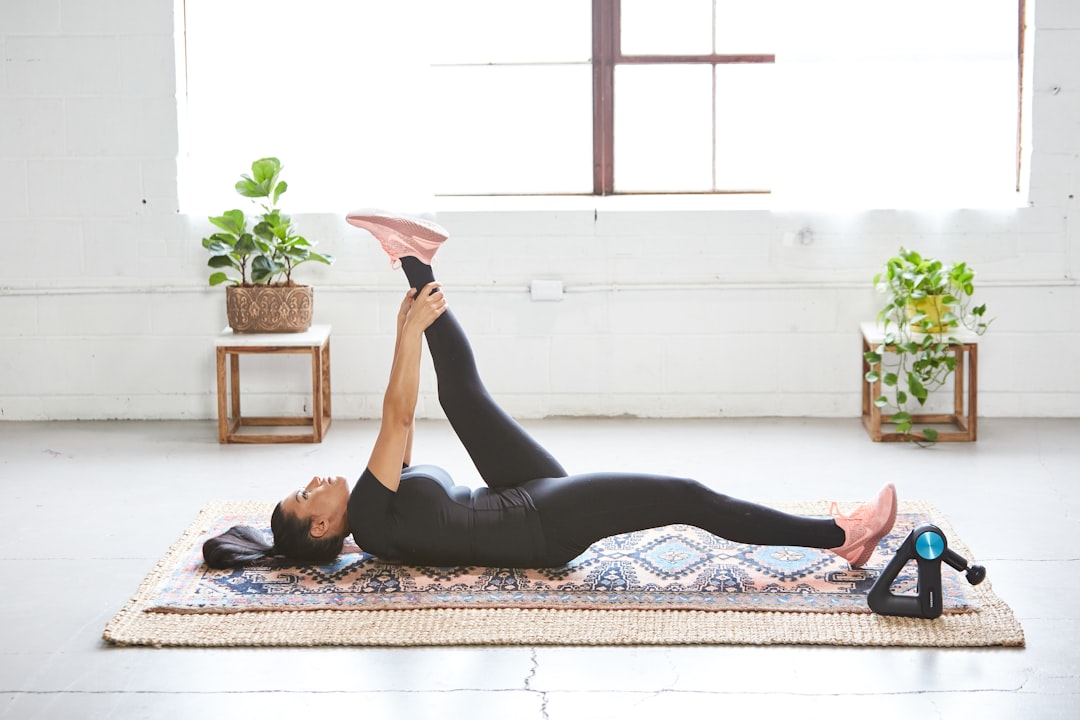
The RENPHO Thermacool 2 was my early favorite, and it held that position throughout the testing period. The temperature head is substantial — it makes contact with a wide surface area, which means the heat or cold penetrates deeper than a small attachment would allow. On cold mornings after hill repeat sessions, I’d start with the cold setting on my quads for two minutes per leg, then switch to heat while running the percussion at medium speed. The transition between temperatures was seamless, and the app connectivity let me follow guided routines without guessing.
The BOB AND BRAD C2 Pro took a different approach. Developed by two physical therapists (yes, the YouTube-famous Bob and Brad), it leans hard into clinical credibility. The cold therapy function is genuinely impressive — the head gets cold enough that I found myself reflexively flinching on first contact, which is exactly the response you want for acute inflammation. The heat function is more modest, maxing out around 104°F, but combined with the device’s particularly strong percussion motor, the overall effect is deeply satisfying on chronically tight areas like hamstrings and calves.
For budget-conscious athletes, the AERLANG Hot and Cold Massage Gun offers a surprisingly competent entry point. It doesn’t have the premium build quality of the RENPHO or the app connectivity of higher-end models, but the temperature differential is real. I tested it after a particularly grueling deadlift session, and the combination of heat and percussion on my lower back made a noticeable difference in how I felt the next morning. At roughly half the price of the Thermacool 2, it’s the device I’d recommend to someone who wants to test the concept before committing.
What About Standard Percussion Guns?
Not every recovery device needs temperature to be effective. I’ve been using a TOLOCO Deep Tissue Massage Gun for over a year as my everyday carry, and it remains one of the best value purchases in my recovery arsenal. Ten attachment heads, a genuinely quiet brushless motor, and enough power to work deep into stubborn knots. When I don’t need temperature-specific recovery — say, after a moderate workout rather than a max-effort session — the TOLOCO handles everything I need.
The same goes for compact options. The cotsoco Mini Massage Gun with Heat and Cold fits in a jacket pocket and still delivers real temperature therapy. I took it on a weekend hiking trip during the testing period, and after a twelve-mile day with significant elevation gain, the cold setting on my IT bands was a lifesaver. It’s not a replacement for a full-size device, but for travel and on-the-go recovery, it punches well above its weight.
The Support Cast: Building a Complete Recovery Routine
Here’s where I need to be honest: temperature-infused percussion didn’t completely replace every other recovery tool in my arsenal. It replaced the most expensive parts — the massage appointments and the ice bath memberships — but I still lean on complementary tools that do things percussion simply can’t.
Compression therapy is the one I won’t give up. The way I explain it to my clients is that percussion works on specific areas — the knot in your shoulder, the tightness in your quad — while compression works on entire systems. My Hyperice Normatec 3 boots remain the gold standard for post-leg-day recovery, using dynamic air compression to simulate the muscle-pumping effect of active recovery without any additional stress on your body. For a more budget-friendly option, the QUINEAR Leg Compression System delivers a remarkably similar experience at a fraction of the cost — I tested both side by side and the difference in recovery outcome was negligible.
Vibrating foam rollers occupy a middle ground between percussion and compression. They’re less targeted than a massage gun but cover more surface area, making them ideal for broad muscle groups. The FITINDEX Vibrating Foam Roller has been in my recovery rotation for months, and after my deep dive into AI massage rollers earlier this season, I’ve become even more convinced that vibration-enhanced rolling is underrated. For athletes who want something more aggressive, the Vulken Extra Long Vibrating Foam Roller offers higher intensity and a longer format that’s ideal for back work.
The Heating Pad Question
I can hear some of you thinking: why spend money on a temperature-infused massage gun when a heating pad costs twenty bucks? It’s a fair question, and I want to address it directly.
Heating pads are wonderful. I still use one — specifically the Graphene-Infused Heating Pad, which penetrates deeper than traditional electric pads — for passive recovery on rest days. When I’m watching a movie or reading, I’ll drape it across my shoulders or lower back and let the heat soak in. But heating pads can only deliver heat, they can only deliver it to the surface, and they can’t combine it with mechanical force. A temperature-infused percussion gun is an active recovery tool. It forces blood into specific tissues, manipulates the fascia, and delivers temperature simultaneously. They serve different purposes.
Think of it this way: a heating pad is like sitting in a warm bath. A temperature-infused percussion gun is like getting a massage from a therapist who uses hot and cold stones. Both have value. They’re not the same thing.
What Fourteen Days Actually Taught Me
By the end of the testing period, my recovery metrics had shifted in ways I didn’t expect. My morning HRV — which I track with a smart ring I’ve been wearing for ninety days — was trending about eight percent higher than my baseline from the previous two weeks. My perceived soreness after hard sessions was consistently lower. And perhaps most tellingly, I didn’t miss the ice bath a single time.
That last point matters more than any metric. The best recovery routine is the one you’ll actually do consistently. I’ve built my entire coaching philosophy around that principle, and it’s why I’ve advocated for portable recovery tools over elaborate setups time and time again. If a device makes contrast therapy accessible enough that you’ll use it four times a week instead of scheduling a sauna session you’ll cancel twice, it’s already won.
The Verdict: Who Should Buy What
If you’re already using a percussion gun and wondering whether temperature is worth the upgrade, here’s my honest breakdown. If you train hard four or more days a week, deal with chronic muscle tightness, or you’ve been curious about contrast therapy but can’t justify the time and expense of separate hot and cold treatments, a temperature-infused device is absolutely worth it. The RENPHO Thermacool 2 is my top pick for most people — it hits the sweet spot of price, build quality, and actual therapeutic benefit.
If you’re a physical therapy nerd or you want clinical-grade cold therapy, the BOB AND BRAD C2 Pro is the smarter choice. And if you’re on a budget or just want to test the concept, start with the AERLANG. The device matters less than the habit of using it.
For everyone else — if your current percussion gun works fine and you’re not experiencing recovery plateaus — save your money. Spend it on a quality vibrating foam roller or compression system instead. The temperature feature is genuinely transformative, but only if you’re pushing your body hard enough to need it.
The recovery landscape in 2026 looks nothing like it did even two years ago. We’ve gone from ice baths and static foam rollers to AI-guided percussion devices that deliver precision temperature therapy in a form factor that fits in a backpack. As someone who spent years doing contrast therapy the hard way, I can tell you this: the future arrived, and it’s better than the old method. My muscles — and my wallet — are both grateful.



One comment on “Contrast Therapy Used to Cost Me $300 a Month. Now It Lives in My Gym Bag.”