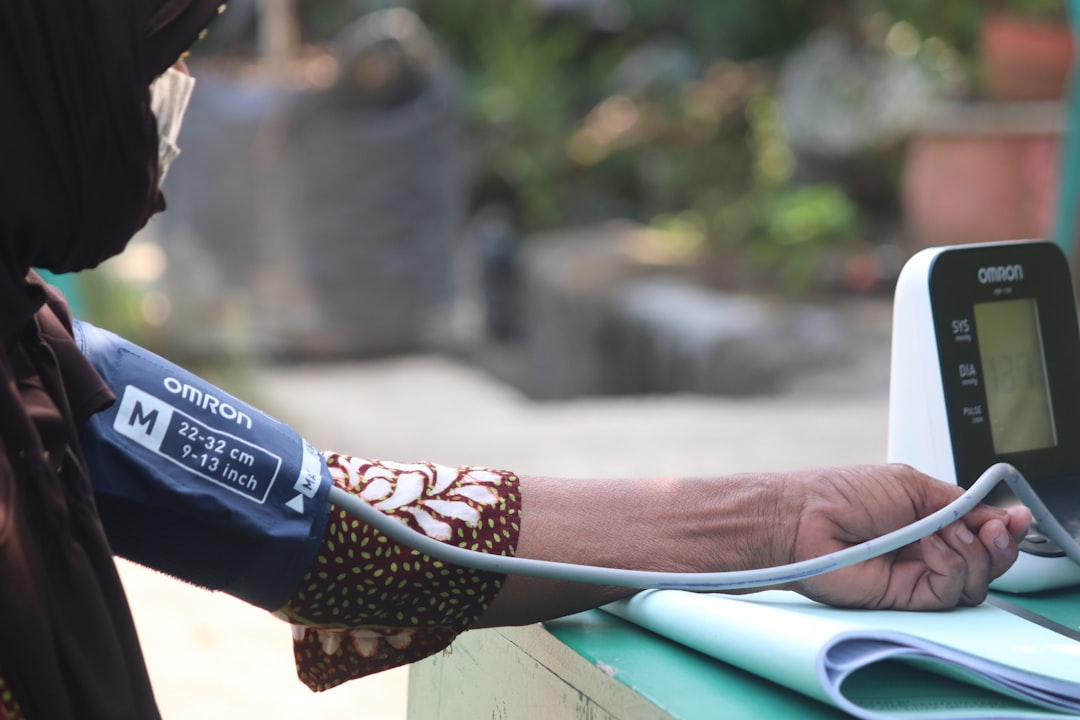
My smart ring tracks my sleep stages, my continuous glucose monitor watches my metabolic response to a sweet potato, and my watch nudges me when my heart rate variability dips. I love all of it. And yet the single most predictive number for my long-term health — the one my doctor actually leans forward for — is completely invisible to every gadget I own. Blood pressure. It took an annual physical, a slightly elevated reading in a freezing exam room, and a nurse who said “you always spike in here” for me to finally close that gap at home. Six weeks and a counter full of cuffs later, my team and I have settled on the monitors that earned permanent spots in my house — and the ones that quietly went back in the box.
Why the Kitchen Table Beats the Exam Room
Here’s what surprised me most: the reading you get in a doctor’s office is often your worst one. Clinicians call it white coat hypertension — the stress of the appointment itself can add ten or more points to your systolic number. Roughly one in five people who look elevated in the office turn out to be perfectly normal at home. The reverse happens too, and that’s scarier: masked hypertension, where you read fine in the chair but run high all day in real life. Neither pattern shows up in a twice-a-year snapshot.

Home monitoring fixes the math. Instead of two data points a year, you get morning and evening readings, week after week, in the exact environment where you actually live. When I brought my log to a follow-up appointment, my doctor adjusted course based on patterns — the Tuesday spikes after my Monday night league games, the slow creep after a salty weekend — that no office visit could ever catch. It’s the same reason I became obsessive about continuous glucose data: trends tell you things snapshots never will. If you’ve read my CGM buyer’s guide, you already know how this story goes. Blood pressure monitors are the same discipline, minus the subscription cost.
How I Ran the Test (and What Actually Matters)
My team gathered five upper-arm monitors, two wrist units, and a spare large cuff, then we ran them side by side for six weeks — same time slots, same arm, same sequence, two readings per session per device. I’m not a lab, and I won’t pretend otherwise. But consistency reveals a lot: devices that agreed with each other, devices that drifted, and devices whose readings jumped around enough to be useless for trend tracking.
Three buying criteria emerged from all of this. First, validation: has the device been through clinical accuracy testing, the kind recognized by the American Medical Association or the American Heart Association’s validated device lists? Omron dominates those lists for a reason. Second, cuff fit: an ill-fitting cuff can throw readings off by a genuinely meaningful margin, and more people wear the wrong size than the right one. Third, data you’ll actually revisit: an irregular-heartbeat detector and simple app syncing matter more than any premium feature, because a monitor you never review is a paperweight.
The Upper-Arm Contenders That Earned Their Counter Space
The Omron Iron became my daily driver and the one I’d recommend to most people without hesitation. It’s FDA-cleared, pairs with Omron’s app over a proper wireless connection rather than fussing with pairing screens every session, and stores enough readings internally that you can ignore the app for a month and lose nothing. The body-movement sensor that prompts you to sit still sounds like a gimmick until you realize how much your posture is quietly wrecking your numbers. It’s the priciest of the arm units we tested, and after six weeks, I stopped noticing the price and started trusting the data.
Its sibling, the Omron Bronze, is the honest pick if you want validated accuracy on a budget. You give up app syncing and some memory slots, but you keep the core engine that made Omron the brand clinicians mention by name. If your plan is “measure, write it down, bring the notebook to appointments” — honestly a great plan — the Bronze does everything that matters.

The iHealth Track is the one I hand to guests who ask “which should I buy?” after seeing mine. The display is oversized and genuinely readable without glasses, the controls make sense on the first try, and it syncs to a clean app that shows your trends without a learning curve. My mother-in-law, who has strong opinions about gadgets that overcomplicate themselves, adopted one within a week of borrowing ours. That’s the highest endorsement I can give.
Two value plays rounded out the arm contingent. The Oklar upper-arm monitor is FDA-cleared, rechargeable, and comes with a case — a genuinely thoughtful bundle at a price that undercuts the big names. The Sinocare unit was the surprise of the test: dual-user memory, a carrying case, and readings that stayed within a few points of the Omrons across six weeks. Neither has the decade-long validation pedigree, but both delivered consistent numbers for us, and consistency is the whole game.
What Wrist Monitors Are Actually For
I’ll say the quiet part first: a properly positioned upper-arm cuff will almost always beat a wrist monitor for accuracy, because wrist arteries are narrower and angle-sensitive. But “almost always” hides the real-world cases where wrist is simply the right tool. Travel is one — I’ve taken the Omron Gold wrist monitor through three trips now, and it slips into a carry-on pocket the way no arm unit can. For family members whose arms make standard cuffs awkward, or who physically cannot position an upper cuff without help, a wrist unit used correctly beats no data at all.

The technique bar is higher, though. Wrist readings are only trustworthy when your wrist sits at heart level, elbow supported, palm open — the Oklar rechargeable wrist monitor we tested actually coaches you into position with on-screen prompts, which fixed the single biggest source of junk readings. Used that way, our numbers tracked closely with the arm units. Used lazily, they wandered. Know which user you are before you choose.
The Cuff Size Problem Nobody Warns You About
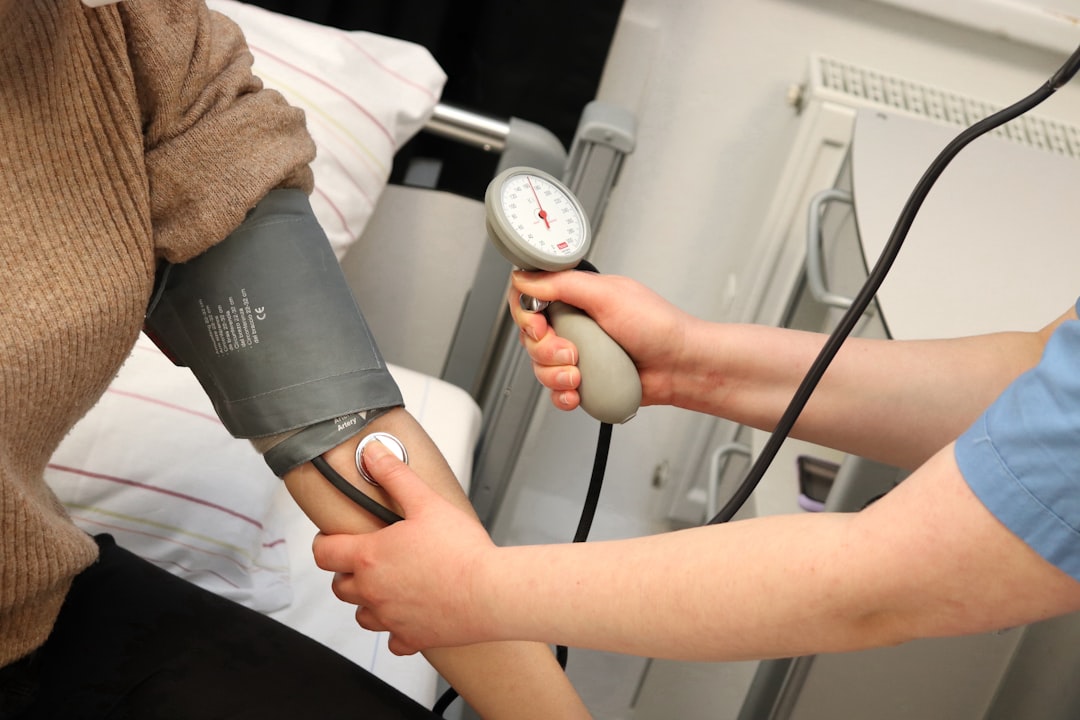
Here’s the mistake I made for years without knowing it: wearing a standard cuff on an arm that needed a large. A cuff that’s too narrow overestimates pressure; too wide and it underestimates. Either way, your trend line is lying to you. Measure your upper arm with a soft tape measure before you buy anything. Standard cuffs typically cover roughly 9 to 13 inches; beyond that, you want a large or extra-large cuff, and your readings will thank you for it.
If your current monitor’s cuff doesn’t fit, you don’t necessarily need a new machine — universal cuffs like this large adult cuff attach to most major brands. For fuller coverage, this dual-size set with both 9–17″ and 13–21″ cuffs covers an entire household on one device, which is exactly what we ended up doing for my parents’ place. One machine, everyone measured correctly.
How to Take a Reading Worth Trusting
A perfect monitor used badly produces junk, so let’s lock the ritual. Same time windows every day — morning before coffee, evening before bed. Empty bladder. Back supported, feet flat on the floor, arm resting at heart level on a table. No talking, no phone scrolling, no crossed legs; sit quietly for five minutes first. Then take two readings a minute apart and log the average. Caffeine, a full meal, exercise, and even a tense email thread can each nudge the number, so keep the conditions boring and repeatable.

And please, write things down or let the app do it. The magic isn’t any single reading — it’s the eight-week trend that shows your habits working or not working. My log is what turned a scary office number into a story about Monday night volleyball and shaker-cup sodium. Data without a journal is just anxiety with extra steps.
The Habits That Move the Number
The monitor measures; it doesn’t fix. The fixing happens in the boring hours of the day. Regular aerobic movement is the most reliable lever I’ve found — even easy zone-2 work, the kind I get from my walking pad desk experiment, shows up in my evening readings within days of restarting. Strength training helps too, and if you need motivation there, remember that metrics like grip strength and blood pressure are two chapters of the same longevity book.

Watch the sneaky sodium, especially in “healthy” packaged food, and be honest about alcohol’s delayed effect on next-morning readings. Heat therapy earned an unexpected mention in my logs as well — my evening numbers after sessions in my infrared sauna blanket were consistently the lowest of my week, which lines up with what the vascular research suggests about heat exposure and vessel flexibility. None of this is medical advice; it’s my data, and it’s yours to compare against your own.

The cheapest experiment you can run: take your morning reading before caffeine for two weeks, then thirty minutes after your usual cup for two weeks. The difference for some people is the entire “problem” they were worried about. For me it was about four points — enough to know my first espresso belongs after the cuff, not before it.
The Bottom Line
If you want the monitor I trust most, get the Omron Iron. If you want validated accuracy for less, the Bronze is the value king. Gift-shopping for a parent who resists complicated tech? The iHealth Track’s giant display wins them over. Frequent travelers and cuff-averse family members do fine with the Omron Gold wrist or the coaching Oklar wrist unit, used with proper positioning. Whatever you choose, measure your arm first, sit still, and log everything.

Six weeks of twice-daily readings rewired how I think about my health stack. My ring still tracks my sleep and my CGM still watches my glucose, but the little machine on my kitchen counter now tells the story none of them can — quietly, twice a day, in numbers my doctor actually charts. That’s a lot of peace of mind for less than the cost of a month of boutique fitness classes. Measure the number your wearables can’t. Future-you will be grateful you started today.



2 Comments on “The Number My Smart Ring Can’t See: A Home Blood Pressure Monitor Showdown”