Ellen has been in my Tuesday strength class for three years, and she is not a quiet woman. She counts her reps out loud. She heckles my playlist. So when she asked me to repeat the cue for goblet squats — three times in a row, leaning in each time — I noticed. So did the two women next to her. After class she laughed it off: “Everyone mumbles now, Soph.” I’ve heard that exact sentence before, from my father, standing next to a television turned up so loud the neighbors could follow the plot.
Here’s the part most people never learn: nobody’s first sign of hearing loss is volume. It’s consonants. The soft, high-frequency sounds — f, s, th, sh — sit in the range from roughly 2,000 to 8,000 hertz, and that’s exactly where age-related loss begins. Vowels still land, consonants vanish, and the whole world starts mumbling. Once you know that, you hear the tell everywhere: the “what?” at loud dinners, the suspicion that the bartender is slurring, the spouse who repeats the coffee order.
I spend my days tracking numbers with clients — resting heart rate, grip, hemoglobin, sleep. And this fall I added one more line to the intake sheet, because the research around it has gotten too loud to ignore. Hearing might be the most under-tracked longevity metric we have.
Why I Now Put Ears on the Longevity Dashboard
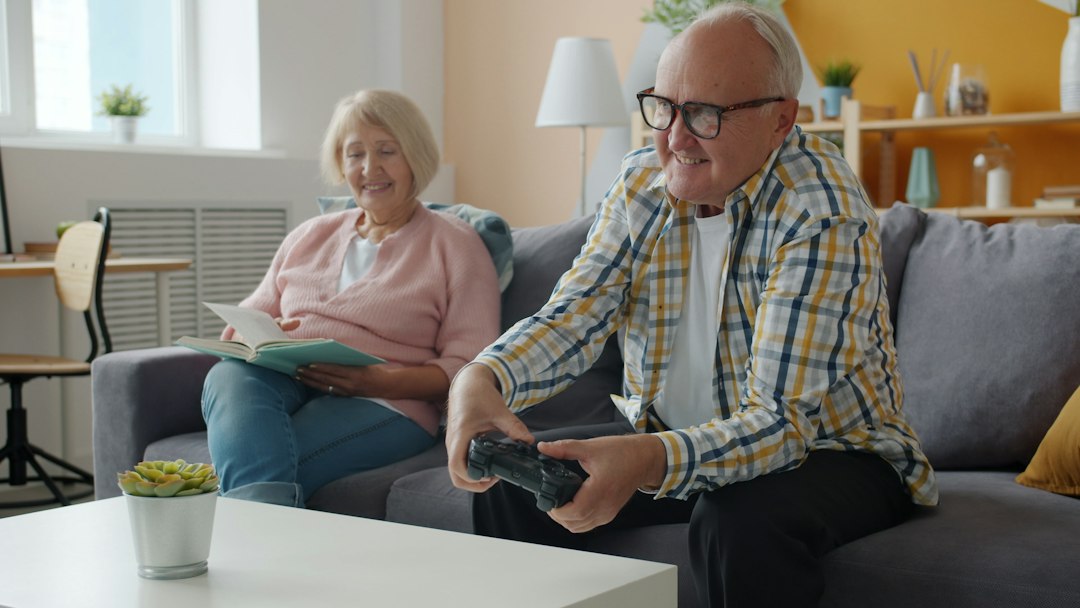
I treat hearing the way I treat the sit-and-rise test and grip strength: a cheap, honest signal of how the whole system is aging. The Lancet Commission on dementia prevention has consistently flagged untreated hearing loss as one of the largest modifiable risk factors for cognitive decline in midlife. The leading theory is ugly in a fascinating way — when your ears stop delivering clean signal, your brain burns conscious effort decoding mush instead of storing memories, and it quietly starts withdrawing from the hardest listening environments of all: conversations.
That’s the spiral I care about as a coach. It rarely announces itself. It shows up as skipping the noisy restaurant, then the big family dinner, then the volunteer shift. Social connection is load-bearing for health, and hearing loss saws at the beams.
There’s a balance angle, too. The inner ear’s vestibular system is part of your fall-protection hardware, which is why hearing checks belong in the same conversation as the one-foot balance test once you’re past fifty. The good news is that this is also the most fixable item on the list — and for the first time, fixing it doesn’t require a four-figure check.

The Four-Thousand-Dollar Wall Finally Cracked
For decades the math was brutal. A properly fitted pair of prescription hearing aids ran, on average, around $4,600 — often out of pocket, because most insurance plans quietly skipped the benefit. People patched over the loss for a decade instead. Then in late 2022 the FDA created the over-the-counter category: adults with perceived mild-to-moderate loss could buy hearing aids directly, no exam, no fitting appointment, no gatekeeper.
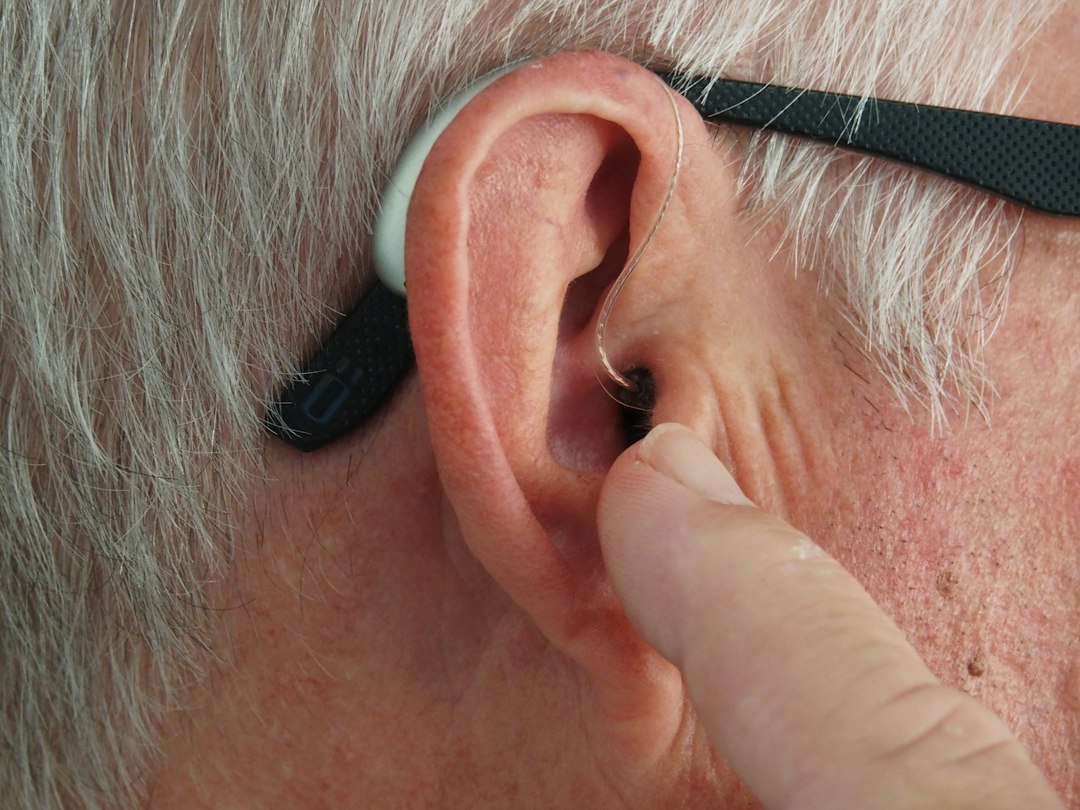
The first wave was clunky. The 2026 wave is not. Anker — the company that made charging cables a personality trait — announced its first OTC hearing aids at IFA this September, which tells you the category has gone mainstream. Elehear’s tiny Delight went the other direction, shrinking into a nearly invisible in-canal device that uses an AI engine to adapt sound processing in real time. JLab blurred the line entirely with the Hear OTC, a hybrid that works as a wireless earbud and a hearing aid with preset amplification modes. If you want to browse where the market has landed, the current crop of OTC hearing aids for adults runs from about $99 to $999 — still a fraction of the prescription route.
What the money actually buys, at every tier, is software. Today’s self-fitting rechargeable pairs walk you through a hearing screen in an app, then shape amplification to your own audiogram-ish curve — the same basic idea Sony built into its clinic-derived CRE line, which you can find alongside Sony’s CRE-C10 in most searches now. This is the part my inner exercise physiologist loves: progressive overload for your ears, programmed by the device itself.
Who These Little Devices Are Actually For
Bold print, because it matters: OTC devices are for adults with mild-to-moderate loss. They are not for sudden hearing loss, loss in only one ear, ringing that appeared out of nowhere, pain, or drainage — any of those means a doctor, this week, not a shopping cart. My rule with clients is simpler: screen first, shop second.
The screening costs nothing. A validated phone hearing test takes five quiet minutes and gives you a rough threshold curve — the “26 decibels or worse across the speech frequencies” line is where “mild loss” begins. My team now runs the whispered-voice check in intakes: stand an arm’s length behind someone, exhale fully, whisper three numbers. If they miss more than they catch, we schedule the real test. And for people who only struggle in the occasional boardroom or theater, a cheap personal sound amplifier is a legitimate stepping stone — not a medical device, but often enough for the “I only need help at meetings” crowd.
Where I see people fail is buying for price alone. The $99 end of the pool — Audien’s budget pairs and their many imitators — can genuinely help a quiet-room conversation. Take that same unit into a loud restaurant, though, and amplification without directional microphones turns the table into a wall of noise. Buy for the room you actually struggle in.
Three Devices, Six Weeks, and a Few Humbling Evenings
I don’t recommend anything I haven’t lived with, so my team and I ran a small field test this season: three volunteers, three devices, six weeks of loud dinners and grandkid visits. The findings were humbling and useful. First, the self-fitting apps genuinely work — pure-tone screening, then the device builds your profile. Second, feedback whine is the tell of a cheap unit; the good ones cancel their own whistle before you hear it. Third, rechargeable cases matter more than you’d think for hands that also struggle with pill bottles. And fourth, Bluetooth changed the game for one volunteer — streaming the TV straight to both ears turned caption-watching back into television.
The upgrade path surprised me too. Lexie’s B2, tuned with Bose-derived sound processing, let my volunteer video-chat with a real specialist from her kitchen — remote fine-tuning that used to mean three clinic visits. You can compare Lexie’s B2 and its subscription rivals directly, and most now carry 45-day return windows, which is the only way to trial hearing tech honestly. Brains need weeks to relearn consonants; a weekend test tells you nothing.
Expect an adjustment curve, because this is training, not magic. We started volunteers at two hours a day and built up. The amplification sounds tinny and strange at first — everyone said so — right up until the moment, around week three, when someone’s granddaughter’s voice snapped into focus and both of them teared up. That’s not a gadget review moment. That’s the one I do this for.

Protect the Pair You Still Have
Half of you reading this still test fine, and your job is different: keep it that way. Noise damage is dose, not drama — 85 decibels is the all-day safety line, and a spin class, a leaf blower, or a live show regularly clears 100. I keep flat-attenuation earplugs in three places: gym bag, coat pocket, bedside. Not the foam oranges from the pharmacy, which mute music into mud — high-fidelity plugs that lower volume evenly, like Loop’s Experience earplugs or the classic concert-grade filters my crew hands out at loud events.
The 60/60 rule still rules earbuds: no more than 60 percent volume for 60 minutes at a stretch. And if you run or cycle with traffic noise, my open-ear headphone talk applies double when your hearing is already fraying — situational awareness is a safety feature your ears provide for free.
Leave the Cotton Swabs on the Shelf
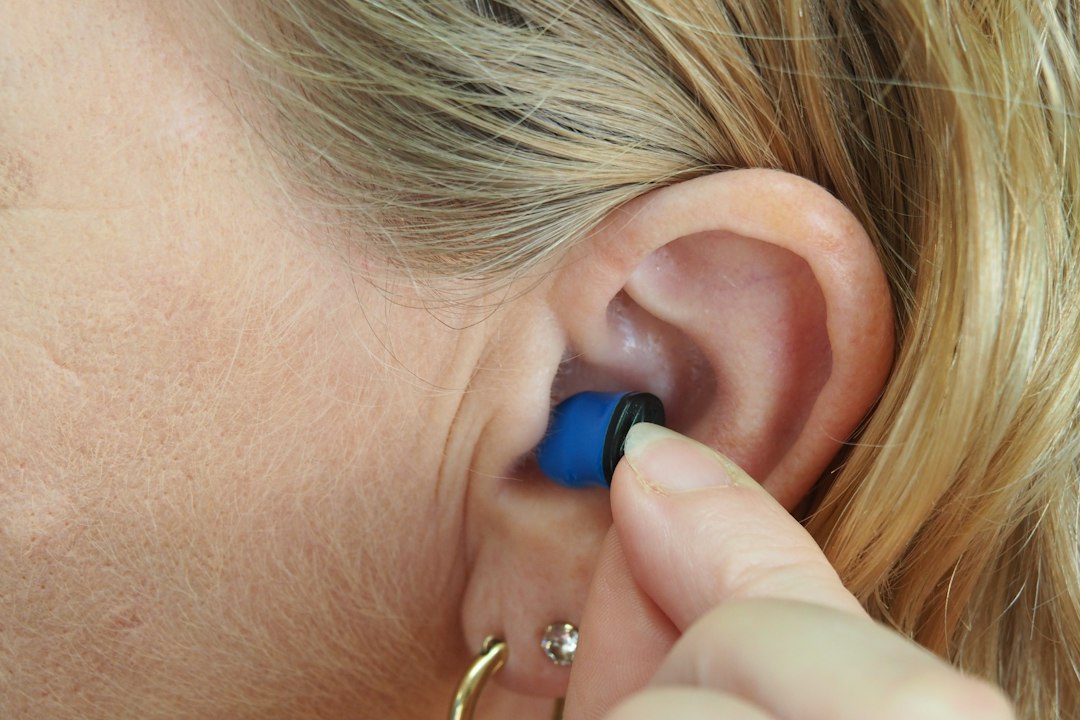
Quick housekeeping, because I hear this weekly: ears are self-cleaning. Swabs shove wax deeper and pack it against the eardrum — cerumen belongs in the ear canal, quietly migrating out on its own. When wax does build into a genuine plug (muffled sound, fullness, your new aids whistling), gentle warm-water irrigation is the home fix my clients tolerate best; a basic ear washer kit costs less than a co-pay. The camera-tipped digital otoscopes are my testers’ favorite guilty pleasure — seeing your own eardrum on your phone screen makes the whole topic feel less like aging and more like exploration. Stubborn plugs still belong with a professional. Don’t power-wash past pain.
The Five-Minute October Habit
Here’s my ask, and it’s small. Every October — when the clocks change and you’re already redoing your routines — run a five-minute phone hearing test and write the result down. Baseline at forty, annually from fifty-five, same as bloodwork. If the number drifts, you’ve caught it while it’s still an easy fix instead of a lost decade of dinner conversations.

Ellen did exactly that this month. Mild-to-moderate, both ears, mostly above 3,000 hertz — classic consonant erosion. She’s three weeks into a self-fitted pair, and last Tuesday she heckled my playlist without one “what?” Her word for the change was “restful,” and I keep thinking about that. Hearing well isn’t effortful sharpness. It’s the quiet underneath everything else. Guard it like the longevity asset it is — your future self is listening.