October has a way of ambushing my evening runners. Three weeks ago they were cruising home from work in golden six-o’clock light, shorts on, sunglasses shoved into their waistbands. Now that same six o’clock rush is pitch black, the crosswalks are crowded with headlights, and the shoulder they’ve trusted all summer has become a place where cars simply do not expect to find a human being.
I learned this lesson the hard way a few years back, when one of my Tuesday-night group regulars came in shaking. A driver had turned across her path in a parking lot, stopped six inches short, and insisted — honestly, visibly confused — that he never saw her. She was wearing black leggings, a charcoal jacket, and a reflective logo about the size of a postage stamp. That night, my coaching team and I rebuilt how we dress every athlete who trains before sunrise or after sunset, and we’ve run the same glow audit every October since. Running in the dark is a skill, and this is the gear that teaches it.
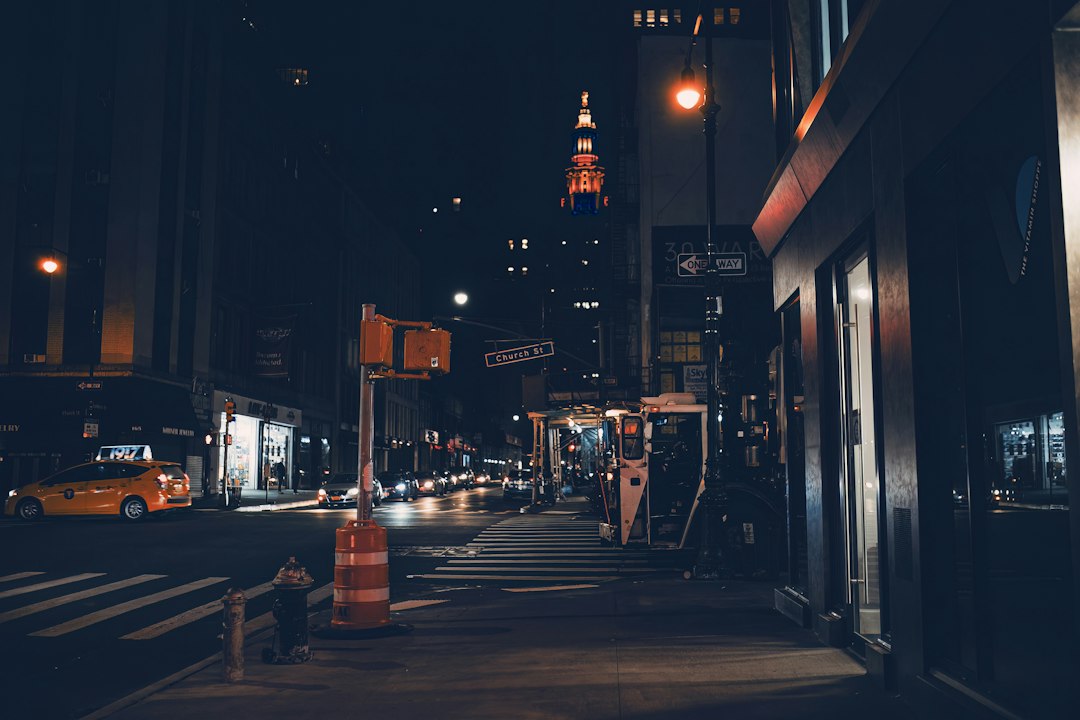
The Math That Changed How I Dress
Let’s start with numbers, because the numbers are genuinely startling. Research on pedestrian conspicuity keeps landing in the same range: a person in dark clothing becomes visible to an approaching driver at roughly 55 to 100 feet. Add reflective material and that detection distance stretches to 400, 500, sometimes beyond 600 feet depending on the study.
Now stack that against stopping distance. At 40 miles per hour, a car covers about 59 feet every single second, and an alert driver on dry pavement still needs well over a hundred feet to react and brake to a stop. Run the two columns side by side and the conclusion is uncomfortable: a driver who first spots a dark-clothed runner at 80 feet physically cannot stop in time. The math does not allow it. The same driver who spots reflective material at 500 feet gets seven or eight full seconds to lift off the gas, drift left, and give you the lane.
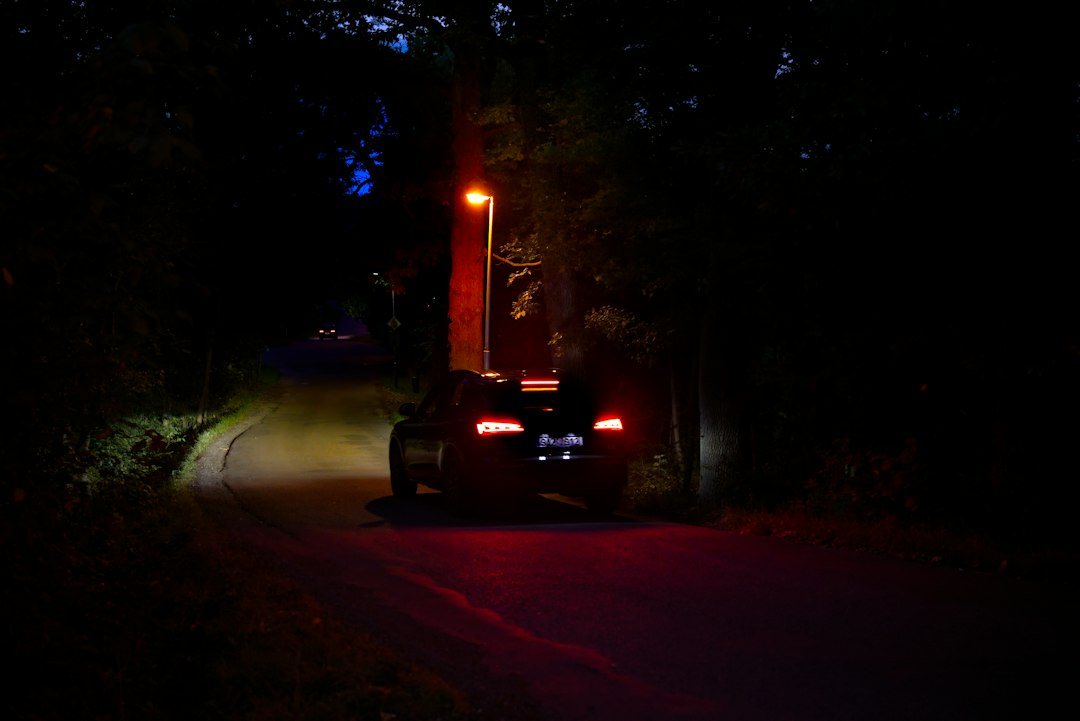
That gap — between invisible-at-55-feet and unmistakable-at-500 — is the entire reason this article exists. None of it requires talent or training adaptations. It requires about sixty dollars of gear and two minutes of attention before you walk out the door.
Start With a Body of Light
The first thing I hand a client in October is a vest, and there are two flavors. The flashy option is the light-up LED vests that turn you into a walking glow stick — active lights that show up whether or not any headlight happens to be pointed your way. They’re especially good on twisting suburban roads where a driver’s beams sweep across you sideways at intersections, exactly the geometry where passive reflectives fail. My walkers over sixty get them automatically, because older drivers need more light and more time to recognize a shape.
The second flavor is quieter and, dollar for dollar, my favorite piece of safety equipment in the entire industry: a classic reflective running vest. The material is retroreflective, which means it bounces light straight back toward its source instead of scattering it — so the only person on the road who sees it blazing is the person behind a set of headlights. That’s not a bug. That’s the whole point. To everyone else you look like a normal human being; to the one driver who matters, you’re a flare.
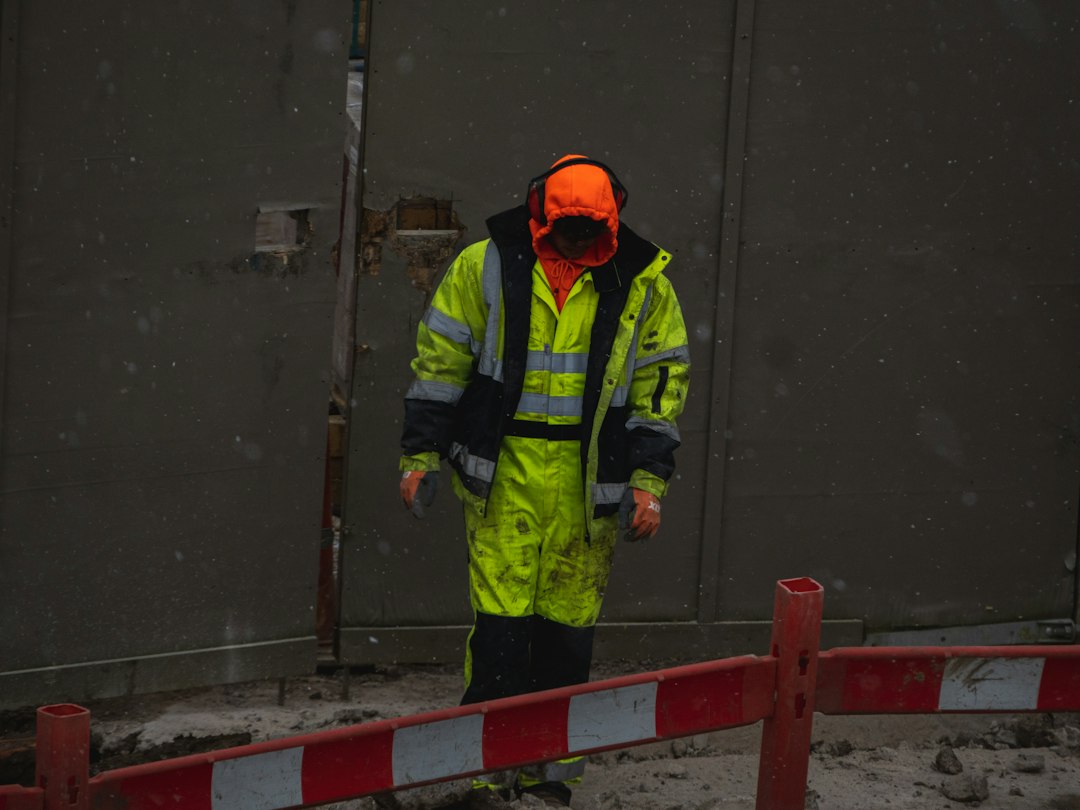
One myth worth killing while we’re here: bright colors alone do almost nothing after dark. That neon yellow jacket that screams during your lunchtime run is a gray ghost at night unless something is illuminating it. Road crews wear neon yellow and silver stripes for a reason — the neon is for dusk and dawn, the reflective banding is for the hours when it actually saves lives.
Light the Road for Yourself
Being seen is half the equation. Seeing is the other half, and this is where I lose people to stubbornness every year. “I know my route,” they tell me. Then they roll an ankle on a curb shadow, or a pothole that wasn’t there in August eats a whole stride.
The fix is a beam. A rechargeable running headlamp in the 200-to-300-lumen range lights up sidewalk seams, ice patches, and raccoon surprises far enough ahead to react, and as a bonus it doubles your visibility to every driver approaching head-on. Tilt it down about 30 degrees — you want to light the ground ten feet ahead, not blind oncoming traffic. For my trail athletes in the fall, we go brighter, because roots and rocks don’t forgive.
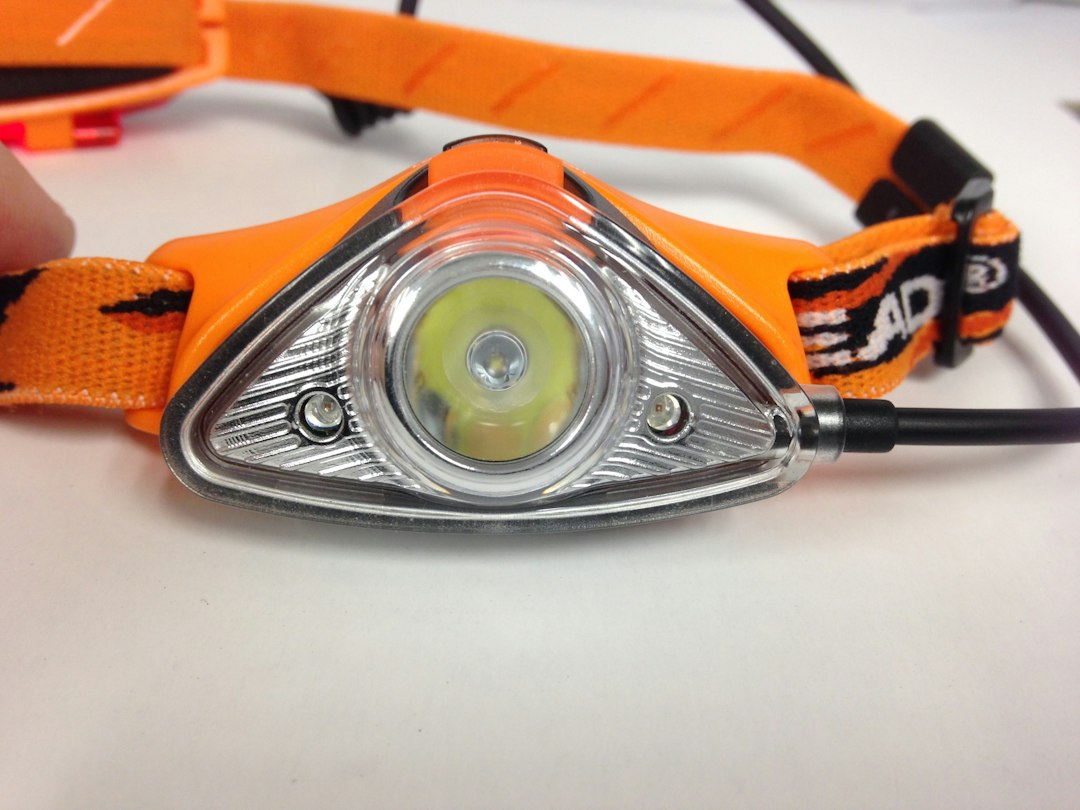
If headlamp straps give you helmet hair you’re not willing to negotiate, knuckle lights put a soft wide beam exactly where your hand naturally points, and they’ve become the sleeper favorite of my walking groups. My last trick is cheap redundancy: a pair of clip-on LED lights, white facing forward and red blinking backward, clipped to the back of your vest or waistband. The rear red flasher matters more than people think — most close calls in my clients’ logs come from behind on unlit roads.
Make Your Moving Parts Glow
Here is the most elegant finding in all of visibility research, and the one I repeat most often: drivers don’t just detect light, they recognize patterns of movement. The human brain is exquisitely tuned to spot the strobe of joints — feet, ankles, knees, hands — swinging in a rhythm that says “person.” A single reflective patch on your chest reads as an ambiguous floating dot. Reflective material on your ankles and wrists reads instantly as a human being in motion, because the lights themselves appear to move the way people move.
So we engineer for biomotion. Reflective ankle bands sit at exactly the height where low-beam headlights actually strike a runner, sweeping through the brightest part of the beam with every stride. Reflective running gloves put two fireflies swinging at hip height, and they keep your hands warm, which in October is not a side benefit. For the runners who refuse every strap and band on principle, a roll of reflective tape works wonders stuck to shoe heels, jacket cuffs, and the back of a cap.
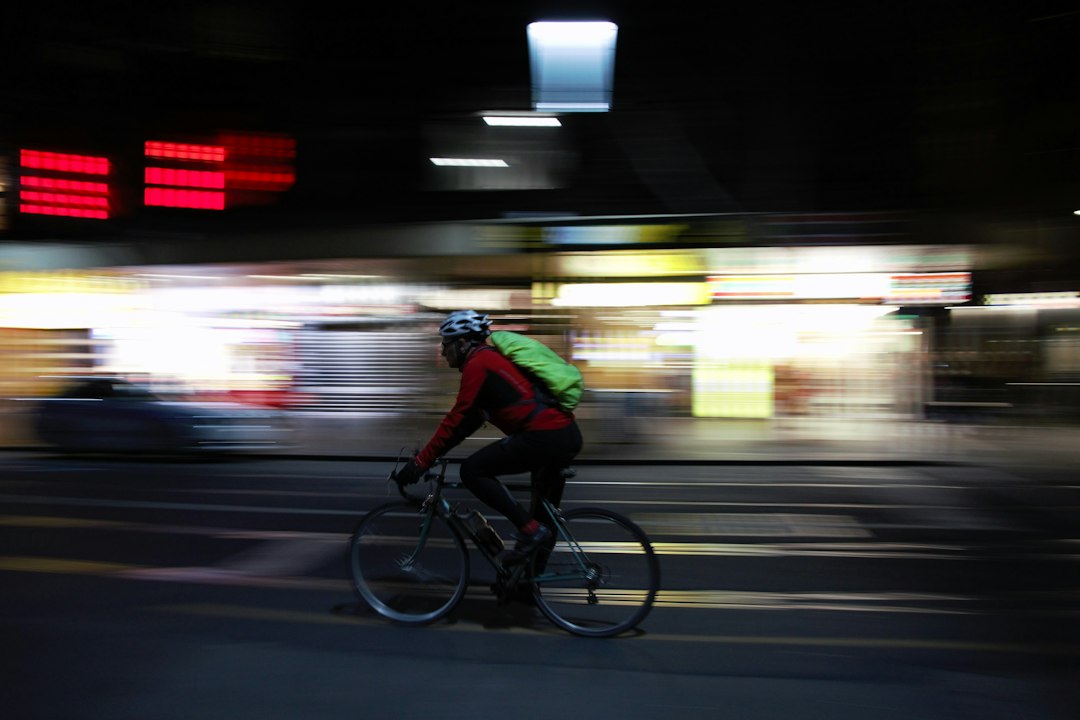
And if you’re replacing outerwear this season anyway, make the garment do the work: a running jacket with reflectivity woven through the sleeves, shoulders, and back turns your entire silhouette into a signal. My team keeps a shortlist of the ones that survived our washer test — the cheap screen-printed reflectivity that flakes off after five washes is how people end up with false confidence in November.
The Dog Deserves a Beacon Too
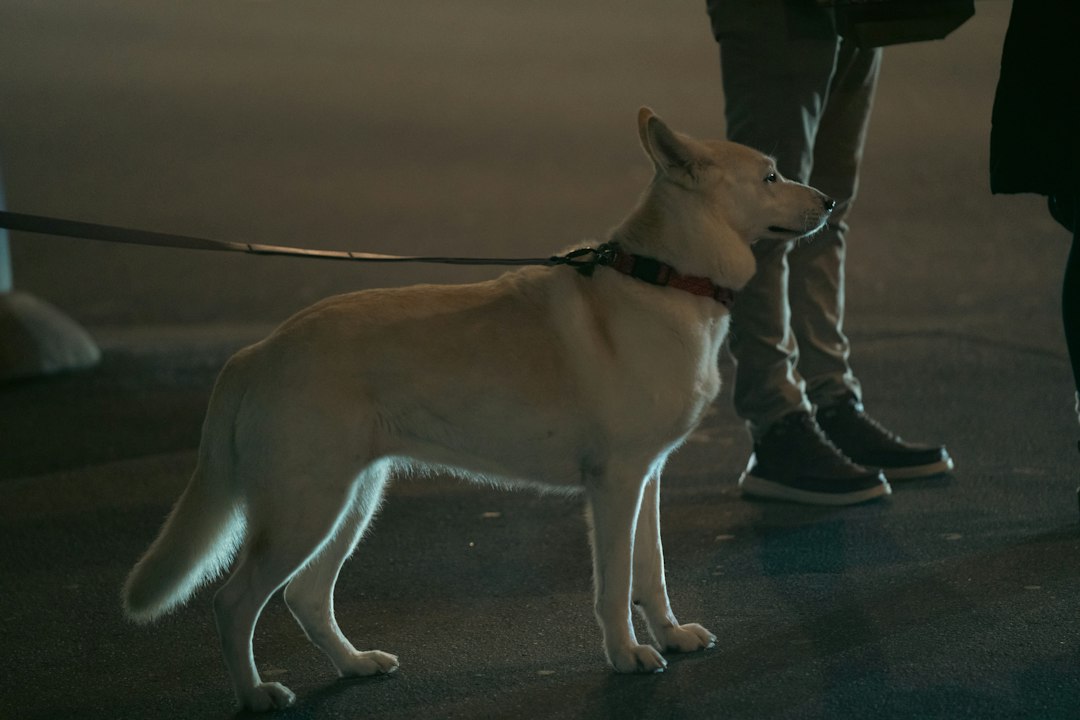
Half my five-o’clock clients aren’t runners at all — they’re dog walkers on shoulder-less country roads, and they’re the least visible people in my entire roster. The dog is low, below the headlight beam. The leash is dark. The human is bundled in a black puffer. From behind a windshield, that whole scene simply does not exist until the last second.
The upgrade is delightfully simple. An LED dog leash puts a glowing line exactly where the driver’s eye is already scanning low, and most of the ones we’ve tested run eight-plus hours on a charge, long enough for a week of walks. Add an LED armband on the human end of the leash and you’ve marked both halves of the team. One of my clients reports her black lab has become a minor neighborhood celebrity — “the dog with the lightsaber leash.” The dog does not mind the fame.
The Two-Minute Driveway Audit
Before gear, before gadgets, this is the habit that actually changes outcomes, and it takes less time than tying a double knot. Every athlete on my roster runs the same check before dark-weather workouts:
- Face traffic. You should see headlights coming, not trust taillights to see you. If you must run with traffic for a stretch, this is the moment your rear red flasher earns its keep.
- Three heights of glow. Something at the ankles, something at the torso, something at the wrists. That’s the biomotion triangle.
- Two lights minimum. One pointing down to light the surface, one blinking to be seen. Different jobs, both non-negotiable.
- Treat every driveway and parking exit as live. Assume the driver is looking for other cars, never for you — because honestly, they usually are.
- One ear open, always. I give every runner I coach the same open-ear headphone talk: bone conduction or nothing after dark, because your ears are your rearview mirror.
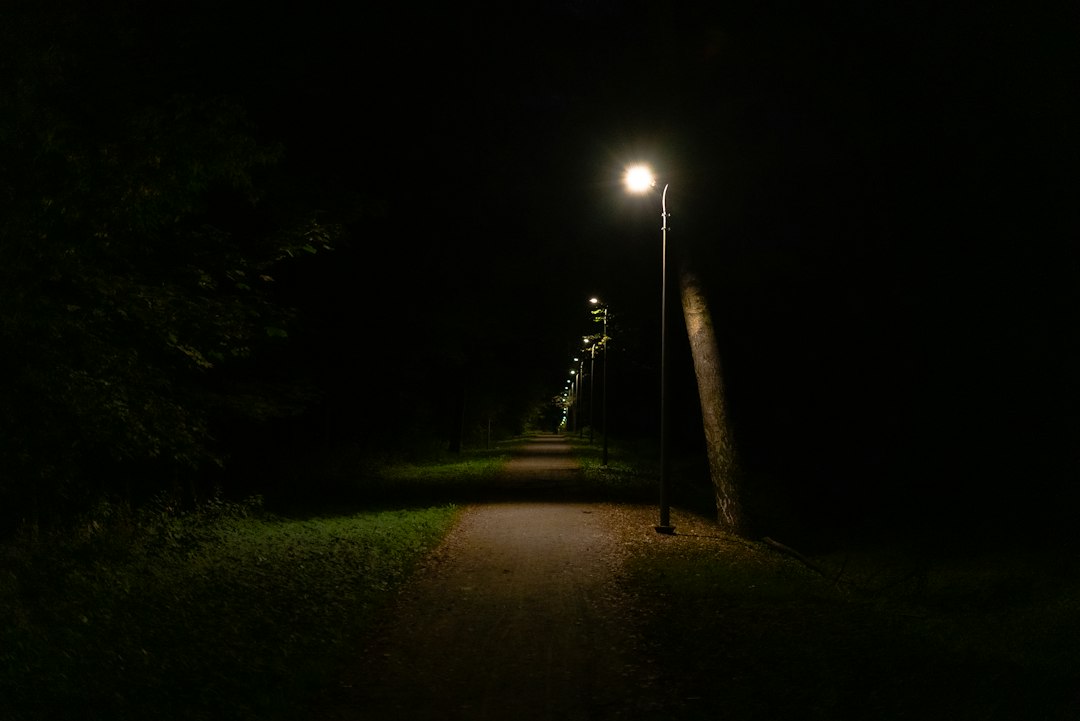
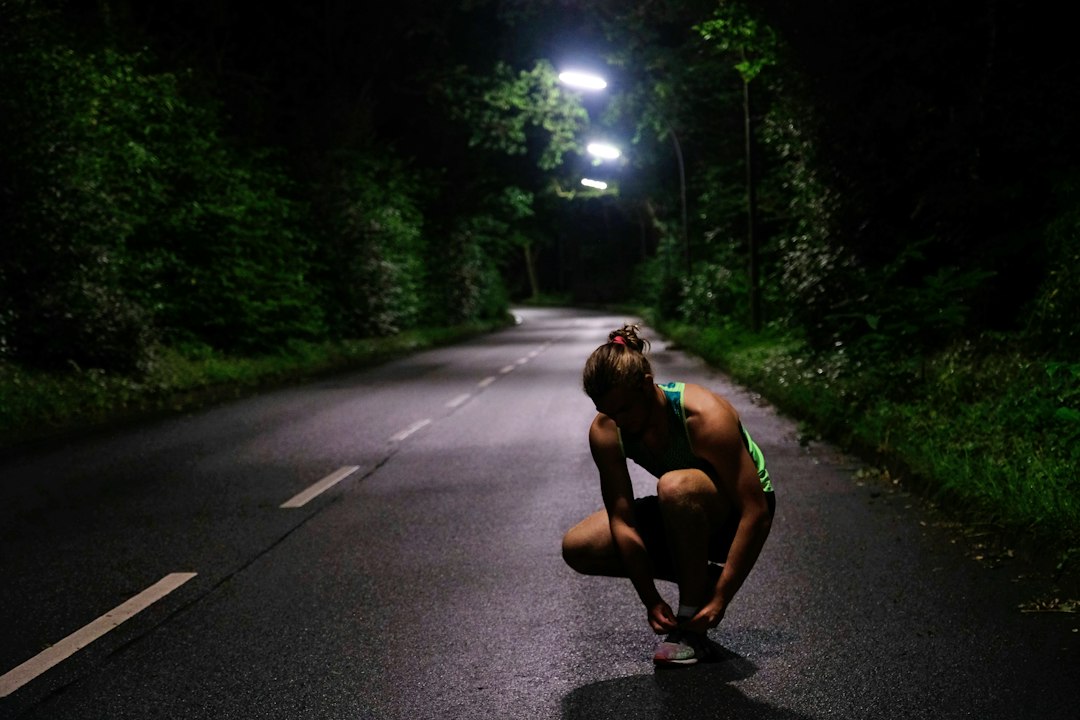
Route choice is the quiet sixth rule. My light exit strategy for the dark weeks means trading my prettiest routes for my lit ones — the loop with streetlights, the path with the intersection buttons, the stretch where houses mean porch lights. If you felt the evenings closing in back in September, you already know what losing two minutes of daylight a day does to a training schedule. The antidote isn’t moving inside; it’s making the outside survivable.
But I’ll Look Like a Crossing Guard
Every year, someone says it. Every year, I give the same answer: crossing guards survive traffic for a living, and they dress like it on purpose. But the honest truth is that modern visibility gear has gotten genuinely good-looking — sleek black jackets with silver thread woven through the weave, slim LED bands in colors that don’t scream construction site, vests light enough to forget you’re wearing one. My favorite compliment of last winter came from a client whose daughter told her she “looked like a superhero” on their evening walks. She was wearing a headlamp and an LED armband. Total cost: about forty dollars.
The other objection I hear is “but it’s only dusk.” Dusk, my friends, is the most dangerous hour of all — enough residual light that drivers feel confident, not enough that they can actually resolve a dark shape against the road. If you’re questioning whether you need the gear, you’ve already answered the question. And remember that October gear stacks: pull your reflective layers over the twenty-degrees-warmer dressing rule that keeps my clients outside past Thanksgiving, and you’ve solved warmth and visibility in one wardrobe decision.
The darkness isn’t going anywhere until spring. That’s not a reason to retreat to the treadmill for five months — it’s a reason to spend sixty dollars and two minutes, and then go enjoy the quietest, most beautiful running hours of the year with your whole nervous system relaxed. Be the brightest thing on the road. The driver who sees you from five hundred feet away will never know you saved their evening too.