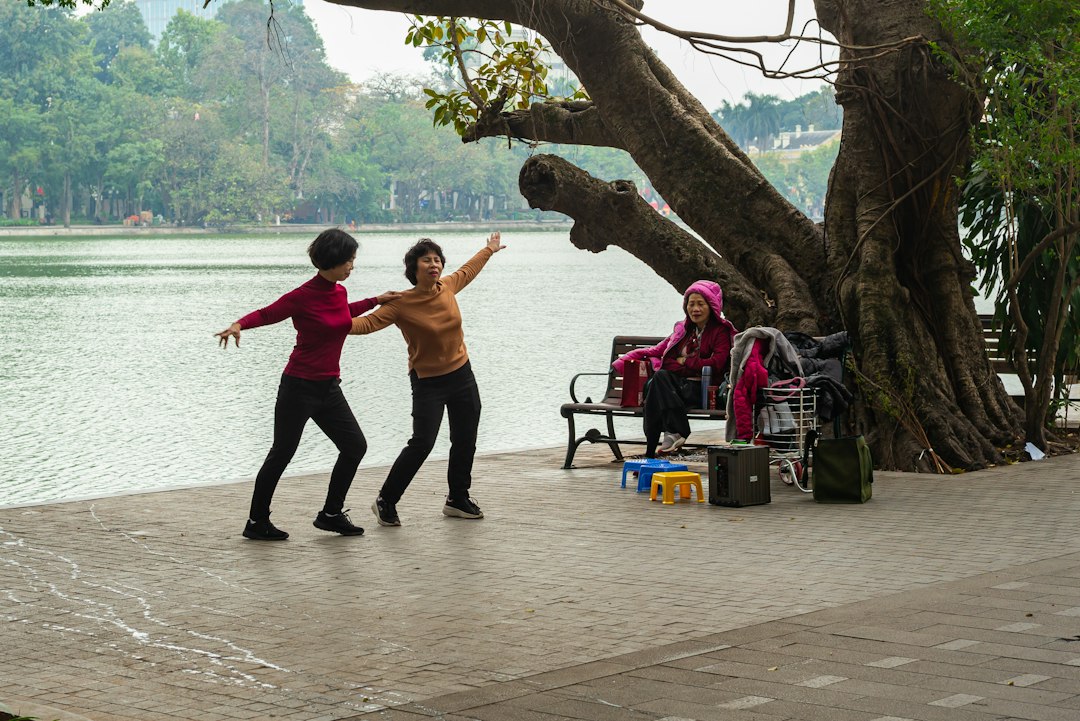
The first hard frost hit my backyard on Tuesday. I went out at 6:40 with my coffee and found every leaf on the patio furred white, the bird bath sealed shut, and my breath hanging in the air like a question. That was the moment I knew it was time to move my morning practice indoors for the season. Not my lifting. I mean the slow thing: the twenty minutes of tai chi that has quietly become the most important part of my training week.
If you had told me at twenty-two, when I was chasing a heptathlon qualifying mark and measuring my life in hundredths of a second, that I would one day call a practice done at the speed of honey “training,” I would have laughed you off the track. But here we are. My clients ask about it constantly this fall, and they are not alone. Trend trackers show interest in tai chi and qigong up roughly 29 percent over the past year while yoga searches slipped by more than 20. People want something gentler and kinder to their joints.
So this is the four-week plan my team and I put together for every client who asks how to start tai chi for beginners at home. No studio, no special floor, no flexibility required. Just a cleared corner of the living room, a willingness to go slower than feels reasonable, and about the same amount of time you spend scrolling before bed.
Why the Dark Months Are the Right Time to Start
The clocks fall back this Sunday. For most of us that means the outdoor walking window shrinks to a lunchtime sliver, sidewalks get slick, and the motivation to lace up at 5:30 p.m. in full darkness evaporates. I wrote about some of the indoor cardio options in my cozy cardio audit for dark evenings, and those are fantastic for your heart. Tai chi fills a different gap. It trains the things winter quietly erodes: balance, leg strength in odd angles, ankle stability, and a calm nervous system.
Winter is also when falls spike, partly from ice and partly because we sit more and lose the daily balance practice of trails and curbs. Last week I wrote about the ten-second single-leg test and why balance is the longevity skill almost nobody trains on purpose. Tai chi is the most pleasant way I know to train it on purpose, every single day, without a wobble board in sight.

What the research actually says
I am careful with wellness claims, so here is what I am comfortable telling clients. A 2025 meta-analysis that pooled 21 randomized controlled trials found that tai chi meaningfully improved balance, walking speed, and confidence about not falling in healthy older adults, and lowered fall risk compared with doing nothing. That lines up with decades of fall-prevention work.
Blood pressure is the surprise finding I love sharing. In a randomized trial published in JAMA Network Open, 342 adults with elevated blood pressure did either tai chi or conventional aerobic exercise, four hour-long sessions a week for a year. The tai chi group’s systolic pressure dropped by about 7 points on average, compared with about 4.6 in the aerobic group. If you are tracking your own numbers at home, my home blood pressure monitor showdown explains how to measure correctly, and a validated cuff like the Omron Platinum Upper Arm Blood Pressure Monitor makes a great four-week before-and-after experiment.
Sleep is the third piece. A 2025 trial in The BMJ compared tai chi with cognitive behavioral therapy for insomnia, the gold-standard treatment, in adults over 50. Therapy won at three months. But by fifteen months, tai chi had caught up and performed just as well. That is a long game, and it tells me consistency matters more than intensity. None of this replaces your doctor’s advice, and if you take blood pressure medication or get dizzy when you stand, check in with your clinician before you start. For most people, though, the risk is tiny and the upside is real.
Clearing the Corner: Your Home Practice Space
A space about six by eight feet, roughly a small rug, is plenty. Push the coffee table back and look down. Cold, hard floors make your feet clench, and clenched feet ruin balance.
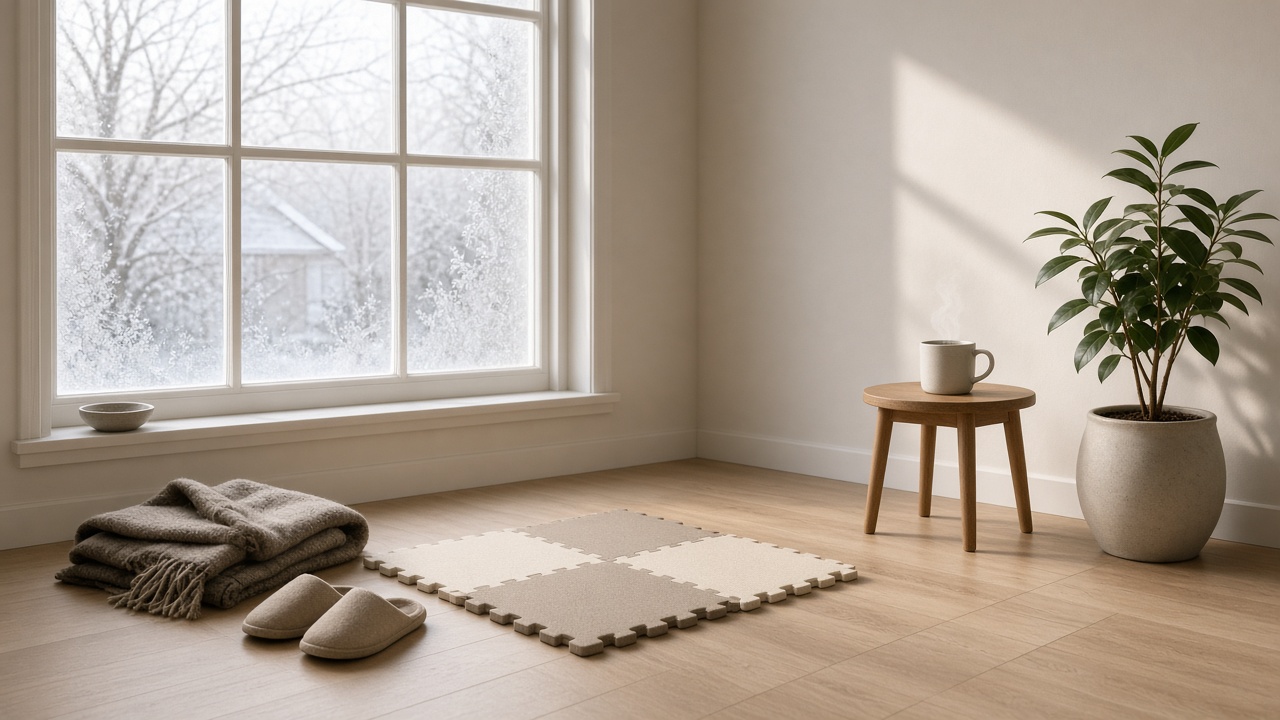
If your practice corner is tile or a drafty basement slab, lay down a few ProsourceFit Puzzle Exercise Mat squares. They are firm enough to pivot on, warm enough to stand on barefoot, and they pull apart and stack behind the couch when guests come over. Avoid thick, squishy yoga mats for tai chi. The movements involve slow pivots on the heel and ball of the foot, and a soft surface grabs your foot mid-turn.
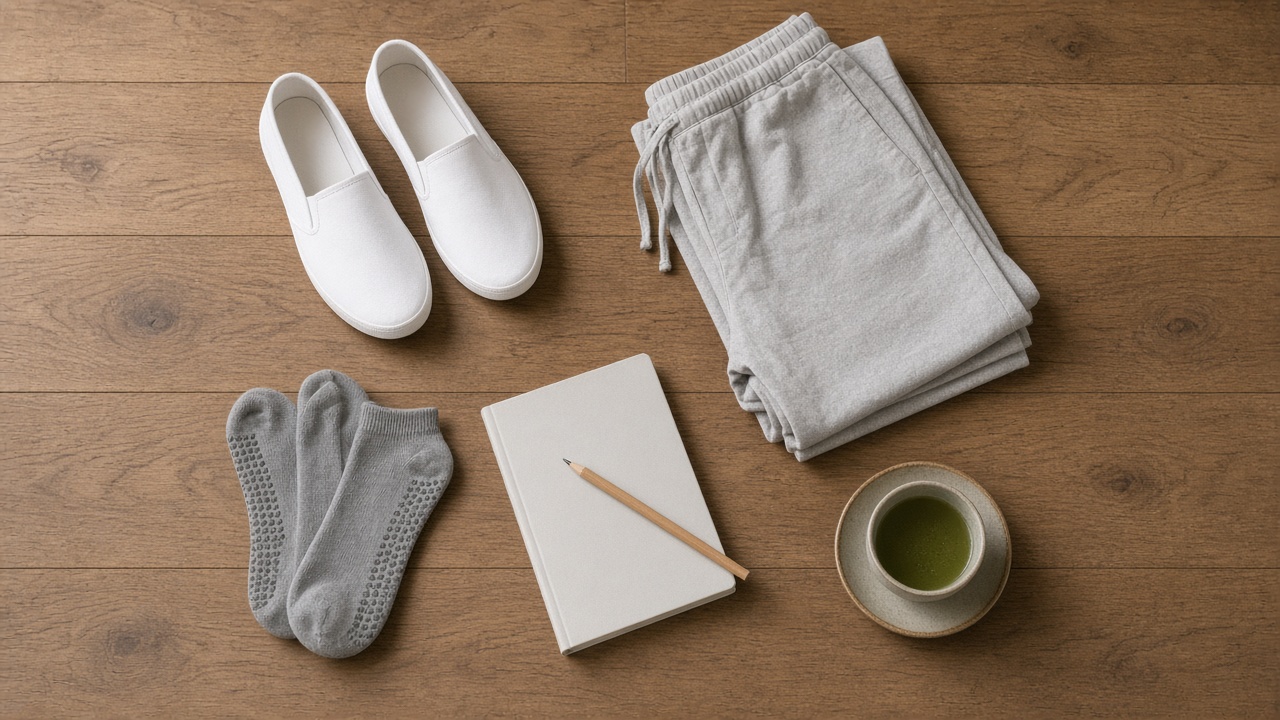
Footwear is a personal decision. Traditional practice uses flat, flexible shoes with thin soles so you can feel the floor. I teach my clients barefoot at first because it gives the best feedback, but if your feet get cold or your floor is slick, a pair of Feiyue Classic Canvas Martial Arts Shoes is the honest-to-goodness classic. They are cheap, light, and flat as a pancake. My second choice for chilly mornings is Non-Slip Grip Socks, which keep your toes warm without the slide of regular socks on hardwood.
Clothing should let your knees bend deeply and your hips sink without tugging. Any loose sweatpants work. If you want the traditional feel, Cotton-Linen Tai Chi Pants have a drop crotch and elastic cuffs that stay out of your way during low stances.
Week One: Learn to Stand, Then Learn to Shift
Week one is humbling. You will spend most of it learning how to stand.
Daily practice, 10 minutes:
- Standing posture (3 minutes). Feet shoulder-width apart, toes pointing forward, knees softly bent so they are just unlocked. Let your tailbone drop slightly, like you are about to perch on a tall stool. Arms hang loose. Breathe through your nose and feel your weight spread across the whole foot: heel, outer edge, and the base of the big toe.
- Side-to-side weight shifts (4 minutes). Slowly move about 70 percent of your weight into your right foot without leaning your upper body. Pause. Glide back through center and into your left foot. Each shift should take about four seconds. You will feel your thighs working much harder than you expect.
- Opening and closing (3 minutes). Inhale as you float your hands up to chest height, palms down, as if they are resting on water. Exhale as you let them sink back down while your knees soften slightly. Repeat until the timer ends.
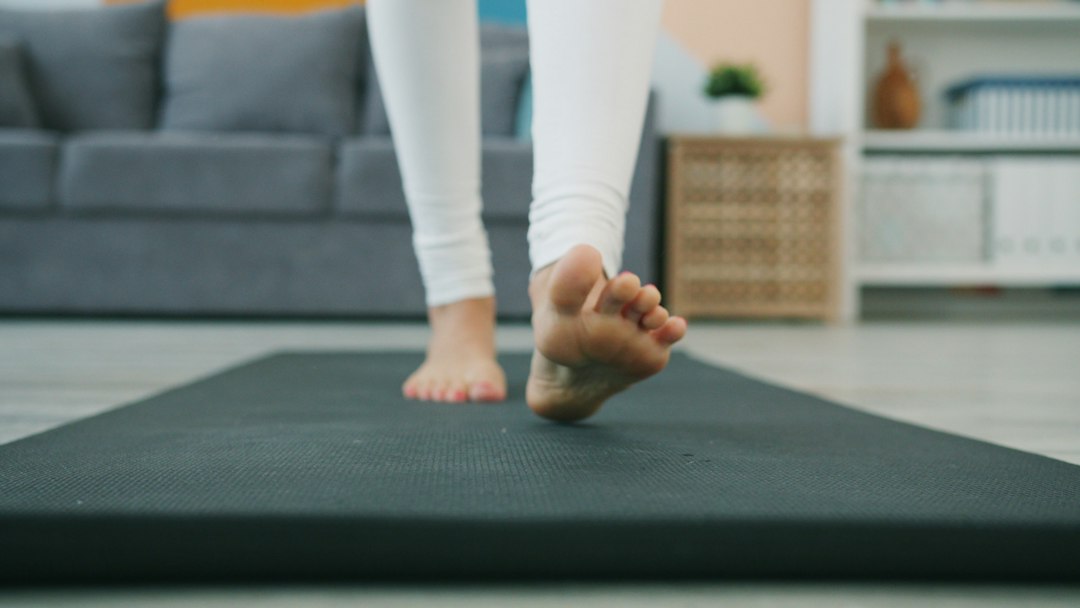
Here is the coaching cue I repeat a hundred times in week one: your head travels in a straight line. When you shift your weight, your skull should not bob up and down or tilt sideways. Imagine a glass of water balanced on top of your head. That one image fixes most beginner problems.
Week Two: Cloud Hands and the Cat Step
Now we start moving through space. Week two adds two of the most famous beginner movements, and your practice grows to 15 minutes.
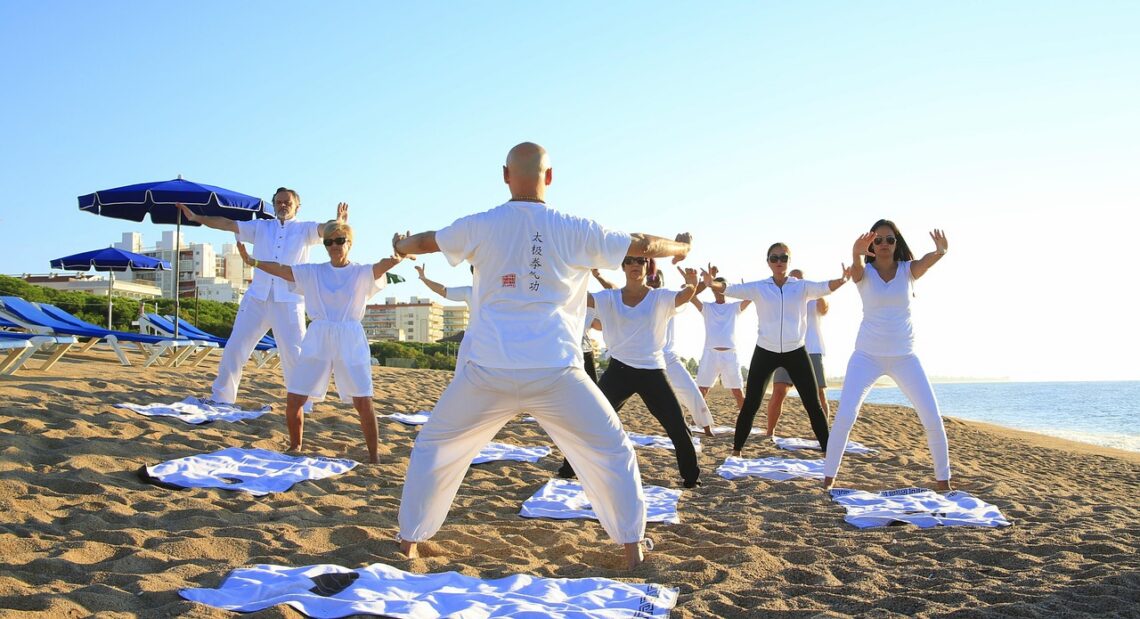
Cloud Hands is the movement people picture when they think of tai chi in the park. Your hands circle in front of your body, one high and one low, while your waist turns and your weight shifts from foot to foot. The hands do not drive the movement. The waist does. If your arms feel tired, you are using them too much. Start with hands only, then add the weight shift, then a small sideways step.
The cat step is the foundation for walking in tai chi. From your standing posture, sink a little lower and shift all your weight onto your left leg. Lift the right foot and place the heel forward, about a shoe length ahead, without putting any weight on it. Then slowly roll the foot down and transfer your weight into it, as if you are testing thin ice. Repeat on the other side. Move across your space and back. It is single-leg balance training disguised as a meditation, and it is my favorite thing to teach.
If the cat step feels shaky, put a sturdy dining chair beside you and rest your fingertips on the back of it. That is smart training, not cheating. A few clients who are further along like to do their weight shifts on an Airex Balance Pad in week three or four, which makes the ankles and small foot muscles work overtime.
Week Three: Two Moves From the Short Form
Most beginners eventually learn the 24-movement Yang short form, the standardized sequence taught in classes around the world. It takes about six minutes to perform once you know it, and many months to learn it well. In week three we borrow two of its moves and push your practice to 20 minutes.
Part the Wild Horse’s Mane. Step forward into a bow stance, about 70 percent of your weight on the front leg, back leg long but not locked. One hand sweeps forward and up to eye level as if gently parting long hair, while the other hand presses down beside your hip. Shift back, turn the front toes out slightly, gather your hands as if holding a ball, and step through to the other side. The goal is one continuous flow, no stops.
Brush Knee and Push. Step forward again into the bow stance. The lower hand brushes past the front knee while the upper hand pushes forward from beside your ear. This one teaches you to coordinate the front leg, back leg, waist, and both arms in a single smooth arc. Do it slowly, then slower.
This is the week when I tell clients to get help from a good teacher. Video is the next best thing to a live class. The Tai Chi for Beginners DVD by Dr. Paul Lam is a gentle, well-paced program built by a physician specifically for people with no experience, and it is the one I hand to clients over 60. If you like understanding the why behind the movement, The Harvard Medical School Guide to Tai Chi by Peter Wayne is the most balanced book on the subject I have read. It covers the research honestly and gives a simple home routine.
Week Four: Linking It Into a Morning Flow
By week four you have seven building blocks. Now we string them together into a single 20 to 25 minute practice, five days a week.
My suggested sequence:
- Standing posture with relaxed breathing, 2 minutes
- Side-to-side weight shifts, 2 minutes
- Opening and closing, 2 minutes
- Cloud Hands, 6 repetitions each direction
- Cat step across the room and back, 3 laps
- Part the Wild Horse’s Mane, 4 per side
- Brush Knee and Push, 4 per side
- Return to standing posture, eyes closed if you feel steady, 2 minutes
Write one line in a notebook after each session: how your balance felt, how your knees felt, how you slept the night before. After four weeks, flip back through. The first entries usually say “wobbly.” The last ones say “steady.”
The Sleep Connection I Did Not Expect
I started tai chi for my ankles. I stayed for my sleep. Two winters ago, during a rough stretch of training and travel, I began doing a short ten-minute version of this routine about an hour before bed instead of my usual phone scroll. Within a couple of weeks I was falling asleep faster and waking less at 3 a.m. That is one person’s experience, not a study, but it matches what I see in clients who stick with it.
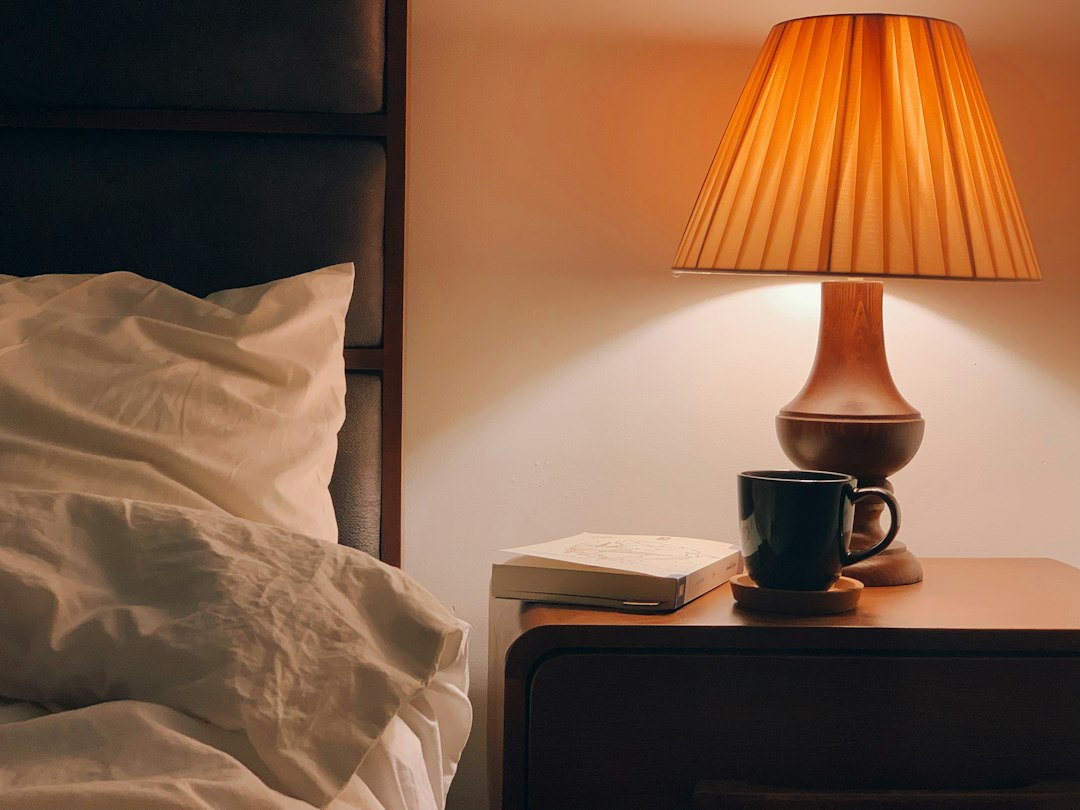
If evenings are your hard time, swap the order and make tai chi part of your wind-down routine. Dim the lights, skip the fast music, and do only the gentlest parts: standing, opening and closing, and Cloud Hands. It pairs beautifully with the other bedtime routines I tested in the week-two nightstand test.
Common Beginner Mistakes I Correct Every Week
- Locking the knees. Every stance has a soft bend. Locked knees put stress on the joint and make balance harder.
- Going too low, too soon. Deep stances look impressive and wreck knees. Start tall. Sink gradually over months, not days.
- Rushing the transitions. The pause between moves is where the balance work happens. If you speed through it, you skip the training.
- Quitting after a clumsy week. Everyone feels uncoordinated at first. The heptathlete in me felt like a newborn giraffe. It passes.
My Beginner Starter Kit, at a Glance
You can absolutely do this with nothing but a cleared floor. But if you want a few tools that make the first month easier, this is the short list I hand out:
- For your feet: Feiyue Classic Canvas Martial Arts Shoes, or Non-Slip Grip Socks on cold mornings
- For your floor: ProsourceFit Puzzle Exercise Mat tiles over tile or concrete
- For learning the form: The Harvard Medical School Guide to Tai Chi
The Cup of Tea at the End
Every one of my tai chi mornings ends the same way. I stand still for a final minute, let the room come back into focus, and walk to the kitchen to put the kettle on. It has become part of the practice. I learned recently from my friends on the home side that boiling water is not a single temperature, which has made my green tea much less bitter. Small upgrades, slowly stacked. That is the whole philosophy, really.

So here is my challenge for the dark months. Clear one corner. Give it ten minutes a day for the first week, and build from there. Do it in the morning while the frost is still on the patio, or at night while the house goes quiet. Four weeks from now, stand on one leg and see how it feels. I think you will find that slow, done every day, adds up to something remarkably strong.