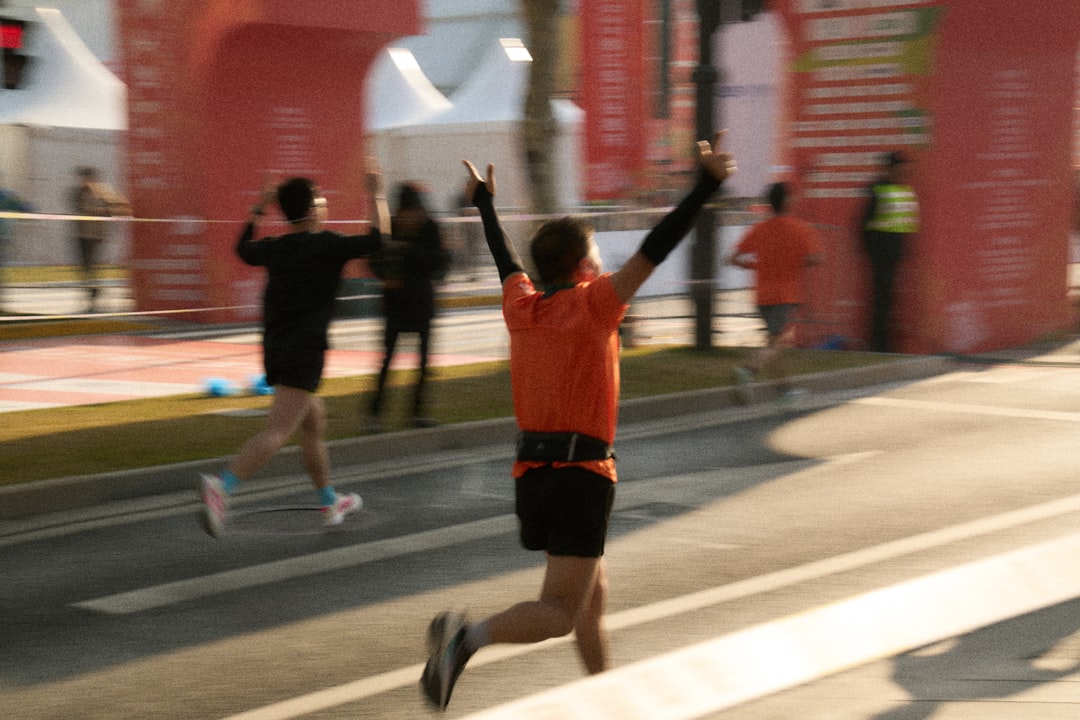
Every September, my inbox fills up with the same panicked question. It is never “what’s my pace target” or “how do I carb load.” It is “I need new shoes and my marathon is in five weeks — what do I buy?” And every September, I give the same answer that makes runners look at me like I just told them to skip their long run: buy last year’s colorway.
Right now, in the middle of fall race season, the running shoe market is doing something quietly beautiful. The 2026 versions of the big trainers have landed at full price, which means the 2025 models — mechanically identical in most cases, just a season older — are being cleared out at 30 to 50 percent off. My coaching team pulled the pricing data this week and we found men’s Glycerin 22s marked down to nearly $104, down from a $165 list price, while the freshly launched Glycerin 23 sits at $174.99. Same footbed philosophy. Same DNA Loft cushioning story. Roughly $70 of pure calendar arbitrage.
Before you sprint to the clearance rack, though, there are rules. I learned most of them the hard way — one tragic 2019 half marathon in a pair of race-weekend bargain shoes I’d logged exactly four miles in. Let me save you that lesson.

The Shoe Calendar Nobody Explains to You
Running shoes run on an annual cycle, and once you see it, you cannot unsee it. Brands launch flagship trainers roughly once a year, usually timed so the new model hits shelves before the spring or fall buying surge. The moment a new version lands, retailers and brand sites start discounting the outgoing model to clear warehouse space. It is not a quality judgment. It is inventory management.
The discounts arrive in waves. First, modest cuts of 15 to 20 percent. Then, as sizes start fragmenting, the real money shows up — 40 percent or more, especially in the colorways that didn’t sell. I tracked the Ghost Max 3 through exactly this arc all summer, and it is now sitting in that sweet window where the shoe is current enough to feel fresh but old enough to be cheap. My team jokes that September is Black Friday for people who read pace charts.
This is the same logic I laid out in my piece on when fitness gear actually goes on sale: the best price rarely coincides with the moment you feel like buying. In shoe terms, the window you want is the six to ten weeks after a new model launches. Buy before that and you pay full freight. Wait too long and your size is gone, and nobody wants to run 26.2 miles in a shoe two sizes off.
Cushioning Math Beats Sticker Math
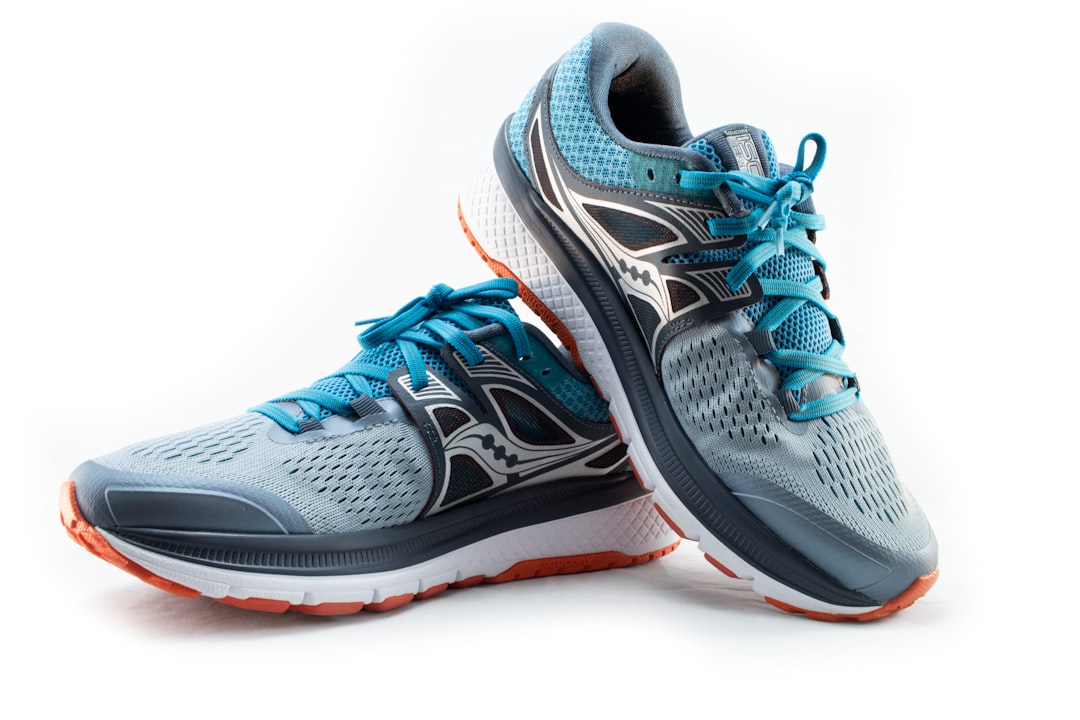
Here is the calculation I make every client do, because sticker price lies. Divide the price of the shoe by the number of miles you’ll realistically run in it. Most running shoes are good for 300 to 500 miles before the midsole foam stops protecting you. So a $165 shoe run to 400 miles costs about 41 cents a mile. A $104 clearance pair of the same shoe costs 26 cents a mile. Run 1,200 miles a year across a rotation — normal for marathon training — and last year’s model saves you around $180 annually. That is a race entry or a month of massage therapy.
The catch is that the clearance model has to be a shoe you would have bought at full price. A discount is not a reason to switch to a silhouette your feet hate. When I put clients in the Glycerin line, I keep them there across model years precisely because the updates are usually refinements, not rebuilds. The women’s Glycerin 22 at clearance pricing is, for my money, the single best value in the neutral cushioned category right now — plush enough for recovery days, tough enough for the big Saturday long run.
And to be clear about what you give up by skipping the newest version: usually a few grams, a tweaked upper pattern, and the smugness of unboxing something with the year’s marketing budget behind it. If you want that feeling, the Glycerin 23 is right there at full price. It is a lovely shoe. It is just not $70 lovelier for someone mid-training block.

Colorway Psychology Is Free Money
Now for the fun part, the part my runners call “the ugly shoe discount.” Within any clearance model, certain colorways drop deeper than others. The black and grey staples hold their value because everyone buys them. The louder, weirder, or simply *last* colorways — the ones that read as “clearly 2025” — get marked down hardest. I have watched near-identical shoes sit $30 apart purely because one was primer grey and the other was the color of a highlighter.
My rule for clients: the shoe touches the ground, not your ego. If the greyed-out men’s Glycerin 22 colorway is $30 cheaper than the crisp white one, and both look fine with running shorts (everything does), take the grey. If you genuinely love the cleaner white version and it fits the budget, that is fine too — just make it a conscious choice, not a default. The same logic applies to the women’s side of the aisle; my faster masters athlete swears by the women’s Ghost Max 3 in the navy colorway precisely because it was the ignored one on the shelf.
One honest caveat from someone who has done this a hundred times: sizes fragment fast in the discount racks. If you see your size at a great price, the window to think about it is measured in days, sometimes hours. Bookmark the page. Set a reminder. Do not do what I did in 2021 and “sleep on it” while someone in Ohio bought my 8.5s overnight.
The Three-Week Rule
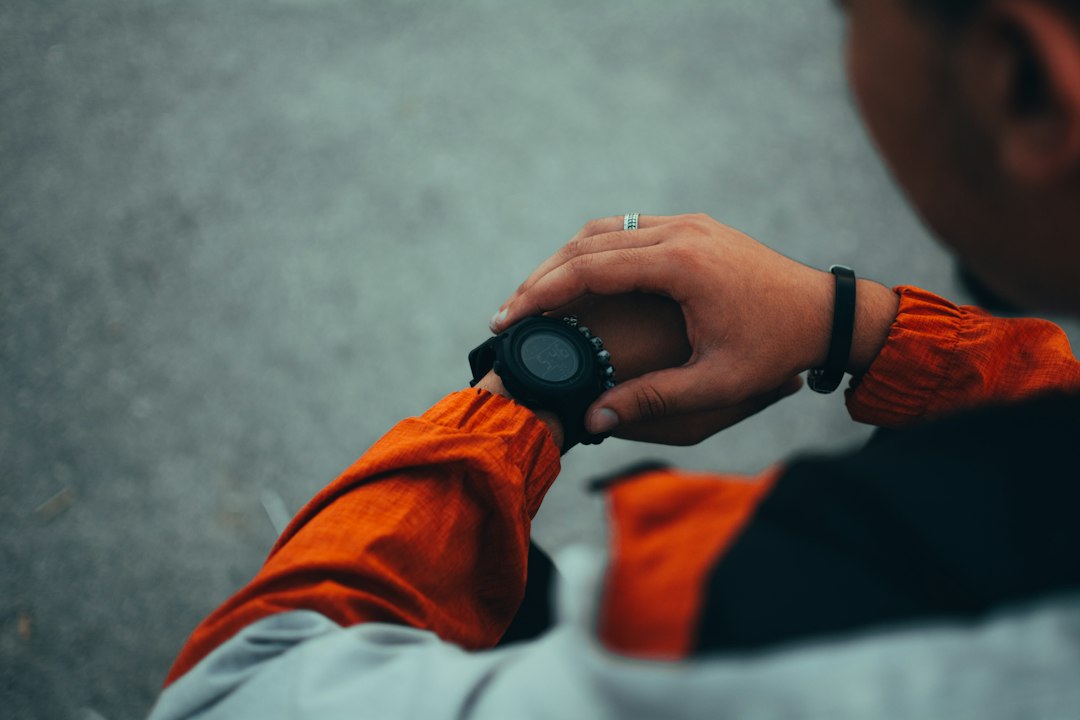
Here is where deal-timing meets race-timing, and where I get strict as a coach. Never run a race in shoes with fewer than three weeks and ideally 10 to 15 runs of history on your feet. Never. The newer and more different the shoe, the earlier it needs to enter your rotation. Specialty running shops put it at getting your race pair four to six weeks out, alternating it with your old pair so your feet adapt without either pair doing all the work. That timeline is not decoration — it is blister prevention, IT band insurance, and black-toenail avoidance all in one.
The shoe swap works because most “break-in” is actually your feet and ankles adapting, not the foam softening. Modern foam does not need breaking in. Your gait does. Give it those weeks, and a clearance shoe becomes your best friend on race morning. Skip them, and you are running the experiment on the one day you paid $150-plus entry fees to enjoy.
Practically, that means this week in mid-September is the last sensible moment to buy for a mid-October race. Buy now, log the runs, rotate pairs. If your race is in three weeks or less and your current trainers are cooked, buy the same model and size you already run in — that is the only version of a late swap I will bless. And if you feel a hot spot or heel sting flaring up during the transition, stop and read my piece on catching plantar fasciitis early before it becomes a six-month problem.
When You Should Skip the Bargain Bin Entirely
Clearance shopping is not for everyone, and I would rather you hear it from me than learn it at mile 18. Skip last year’s model if the new version actually changed the geometry — when brands switch from a 10mm drop to 8mm, or redesign the posting, the “same name, new shoe” trap is real. Read one trusted review of the new model before assuming continuity. Skip it, too, if you are racing in something highly dialed, like a stability shoe prescribed for a specific gait issue; a $70 savings is not worth renegotiating your mechanics mid-block.
And if you are one of my walkers rather than runners — welcome, this whole strategy works even better for you, since you burn through foam slower — I keep a separate field guide for that, over at the walking shoe buying guide. The discount calendar is identical. The stakes on fit are actually higher, because you spend more total hours in the shoes.
The last skip case is purely mental: if you ran your last PR in the current model on your feet, do not switch anything inside a training block. Superstition gets mocked until it is race day. I have a shelf of “lucky” colorways I will defend in any argument, and my recovery footwear rotation follows the same rule: what works, stays.

What to Do With the $80 You Just Saved
Assuming you played the calendar right and saved somewhere between $60 and $80 a pair, let me tell you where that money goes, because it is not “celebratory pastries.” It goes into the two accessories that quietly ruin races when ignored: socks and anti-chafe. A beautiful shoe paired with a cotton sock is a blister factory. My whole team runs in Balega’s Hidden Comfort no-shows — seamless heel, decent compression, and they survive the laundry cycles marathon training demands.
Then there is the unglamorous stick that has saved more race days than any foam roller: Body Glide. Feet, arches, wherever seams meet skin on long-run days. Ten dollars, no scent, no sting, and it turns the last six miles of a marathon from a shuffle-wince into an actual run. If you buy nothing else I mention today, buy that.
Beyond that, the savings fund the rotation itself. Two cheaper pairs of last year’s model, alternated run by run, outperform one expensive pair worn into the ground — the foam gets a chance to rebound between sessions, and your feet get subtle variety. That is not marketing talk; it is how the math of cost-per-mile and injury risk stack up.
The September Shoe Play, Summarized
Here is the whole strategy on one card, so you can screenshot it before the sizes vanish. Buy the outgoing model of a shoe you already love, six to ten weeks after its successor launches, ideally in the ignored colorway, at 30 to 50 percent off. Get it on your feet a minimum of three weeks — better four to six — before race day, with 10 to 15 logged runs and a rotation with your old pair. Spend the savings on socks, anti-chafe, and maybe a second discounted pair to alternate.
Fall race season rewards the prepared, and preparation is mostly boring decisions made at the right time. The grey Ghost Max 3 sitting at a discount right now does not care that it is last season’s color story. It cares about carrying you across a finish line, 26.2 miles later, with your toenails intact. Buy the calendar, not the marketing — and I will see you at the finish chute, looking fast in your gloriously cheap shoes.