A client texted me a product page at 9:40 on a Tuesday, the kind of message that arrives right after a hard lower-body day when every sales adjective sounds like relief. The mat was pretty. Amethyst crystals. A soft infrared glow. Four frequencies with names that sounded like a meditation app. The price sat north of a thousand dollars, and the promise was a pulsed electromagnetic field that would do what her foam roller, her walks, and her sleep had not.
I did not tell her no. I told her to wait until someone on my team could put a meter on a mat like it. We are not a lab. We are coaches who get tired of watching good people buy the brochure. Pulsed electromagnetic field therapy, PEMF if you want the short name, is a real category with a real research history. Consumer mats that stack a weak coil under a heating pad and call the whole stack a medical field are a different category. If you are shopping one this fall, bring a meter to the mat before you bring your credit card.
What the letters actually mean
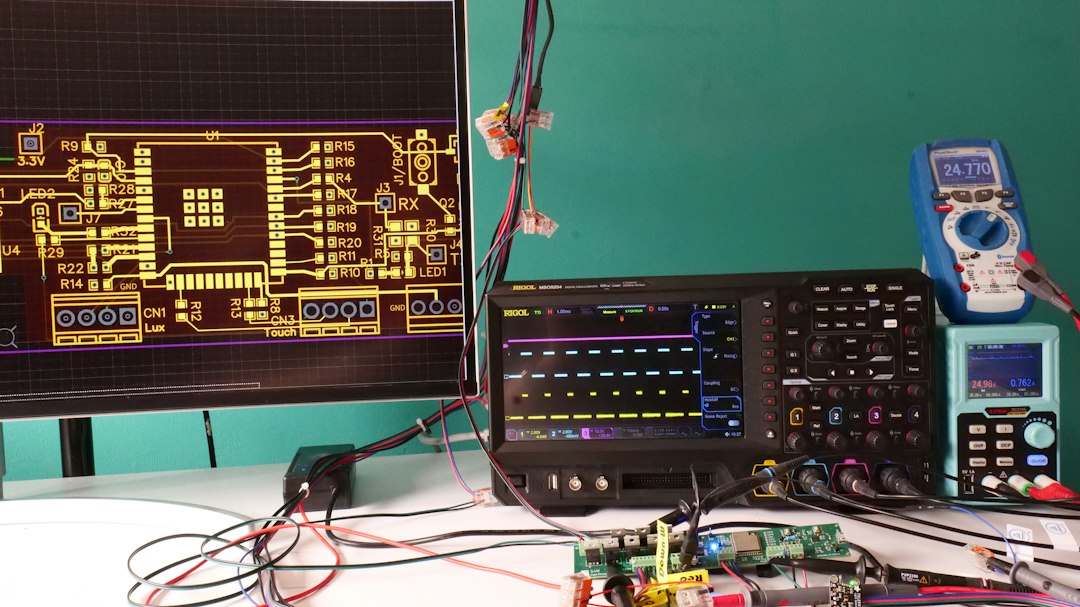
PEMF is a pulsing magnetic field. Coils switch on and off at a chosen frequency, measured in hertz, and the strength of that field is measured in gauss or, for the very small numbers, milligauss. A milligauss is a thousandth of a gauss. That unit swap is where a lot of wellness copy gets slippery. A number can look scientific and still be tiny.
Clinical devices that earned their reputation were built for specific jobs, bone healing among them, and they were not gemstone yoga mats. Marketers love to gesture at NASA’s low-intensity work. That research existed. It was a controlled setup with a defined field, not a living-room pad that also happens to get warm. Citing it as a blessing for every crystal mat on the market is how a real paper becomes a sticker.
One engineer who has spent years grading these mats against the pain literature describes the cluster of more encouraging studies as sitting around roughly 10 to 20 gauss, and under about 30 hertz. I am not handing you that as a prescription. I am handing you a yardstick. If a mat’s own paperwork lives in fractions of a milligauss, or in a narrow band of a few hertz with an intensity the brand will not publish in the same units as the studies, you are not buying the thing the studies were about. You might still be buying a very nice heating pad. Know which one you are paying for.
The mat that started the argument
HigherDOSE is the name that keeps landing in group chats, and for a reason. The brand made infrared-plus-PEMF feel like a design object instead of a clinic rental. The full infrared PEMF mat and the smaller on-the-go version are the two I keep getting asked about. The travel size is about 19.5 by 39 inches and a little over 11 pounds, with two PEMF cores and four frequency steps between 3 and 23 hertz. The larger pro version steps up to four cores, the same frequency window, and more wattage in the heaters.
Then the paperwork argues with itself. The brand describes its heaters as running in a very low milligauss band. Independent write-ups have reported different intensity figures, including a tested reading under 1 gauss on one chart and a stated ceiling around 2 gauss on another review. I am not going to pretend those numbers are the same number. They are not. That disagreement is the whole point of this article. If the people selling the mat and the people measuring mats cannot land on one intensity, you should not either, not until you have looked.
A HigherDOSE infrared PEMF mat can still be the right purchase if what you want is a beautiful far-infrared session you will actually take, with a gentle pulse as the extra. It is a poor purchase if you think you are renting a clinical PEMF protocol for your living room. My team has a simple rule now: if the client cannot say, out loud, whether they are buying heat or buying a field, they are not ready to check out.
Shop the field, not the crystals
Amethyst, tourmaline, and obsidian show up in this category the way Himalayan salt shows up in lamps. They photograph well. They give a mat a story. They are not a substitute for a published frequency range and a published intensity in gauss. When a listing leads with the stones and buries the coil count, I assume the stones are doing the marketing.
If you want a mat that treats the signal as the product, look past the prettiest photo. Healthy Wave keeps coming up in the serious comparisons because the line offers more than one way to run the field. The multi-wave mats are the flexible pick, often priced from just under a thousand dollars into the mid two-thousands depending on size, with infrared and red light stacked on adjustable PEMF rather than a single preset. Their higher-intensity option is the one reviewers describe as overlapping the pain-study window, on the order of 7 to 30 gauss and under 30 hertz, with heat and light still in the mix. That is a different machine from a four-step wellness pad, even if both are called mats.
Boncharge sits in the same conversation for people who already like that brand’s light products and want the mat version of the aesthetic. OMI’s beyond mat is the odd one I mention when someone says they do not care about heat at all and only want knobs for waveform and frequency. Most of my clients do care about heat. October in this part of the country makes a warm surface easier to keep than a cold coil you have to talk yourself onto.
Start with a current infrared PEMF mat search and sort by what the listing actually specifies, not by star count. Then open the Healthy Wave PEMF mats and a Boncharge PEMF mat in other tabs. Same room, same question: can I see frequency, intensity, return window, and an auto-shutoff, or am I looking at a mood board?
Heat is allowed to be the point
Here is the part that saves people money. Far-infrared heat is the effect you will feel on night one. Muscles like warmth. A nervous system that has been outside in a cold wind likes warmth. If your real goal is a 20-minute downshift after practice, a full-body far-infrared pad can do that job without a PEMF story attached.
The UTK full-body far-infrared pad is the comparison I keep on the table. It is a large, soft heating mat, advertised around 70 by 31 inches, with a top temperature near 140 degrees Fahrenheit and an EMF-free claim. It is not a pulsed-field device. That is a feature if you came for heat. I would rather a client buy that far-infrared heating pad and use it four nights a week than finance a crystal mat they are slightly afraid of.
The chair-sized middle path is a HealthyLine-style pad that does claim PEMF along with amethyst, tourmaline, and obsidian, built for a seat rather than a whole floor. A PEMF far-infrared chair pad is how I let curious clients try the category without rearranging a room. Twenty minutes in a chair, auto shutoff on, no heroics. If they forget it exists after a week, we learned something cheap.

Red and near-infrared light are yet another tool, and I do not want them blurred into this purchase. A panel you stand in front of is not a mat you lie on. I wrote up the panel that earned a permanent spot in my own recovery corner in the red light piece, and if light is the thing you actually want, a red light therapy panel is the honest cart. Mixing three technologies into one checkout because a landing page used all three words is how people end up with a device they cannot explain to their partner.
The meter is the cheapest thing in the cart
A handheld gaussmeter is not glamorous and it is not perfect. Consumer meters vary. What they are good at is ending arguments. Put the probe where your low back will be, run every frequency the mat offers, and write the number down. Do it again at the edge of the mat, because coils do not cover every inch equally. If the reading is a rounding error next to the double-digit gauss window, you now know you bought a heater with a story. That can still be fine. It should not be a surprise.
I tell clients to order the gaussmeter in the same week as the mat, not after they have fallen in love with it. Return windows close. Feelings get attached to objects that smell like a spa. A number on a sticky note does not care how the unboxing felt.
Grounding is the other claim that rides along on these listings, sometimes as a real conductive layer and sometimes as a sentence. If grounding is a feature you want, buy a grounding mat you can understand, or confirm the PEMF mat’s ground path with the manufacturer in writing. A silver thread in a product photo is not a ground.
Who should lie down, and who should not
I am a coach, not your physician, and this category has a short list I do not negotiate. If you have a pacemaker, an insulin pump, a cochlear implant, or any other implanted electronic device, you do not experiment with a pulsing field because a website said the output was gentle. Pregnancy is the same conversation: take it to the person who manages your care, not to a comment section. Active cancer treatment, epilepsy, and fresh surgical hardware belong in that same pause. Manufacturers print these warnings because they are real, not because a lawyer was bored.

The people I do put on a mat are the ones who already train, already sleep badly when their legs are loud, and already own the boring tools. If you have never owned a foam roller and you do not walk most days, a four-figure mat is a costume. If you have been consistent and you want a warm, horizontal place to finish the day, we can talk. Vibration plates are a different bet, mechanical instead of magnetic, and I walked through that choice in the seesaw-or-piston guide. Heat and cold, the older pair, still do more documented work per dollar than most new pads. I laid that out in the hot and cold piece for anyone who wants the physiology before the shopping.
How we actually run a session
When a mat earns a spot, the protocol is boring on purpose. A thin cotton layer goes down first. Bare skin on a hot crystal surface is how people get the little burns they are too embarrassed to mention. A non-slip yoga towel is enough. You are not trying to feel the stones. You are trying to feel even heat and, if the field is real, nothing dramatic at all. PEMF at consumer intensities is not supposed to buzz like a massage gun. If a mat tingles in a sharp, localized way, I want it off and the cord checked before anyone decides that means it is working.
First week: 15 minutes, lowest useful heat, one frequency, not right after a max-effort session. Heat on top of a workout that already raised your core temperature is a lot of signal for one evening. We use the mat as a separate appointment, usually after dinner has settled and before screens get interesting. Water first. A lot of people come off these sessions thirstier than they expect, the same way they do after the infrared sauna blankets I logged in thirty nights inside a blanket. If a wrap-style sweat is what you wanted, that blanket is the closer tool, and a far-infrared sauna blanket belongs in that cart instead of this one.
Week two, if sleep and next-day legs are fine, we add five minutes or one step of frequency, not both. I care more about whether someone can get off the mat and walk to bed without a second wind of scrolling than I care about which hertz the remote was on. Magnesium glycinate is the only supplement I pair with this routinely, and only for people who already tolerate it. A magnesium glycinate on the nightstand is a habit, not a stack. It does not make a weak coil into a clinical device. It makes a wind-down more likely to stick.

What I watch, and what I ignore
I do not grade a mat by how relaxed someone feels in the first ten minutes. Warmth is persuasive. I grade it across two weeks of notes: time to fall asleep, whether the 2 a.m. wake-up moved, how the legs felt on the easy run, and whether the mat was still unrolled on a Wednesday when nobody was performing wellness for anyone. One of the people who helps me with client check-ins keeps a three-line log. That is the whole study. If the log is blank because the mat got folded behind a door, the technology lost.

I also ignore before-and-after photos of skin glow. Infrared will pink you up. That is circulation and heat, not proof of a magnetic protocol. If a brand’s evidence is a selfie and a sentence about cellular voltage, close the tab. Ask for the frequency list, the intensity in gauss at the surface, the distance the field falls off, the shutoff timer, and the return policy in days, not in feelings.
A buying order that does not embarrass you later
If you are still in, buy in this order. First, decide whether you want heat, a field, or both, and write it down. Second, pick the smallest format that matches the decision: chair pad if you are curious, full infrared pad if you want warmth without the field story, full PEMF mat only if the spec sheet can survive a meter. Third, order the meter with the mat. Fourth, keep the first fourteen days boring enough that a return is still emotionally easy.
The mats worth keeping are the ones you can describe without the word miracle. A warm surface. A published pulse. A shutoff you trust. A towel between you and the crystals. A number you measured yourself, written on a card and tucked under the remote, so the next time a prettier mat shows up in a text at 9:40, you already know what question to ask.