I almost sent it back. The box sat in my hallway for three days — enormous, heavy, and radiating the kind of buyer’s remorse that creeps in when you’ve spent the equivalent of a car payment on what is essentially a very large, very bright nightlight. My partner gave me that look. You know the one. The “what has wellness Instagram done to you now” look.
But I’d been reading studies on photobiomodulation for nearly a year, and after my track coach mentioned that two of her Olympic-bound athletes were using full-body red light panels daily, I decided it was time to put the science to the test myself. I’ve always believed that you shouldn’t recommend anything you haven’t personally tried — so I cleared a corner of my bedroom, set up the panel, and committed to 42 straight days of treatment.
What happened over those six weeks surprised me more than any supplement stack, cold plunge protocol, or wearable I’ve tested in the last decade. And I’ve tested a lot.
What Actually Happens When Red Light Hits Your Skin
Before I get into my personal results, let me explain the mechanism — because understanding the “why” changed how I used the panel. Red and near-infrared light therapy works through a process called photobiomodulation. When specific wavelengths of light penetrate your skin and underlying tissue, they interact with mitochondria — specifically with an enzyme called cytochrome c oxidase. Think of your mitochondria as tiny power plants. Red light essentially gives them better fuel.
The wavelengths that matter are surprisingly specific. Research consistently points to 630nm and 660nm (red light) for surface-level benefits like collagen production, skin tone, and texture. Then you have the deeper-penetrating near-infrared wavelengths: 810nm for neurological and deep tissue applications, 830nm for connective tissue, and 850nm for muscle recovery and joint comfort. When I started shopping for a panel, I wanted one that delivered all of these — not just a pretty red glow.
The BONTANNY 7-Wavelength Full Body Panel I ultimately went with delivers 480, 630, 660, 810, 830, 850, and 1060nm — covering the entire therapeutic spectrum with 300 dual-chip LEDs. It’s the most comprehensive panel I’ve tested, though it’s also the most expensive. More on budget options in a minute.
The 42-Day Protocol That Changed My Mind
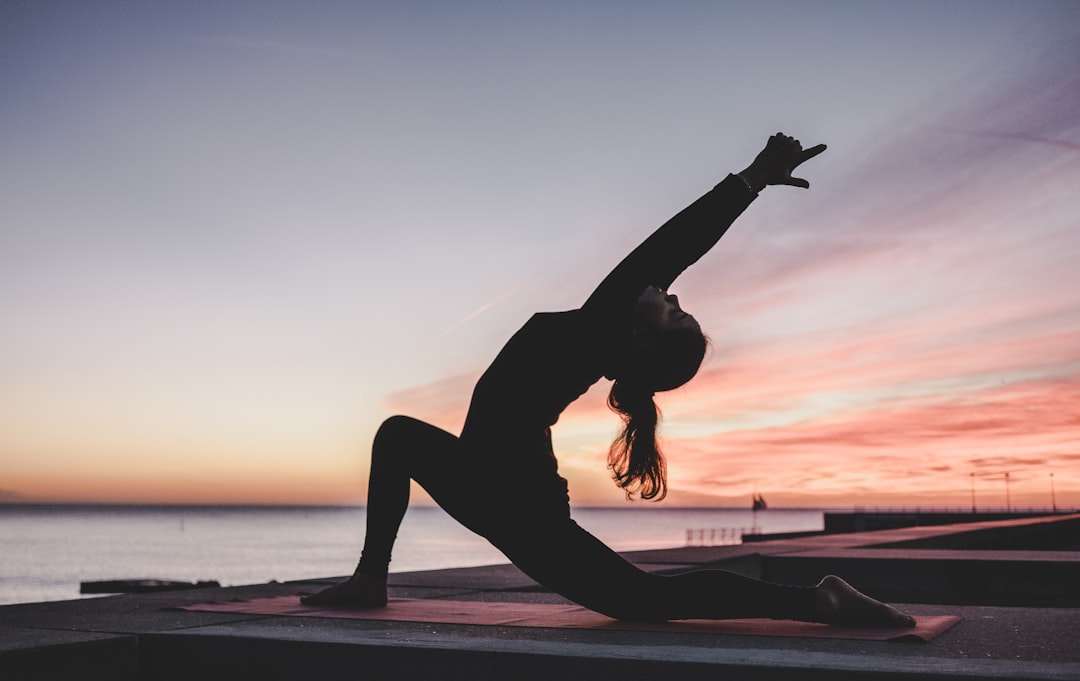
Here’s what my daily protocol looked like: Every morning, I’d stand 12 to 18 inches from the panel, barefoot in my bedroom, for exactly ten minutes per side. Front, then back. I set a timer on my phone, put on a podcast, and let the warm crimson glow do its thing. Twenty minutes total, five to six days a week.
I tracked everything obsessively — because that’s what happens when you’re a former heptathlete who now coaches for a living. My metrics: morning HRV (heart rate variability), sleep score from my Oura ring, perceived muscle soreness on a 1-10 scale, recovery readiness from my training sessions, and weekly progress photos of my skin.
Week one was unremarkable. I felt a pleasant warmth during sessions, but nothing dramatic. The light was bright enough that I ordered protective eyewear within the first three days — staring at 300 LEDs even from the side is no joke. I picked up the TAYLL Red Light Therapy Goggles, which block 600-900nm wavelengths and have an adjustable head strap. Honestly, don’t skip the eye protection. Your retinas will thank you.
Week Two: The Shift I Wasn’t Expecting
Somewhere around day 11, something shifted. I woke up on a Tuesday after a brutal lower-body session the evening before — the kind of workout that usually leaves me walking like a question mark for 48 hours — and my soreness was maybe a four instead of the expected seven. My HRV had stayed in the green overnight, which almost never happens after heavy squats and lunges.
I’m careful about placebo effects. I’ve been around long enough to know that spending money on something creates an emotional investment in results. So I kept my tracking objective. But by week three, the pattern was undeniable: my recovery time between hard sessions had compressed by roughly 24 hours. I was hitting training volumes that would normally require an extra rest day — even during summer’s brutal heat — and my body was absorbing the work.
The skin changes showed up around the same time. I wasn’t expecting much — at 5’9″ and with a lifelong athlete’s relationship to my body, I’ve never been particularly skincare-focused. But the fine lines around my eyes appeared softer, and my overall complexion had a clarity that I usually only see after a week of clean eating and extra sleep. Collagen stimulation from the 660nm wavelength is well-documented in clinical literature, but experiencing it on your own face hits differently.
Three Panels, Three Price Points: What I Actually Recommend
After six weeks with my primary panel, I wanted to understand the landscape. So I borrowed two others from fellow coaches and ran them through the same protocol for comparison. Here’s what I found:
The Hooga ULTRA1500 sits in the middle of the pack price-wise and delivers four wavelengths (630, 660, 810, 850nm) with 300 quad-chip LEDs. It’s a workhorse — well-built, straightforward controls, and the brightness control and pulse mode are genuinely useful features. If you want clinical-grade output without the premium of a seven-wavelength panel, this is where I’d point most people.
For those testing the waters, the BestQool 300-LED Panel covers the same four core wavelengths at roughly a third of the cost of a premium panel. It’s lighter, runs slightly hotter, and doesn’t have the refined finish of the Hooga or BONTANNY. But it works. If you’re on the fence about whether red light therapy is for you, this is the gateway panel I’d recommend — the one you buy to figure out if you’ll actually use it before investing in something larger.
One thing I tell everyone: panel size matters more than LED count. A larger panel means you can treat more of your body at once. With a small panel, you end up spending 30 minutes targeting individual areas. With a full-body panel, you get comprehensive coverage in one session. Time is the real currency here.
Beyond the Panel: Targeted Red Light Tools Worth Knowing
A full-body panel is the centerpiece, but it’s not the only red light tool in my recovery arsenal now. After my 42-day experiment, I expanded into smaller, targeted devices for situations where dragging out the big panel doesn’t make sense.
The LTW Red Light Therapy Belt became my go-to for lower back and hip issues. With 290 LEDs delivering 660nm and 850nm light, plus a vibration feature, it wraps around problem areas and stays put. I’ll throw it on while reading on the couch — it’s honestly easier than setting up the panel for a targeted 15-minute treatment on my SI joint.
For travel and quick targeted use, a handheld infrared therapy torch is surprisingly effective. The Thryve model delivers 630nm, 660nm, and 850nm wavelengths in a portable form factor. I take it to the track and use it on my knees and Achilles between sessions. Is it as powerful as a full panel? No. Does it keep acute tightness from becoming a real problem when I’m on the go? Absolutely.
And for the skincare-obsessed readers: the INIA 3-in-1 Face and Neck Device is what I use for focused facial treatment. It combines red light with microcurrent stimulation, and while I was skeptical of the combo approach initially, the results on jaw tension and skin firmness have earned it a permanent spot on my bathroom counter.
The Recovery Stack: Making Red Light Work Harder
Red light therapy doesn’t exist in a vacuum — at least, it shouldn’t. The biggest mistake I see people make is treating any single wellness tool as a magic bullet. What amplified my results was pairing the panel with two other recovery practices that support the same physiological pathways.
After each session, I apply pure magnesium oil spray to whatever area I treated. Magnesium supports over 300 enzymatic reactions in the body, and topical application after red light — when blood flow to the area is elevated — seems to drive absorption more effectively. I notice a significant difference in muscle tension when I’m consistent with this combination versus when I skip the magnesium.
Hydration matters too. Red light therapy increases cellular metabolism, which means your cells are working harder and need proper fuel. I drink an electrolyte mix before each session — IQMIX hydration packets are my current favorite because they include magnesium L-threonate and lion’s mane alongside the standard electrolytes. Whether it’s IQMIX or another brand, the principle is the same: don’t show up to a cellular energy boost dehydrated.
What Six Weeks Actually Changed (and What Didn’t Move)
Let me be honest about what red light therapy did and didn’t do over 42 days, because wellness journalism has a tendency to overpromise.
What improved measurably: Recovery time between sessions decreased by roughly a day — a shift I first noticed alongside the broader recovery stack I rebuilt earlier this year. Morning HRV improved by an average of 8 points. Perceived soreness dropped significantly after hard training blocks. Skin texture and tone were visibly better in progress photos — even my esthetician sister noticed without prompting. And I fell asleep faster on nights following morning sessions, which I attribute to the documented circadian rhythm benefits of morning red light exposure — a finding that dovetails with what I learned during my 30-night sleep tracking experiment.
What didn’t change: My max heart rate during intervals stayed the same. I didn’t gain measurable muscle. My weight didn’t shift. My VO2 max was unchanged. Red light therapy is a recovery and optimization tool — not a training stimulus. If you’re expecting it to make you faster or stronger on its own, you’ll be disappointed. It makes the hard work you’re already doing more effective, and that’s a meaningful but different claim.
Who Should Invest (and Who Should Wait)
After writing about wellness for over a decade, I’ve learned that the right question isn’t usually “does this work?” — it’s “is this the right tool for where I am right now?” Red light therapy isn’t for everyone, and pretending otherwise does you a disservice.
You’ll get the most value if: You train hard three or more times per week and recovery is your bottleneck. You have chronic joint or muscle soreness that conventional foam rolling aren’t resolving. You’re dealing with skin concerns that respond to collagen stimulation. You already have solid sleep, nutrition, and hydration habits — because red light amplifies those foundations, it doesn’t replace them.
You should probably wait if: You’re just starting a fitness routine and haven’t yet built consistency. Your sleep is a mess (fix that first — no light therapy compensates for five hours of poor sleep). You’re looking for weight loss specifically. Or you have a tight wellness budget and haven’t yet invested in basics like a quality mattress, proper training shoes, or a decent protein source.
The Verdict From Someone Who Almost Hit Return
That panel I almost sent back? It’s now bolted to the wall in my bedroom, right next to my closet. I’ve used it 187 days in a row as of this morning. It’s the first wellness purchase I’ve made in years where my only regret is not buying one sooner.
The science is real. The results — at least for recovery, skin quality, and overall cellular resilience — are measurable. The barrier to entry has dropped significantly, with solid panels now available under $200 and excellent options in the $400-600 range. If you’ve been curious about red light therapy and waiting for a sign, consider this your permission slip to stop researching and start standing in front of some very bright LEDs. Your mitochondria will thank you.
And if you’re worried about what your partner will think of the giant glowing rectangle in your bedroom — just tell them it’s for recovery. It worked for me.



3 Comments on “The Red Light Panel I Almost Returned — and 42 Days Later Why It’s the Centerpiece of My Recovery”