The first time I went skiing after I retired from the heptathlon, I was cocky. I had spent ten years doing hurdles, high jump, shot put and an 800 that still shows up in my nightmares. I figured a few laps down a groomed blue would be a vacation for my legs. By eleven in the morning my quads were shaking like a nervous colt, my left knee was complaining every time I turned that way, and I spent lunch in the lodge pretending I just really loved hot chocolate.
Here is what I learned that day, and what I have taught every skier I’ve coached since: being fit is not the same as being ready to ski. Skiing asks your legs to do a very specific, very strange job. Your muscles spend most of the day lengthening under load and braking against gravity, often on one leg, often while you’re moving sideways, on a surface that never stops shifting. If your summer was all running, cycling or even heavy lifting, your legs are strong. They just haven’t been taught to do this particular job.
The good news is that four weeks is enough to change that, and right now, the calendar is handing you exactly four weeks. So let’s count back from your opening day and build some ski legs.
Why Opening Day Hurts More Than It Should
When you squat in the gym, you lower the weight and then you stand it back up. In skiing, the “lowering” part never ends. Each turn loads your quads while they’re lengthening, which is called eccentric work. That’s the kind of muscle action most likely to leave you hobbling down the condo stairs the next morning. It’s also why a day of skiing can make you more sore than a day of hiking the same mountain.
On top of that braking load, skiing adds two things most training plans ignore. The first is lateral force. Every turn pushes you sideways, and your hips and the outside of your knees have to catch and redirect that force over and over. The second is balance under fatigue. Your ankles are locked in stiff boots, so all your balance has to come from your hips and trunk, and it has to keep working at three in the afternoon when your legs are cooked.
That last-run-of-the-day moment matters. Ski patrollers and sports medicine folks have been saying for years that a lot of knee injuries happen when skiers are tired. I can’t promise any program makes you injury-proof, and anyone who does is selling something. What I can promise is that legs trained for this exact job stay steadier for longer, and that gives you a much better margin on that last run.
Count Back From Your First Chair
The single best thing you can do this week is pick a date. Open your favorite resort’s website, find its target opening day, and count back four weeks. A few mountains are already turning chairs. Arapahoe Basin opened on October 28 and Keystone followed on October 30. Here is roughly how the rest of the calendar looks, based on what the resorts have announced:
- November 6: Breckenridge and Copper Mountain
- November 13: Vail and Mammoth Mountain
- November 20: Park City, Whistler Blackcomb, Heavenly and Northstar
- Around November 21: Stowe, Okemo and Mount Snow in Vermont
- November 25: Beaver Creek, Crested Butte, Big Sky and Palisades Tahoe
- November 26 to 27: Aspen Snowmass, then Jackson Hole
Every one of those dates depends on the weather, so treat them as targets, not promises. Killington, for example, has been making snow since mid-October and simply opens when it’s ready. If your first trip is a holiday-week getaway or a spring trip (my friends over at the travel desk have a lovely guide to late-season skiing in Colorado if you’re already dreaming about April), you have even more runway. Just start now and repeat the four-week block.
If your opening day is less than four weeks away, don’t panic. Compress the plan. Do weeks one and two together for the first week, then move on. Something is always better than nothing.
The Floor Test I Give Every Skier First
Before I write a single ski block, I ask my clients to sit down on the floor and stand back up without using their hands, knees or anything else for support. If that sounds familiar, it’s the sitting-rising test I wrote about in my ten-point floor test post. You start at ten points and lose one each time you use a hand, a knee, a forearm or the side of your leg.
For skiers, I watch for two things. Does one leg do all the work on the way up? Do your knees cave toward each other as you rise? Either one tells me where we need to spend our time. Write down your score and how it felt. We’re going to test again at the end of week four, and I want you to see the difference.
Week One: Wake Up Your Hips
The first week is about the muscles on the outside of your hips, the ones that keep your knee tracking over your foot when the snow tries to push it inward. They’re small, they’re often sleepy, and they make a huge difference.
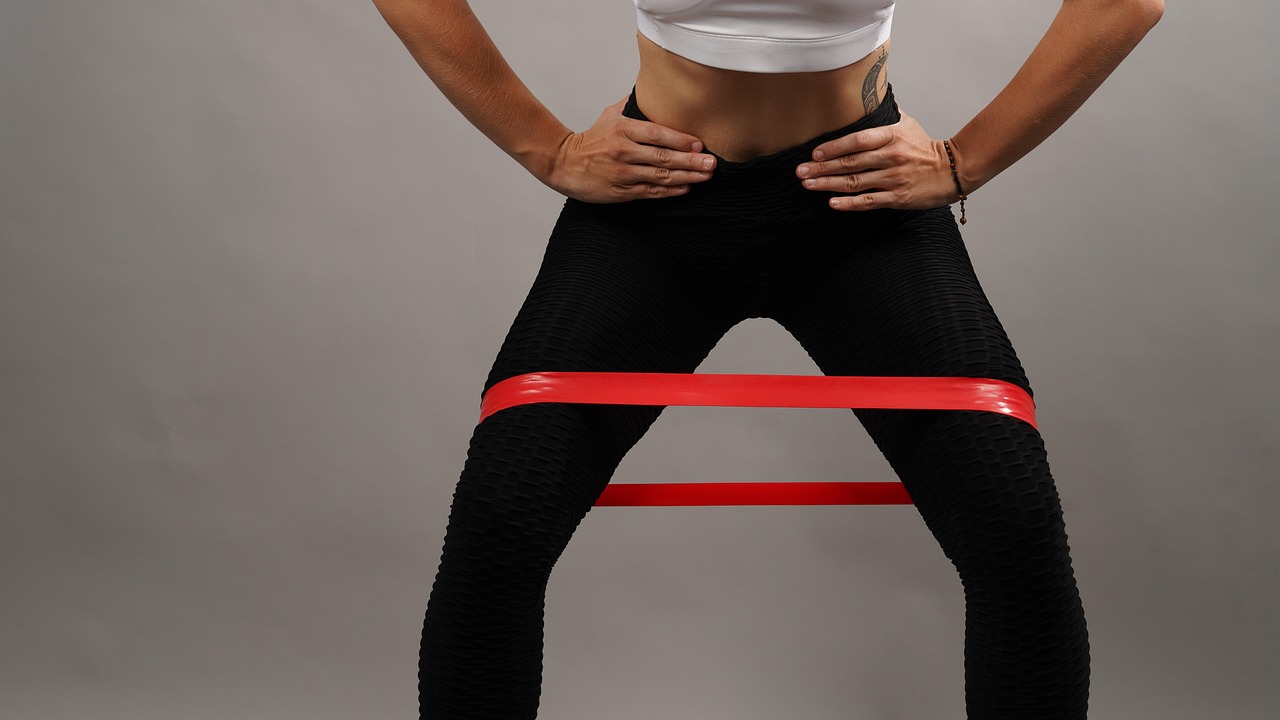
You’ll need a set of Fit Simplify Resistance Loop Exercise Bands. Loop the band just above your knees and do this circuit three times, three days this week:
- Banded lateral walks: 12 steps right, 12 steps left. Stay low, like you’re sitting into a chair, and keep your toes pointing forward.
- Banded glute bridges: 15 reps. Press your knees out against the band at the top and hold for two seconds.
- Banded squats with a three-second lower: 10 reps. Count “one, two, three” all the way down, then stand up at normal speed.
- Side plank: 20 to 30 seconds each side.
This shouldn’t wreck you. It should leave the outside of your hips pleasantly warm and a little tired. If your knees ache during the squats, shorten the depth and keep the slow lowering. That three-second count is the start of everything we do next week.
Week Two: Teach Your Quads to Brake
This is the week that saves your opening-day afternoon. We’re going to load your quads in exactly the way skiing does, slowly and under control while they lengthen. Expect to feel it the next day. That soreness is the point, and it’s much better to have it in your living room than on the mountain.
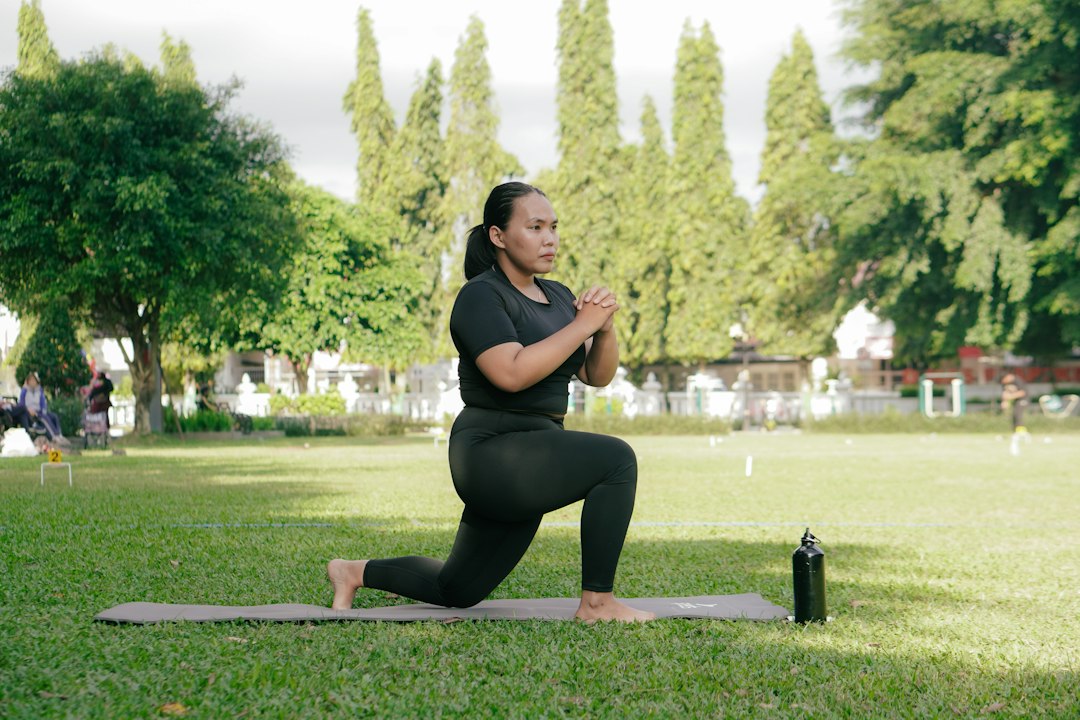
Three sessions, two or three rounds each:
- Tempo goblet squats: 8 reps, five seconds down, one second up. Hold a Amazon Basics Neoprene Coated Dumbbell or a kettlebell at your chest.
- Split squats: 8 per leg, four seconds down. Keep your front knee over your shoelaces.
- Step-downs: 8 per leg. Stand on a step or a The Step Original Aerobic Platform, then slowly lower one heel to tap the floor in front of you before you push back up.
- Wall sit: 45 to 60 seconds. Hips at knee height, back flat against the wall, breathing calmly. This is your lift-line-to-lift-line posture rehearsal.
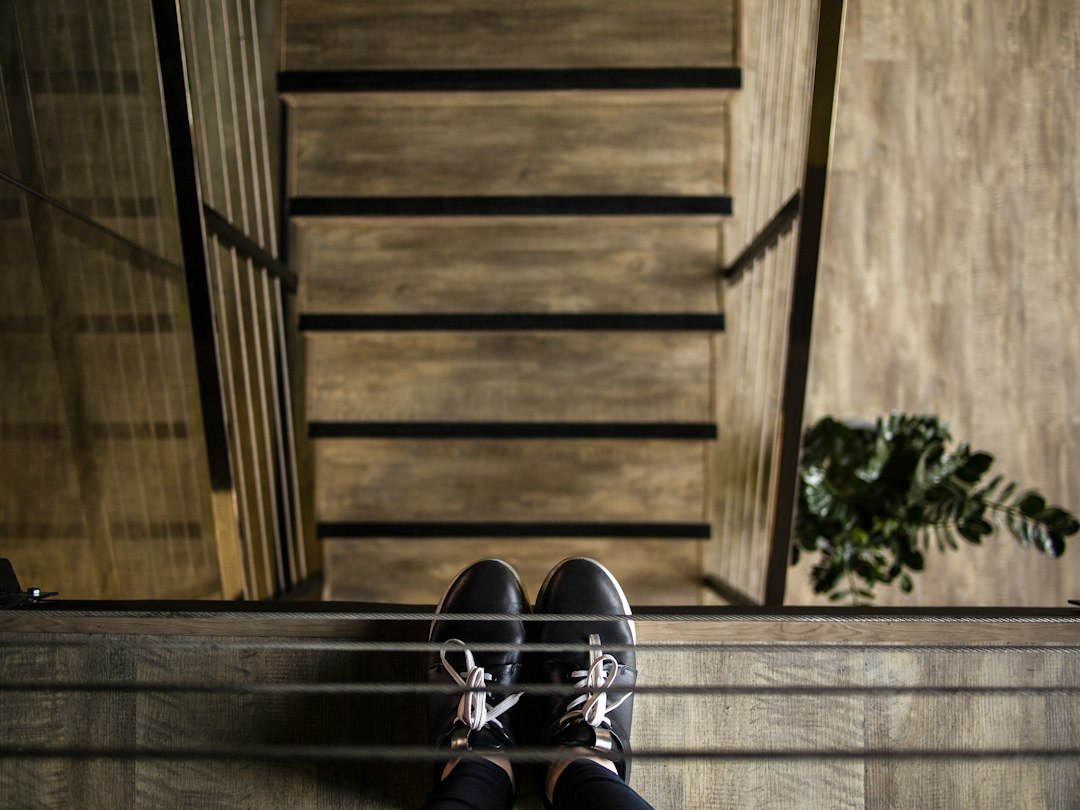
If you have a staircase at home, you have a ski trainer. Walking down two flights slowly, feeling each step land softly, is wonderful extra practice on your easy days.
Week Three: Go Sideways
Ski turns move you sideways, so this week we add lateral power. This was my favorite part of heptathlon training, believe it or not. Bounding drills were where I learned how to land softly and stay balanced, and that is exactly the skill you need.
If you’ve been following my jump rope comeback plan, your ankles and calves are already primed for this. If not, start small and be honest with yourself about landing quality.
- Skater bounds: 3 sets of 10, five each side. Leap sideways onto one foot, land quietly with your knee bent and over your toes, hold for a beat, then bound back.
- Lateral lunges: 3 sets of 8 per side. Sit back into the hip of the bent leg and keep the other leg long.
- Slider lateral lunges: 3 sets of 8 per side, using SPRI Dual-Sided Core Sliders under the straight leg. Your inner thighs will have opinions about this.
- Banded lateral walks from week one, as your warm-up.
The rule I give every skier for this week: quiet landings only. If you’re slapping the floor or your knee wobbles in on landing, shorten the bound. Distance means nothing if you can’t stick it.
Week Four: Balance When You’re Tired
Now we tie it all together. The final week is about balance, specifically balance after your legs have already worked hard, because that’s what the last run of the day feels like.
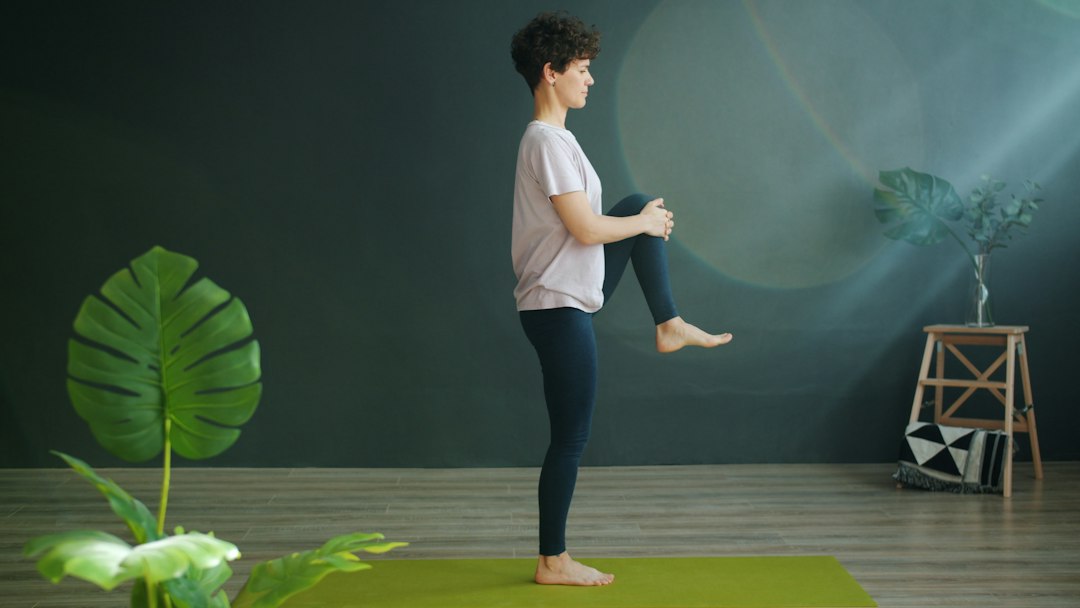
I wrote recently about why a ten-second single-leg stand is one of my favorite longevity markers. For skiing, we push that skill one step further. Try each move first on the floor, then on a Airex Balance Pad when it gets easy:
- Single-leg stand with eyes closed: 3 rounds of 20 seconds per leg.
- Single-leg Romanian deadlift: 3 sets of 8 per leg. Hinge slowly and reach toward the floor.
- Single-leg quarter squats: 3 sets of 10 per leg on the pad, knee tracking over your second toe.
- The finisher: do one round of the week-two wall sit, then go straight into 30 seconds of single-leg balance per leg. That’s the three o’clock test, in your living room.
If you want to make this even more ski-specific, a Yes4All Wooden Wobble Balance Board adds the rocking, unstable feel of variable snow. Stand on it with soft knees and just keep the edges off the floor for 30 seconds at a time.
At the end of this week, sit down on the floor and do your sitting-rising test again. Compare your score and, more importantly, notice how it felt. Most of my skiers tell me the “stand up” part feels lighter and more even between legs. That’s your ski legs showing up.
How a Week Actually Looks
I know life is busy in November, so here is the simple schedule my clients follow. Each session is 25 to 35 minutes, including a warm-up:
- Monday: Strength session for the week’s focus
- Tuesday: Easy cardio, 30 minutes of walking, cycling or jump rope
- Wednesday: Strength session for the week’s focus
- Thursday: Rest or a gentle mobility flow
- Friday: Strength session for the week’s focus
- Weekend: One longer outdoor effort, like a hike, a bike ride or a long walk with hills
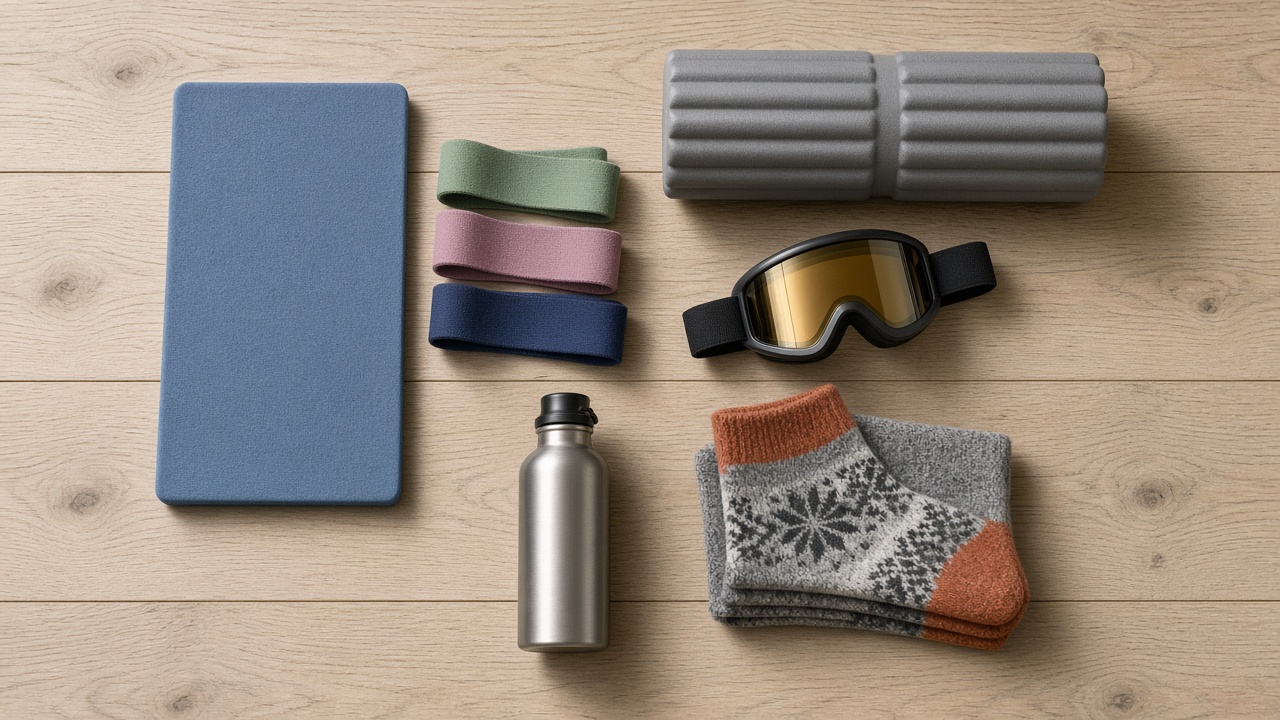
Spend a few minutes each evening on a Amazon Basics High-Density Round Foam Roller, focusing on your quads, outer hips and calves. It won’t erase soreness, but it helps you get moving the next morning. If your quads are seriously barking after week two, a TheraGun Mini Massage Gun is a nice luxury, though it’s absolutely not required.
Knees, Boots and My First-Day Rules
Knees are the number one worry I hear from skiers, and I understand why. If you’ve had a knee injury before, please talk to your physical therapist or doctor before you start bounding. For everyone else, the best thing you can do for your knees is the hip and braking work you’ve just done. Some of my clients also like the warm, supportive feel of a Bauerfeind GenuTrain Knee Support on the hill. If you’re unsure whether a sleeve or a brace makes sense for you, I walked through how I think about it in my knee support guide.
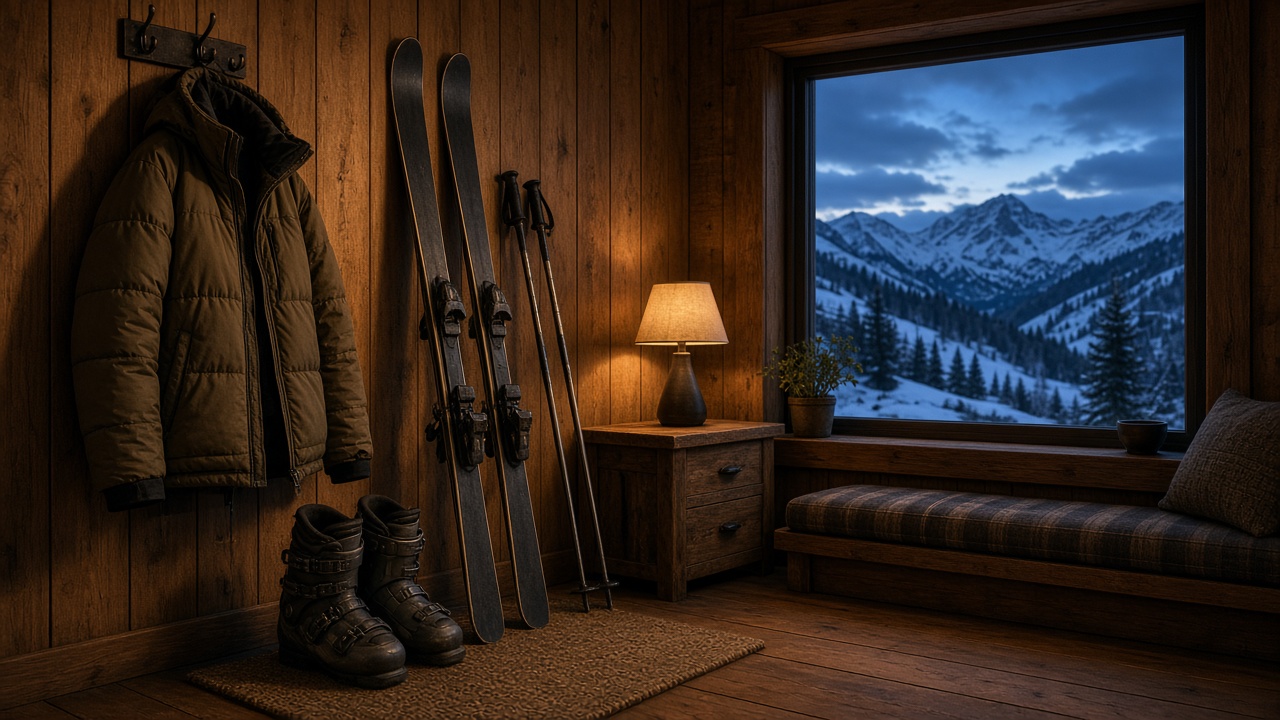
Then there are boots. Cold, damp boots make your feet cramp, your balance worse and your mood terrible. A PEET Original Electric Shoe and Boot Dryer overnight is one of the smartest investments a regular skier can make. Pair it with a few pairs of real Smartwool Ski Socks. Thin and snug beats thick and bunchy every time.
And here are my opening-day rules, which I give to every client before their first chair:
- Warm up before you click in. Five minutes of leg swings, bodyweight squats and lateral lunges in the parking lot. You’ll look a little silly. Do it anyway.
- Ski your first two runs easy. Early-season snow is often man-made and firm. Let your legs and eyes adjust.
- Hydrate like it’s July. Altitude and dry air steal water faster than you’d think.
- Quit one run early. When you hear yourself say “one more,” that’s your sign to head in. Your legs will thank you tomorrow, and you’ll want them for day two.
My Short List of Ski-Prep Gear
You can do this entire plan with your body weight and a staircase. But if you’d like to build a small ski-prep corner at home, here’s exactly what my team and I recommend:
- Hip activation: Fit Simplify Resistance Loop Exercise Bands
- Braking strength: Amazon Basics Neoprene Coated Dumbbell and The Step Original Aerobic Platform
- Lateral work: SPRI Dual-Sided Core Sliders
- Balance: Airex Balance Pad and Yes4All Wooden Wobble Balance Board
- Recovery: Amazon Basics High-Density Round Foam Roller
- On the hill: Smartwool Ski Socks and PEET Original Electric Shoe and Boot Dryer
See You at the Top of the Lift
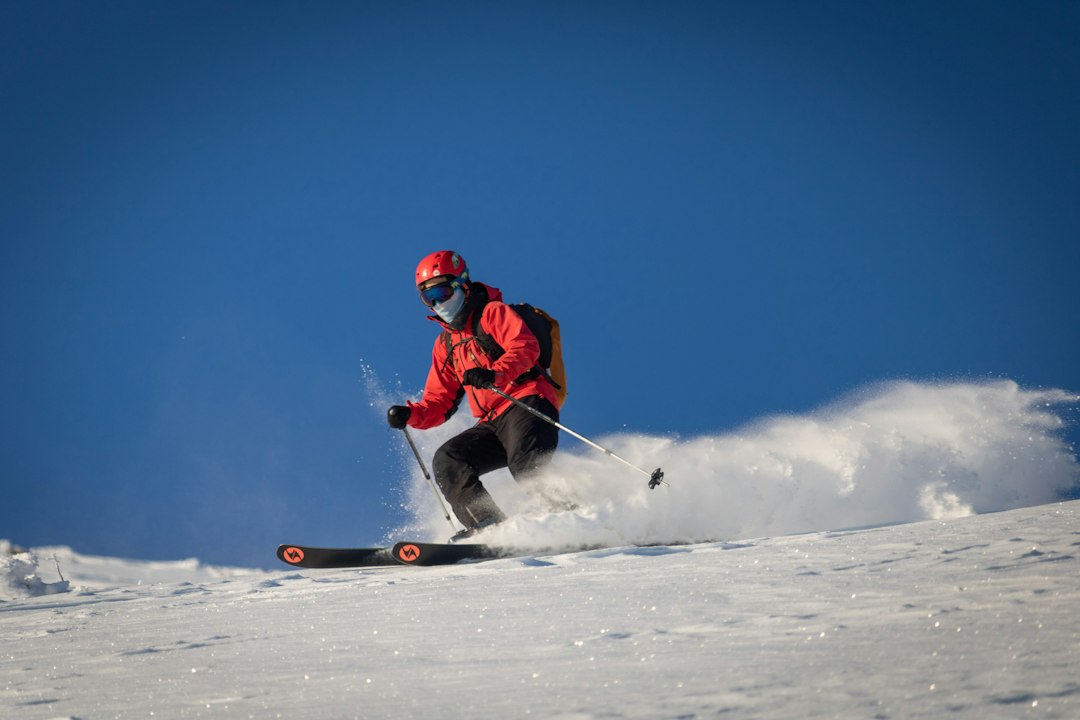
That first season after the track, I eventually figured it out. The next autumn I spent four weeks doing almost exactly what you’ve just read, and on opening day I skied from first chair until the patrol sweep without a single tremble in my legs. My husband had to drag me off the mountain. I’d found a new sport to love, and I loved it more because my body was ready for it.
So pick your date. Count back four weeks. Sit on the floor, stand up, and write down your score. Then put on a band and start week one tonight. By the time the chairs start turning at your mountain, you won’t just survive opening day. You’ll enjoy every run of it, including the last one.