Every October, my phone starts lighting up with the same text from clients: “The furnace kicked on last night and I think I slept in a sauna.” Here is the cruel math of heating season — the same night your partner finally stops complaining about cold feet, your internal thermostat decides that 2:47 a.m. is the perfect time to open every oven door in your body at once. You kick the duvet. You flip the pillow. You lie there doing arithmetic about how many hours remain before the alarm while your sleep tracker quietly records a disaster.
I coach women through this every single year, and I want to be clear about something up front: hot flashes are not a discipline problem. They are a vasomotor event — your temperature regulation narrows its comfort band almost overnight, and the furnace upstairs fires without asking permission. What we can control is the microclimate. After a decade of building these kits for clients and running every gadget my team can get their hands on, I’ve settled on a system that works in layers, the way you’d dress for a run in November. Here is exactly what goes into it, what I skip, and the order I’d buy it all in.
What’s Actually Happening at 3 A.M.
A quick science pit stop, because understanding the mechanism changes what you buy. Your hypothalamus is the body’s thermostat, and estrogen helps keep its tolerance window wide. When that window narrows, a temperature shift of less than a degree can trigger a full heat-dump response: blood vessels dilating, heart rate ticking up, sweat glands going to work. Your core barely moves. It just feels like a five-alarm fire.
That matters for shopping. Since the flare is a false alarm from a sensitive sensor, the winning gear does one of three things: pulls heat away from your skin (conduction), moves air across your body so sweat actually evaporates (convection), or tricks the sensor with a cooling signal. Anything that just claims to “reduce hot flashes” without explaining its mechanism is usually repackaged cotton with a markup. My rule for the whole kit below: physics first, marketing never.
Start Underneath: The Mattress Layer
The biggest mistake I see is building the kit from the top down — fancy pillow, pretty sheets — while sleeping on a foam mattress that stores heat like a bank vault. Memory foam is the enemy here. It hugs your body, cuts off airflow, and reflects your own warmth back at you all night. Before anything else, put a barrier between you and the foam.
The upgrade I recommend most often is a phase-change mattress pad — the good ones use materials originally developed to buffer temperature swings, absorbing heat when you’re warm and releasing it when you cool. My team logged four weeks of sleep data with three different pads last spring, and the difference was less “ice hotel” and more “the mattress stopped fighting me,” which is exactly what you want. If you run warm but don’t have full night sweats, this layer alone can quiet half the problem.
The Sheet Question Everyone Gets Wrong
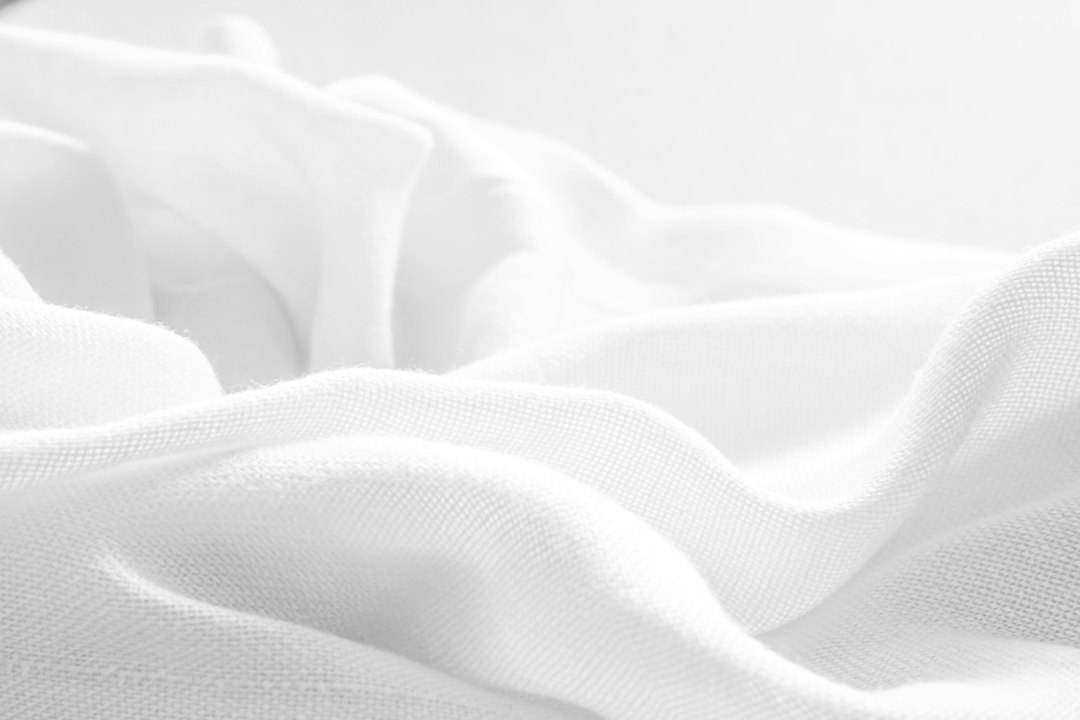
Repeat after me: thread count is not a cooling feature. High-thread-count cotton is dense, and dense fabric traps the humid microclimate your body is trying to shed. What you want is weave and fiber that move moisture outward — bamboo-derived viscose and eucalyptus lyocell do this dramatically better than traditional cotton percale.
When clients ask where to start, I point them to breathable bamboo sheet sets before anything with a chip or a battery in it. One client of mine, a teacher who was changing pajamas twice a night, emailed me after a week with her new sheets and said the words I hear constantly: “I didn’t realize how much of the misery was the fabric.” Budget note — these run a fraction of what most “cooling” gadgets cost, and they work every single night without charging.
The Twenty-Dollar Fix That Earns Its Spot
Not every problem needs a premium solution. Before you spend real money on a cooling pillow, try a gel pillow insert — a flat pad that sits inside your pillowcase and stays cooler than the fabric around it. Is it magical? No. Does it give you a genuinely cold surface to rotate onto when a flash starts? Every time, for about fifteen or twenty minutes, which is roughly the life of most hot flashes anyway.
My gym bag has carried one for years, and I hand them out at workshops like party favors. There is a specific relief in the middle of the night that comes from flipping your pillow and finding cold waiting there. It will not fix a mattress that hates you — see above — but as a first rung on the ladder, it is unbeatable value.
Flip-Cool Pillows and the Chill Window
If you want to go further than an insert, the newest generation of cooling gel pillows is genuinely better than what existed five years ago. The design that impressed my testing group most uses a “flip-to-cool” construction: one side buffers heat through the night, and when you flip it, the reverse side dumps stored warmth and reads cold to your skin for a window of about twenty minutes.
Set expectations honestly. No pillow is an air conditioner. The pillow’s job is to give your hypothalamus a cold signal at the exact moment it’s sounding the alarm — and a flip surface does that more efficiently than anything else I’ve tested under fifty dollars. If night sweats soak your pillow rather than just warming it, pair this with the mattress layer and skip straight past the inserts.
Moving Air: The Bed Fan Decision
Now we reach the single most effective — and most expensive — category in the kit: active airflow under the covers. The gold standard is a BedJet-style climate system, which pushes temperature-controlled air between your sheets through a thin nozzle. It feels absurd for about four minutes, and then it feels non-negotiable. Dual-zone versions ended more thermostat wars in my clients’ bedrooms than any conversation ever has — one side gets arctic air, the other side gets to keep their flannel.
The honest catch is price; these cost more than everything else on this page combined. If that’s out of range, a bed fan with a wireless remote that pulls air out from under the top sheet captures a surprising amount of the benefit for a quarter of the cost. Either way, the principle is the same: sweat only cools you if it evaporates, and under a duvet, it can’t. Moving air finishes the job your body started.
What You Wear Beats What You Own
Here is the part nobody wants to hear: that beautiful cotton nightgown is working against you. Cotton absorbs sweat and holds it against your skin, which means you lie in a damp wrap all night. Modern moisture-wicking sleepwear does for your nights what your running gear did for your miles — pulls moisture off your skin and spreads it to evaporate.
And for the flash that catches you in daylight — a meeting, a grocery line, the middle of a workout — nothing beats the low-tech classic. I keep a cooling towel like the ones my athletes have used for years in my desk drawer, my car, and my gym bag. Wet it, snap it, and it drops its surface temperature noticeably and stays that way for a half hour. Ten dollars, zero charging, indestructible. If the whole industry disappeared tomorrow, I’d rebuild it around these.

The Wrist Thermostat: Splurge or Science?
The most interesting gadget in this space is also the most misunderstood. The Embr Wave 2 is a wristband that pulses precise cool against the inside of your wrist — the same spot where you check a pulse — to deliver a temperature signal your brain treats as meaningful relief. Let me be the honest broker: clinical work supports that it improves perceived thermal comfort, and plenty of women I trust call it a game changer for nighttime flares. It does not cool your body or your room, and skeptics rightly note it can’t fix a stuffy bedroom.
My read after a season of client feedback: it’s a signal device, not an environment device. If your flashes are frequent but your bedroom is already dialed in, the wrist can be worth the splurge. If your mattress is a heat vault and the windows are shut, fix that first — no bracelet out-engineers a foam mattress in July. For the data-minded, I wrote a whole season up with the new hormone-aware wearables, which attack this problem from the tracking side.
The Daytime Pocket Kit
Hot flashes don’t respect your schedule, so the kit needs a travel version. Two items cover ninety percent of it. First, a hands-free neck fan — the bladeless kind that sits like headphones — has become the item my clients buy as gifts for each other, which tells you everything. You can wear one through a school pickup, a job interview prep, or a two-hour flight and look like you’re wearing earbuds.
Second, keep a small thermal face mist in the same bag. A cool mist across the neck and wrists triggers evaporative cooling at the pulse points and buys you three to five minutes of grace while the crest passes. Neither item changes your temperature much — they change how survivable the crest feels, which is most of the battle.

The Nightstand Ritual
Gear gets all the attention, but the thirty seconds before lights-out sets the tone. A tall glass of ice water on the nightstand — hydrated bodies dissipate heat better, and sipping cold water during a flare measurably helps. Layers on your side of the bed only: a light quilt you can kick in one motion instead of a single heavy duvet you have to wrestle at 3 a.m. And a plan, decided in daylight, for what you’ll do when a flash hits — flip, sip, breathe — so you’re not negotiating with a furnace while half asleep.
This pairs with the wind-down structure I built in the nightstand test I run before the clocks fall back: the calmer the runway into sleep, the fewer 3 a.m. wake-ups amplify into full insomnia. And a quick contradiction to flag before anyone emails me — yes, I also recommend weighted blankets for anxiety, and I stand by both. The trick my clients use is a light wicking blanket as your base layer and the weight on top only on the no-flash stretch of the month; my weighted blanket guide covers choosing one you can survive in June.

What I Tell Clients to Skip
Every category has its toll lanes. Skip “cooling” mattresses sold on gel layers buried three inches inside foam — you cannot feel them, and my testers never could either. Skip anything menopause-branded that costs triple the identical unbranded item; a $9 towel is a $9 towel whether the box says “hot flash” or “beach.” Be wary of cooling weighted blankets marketed as solving both problems at once — weight and heat are opposing forces, and combining them usually means doing neither well.
And skip the reflex to buy everything at once. I’ve watched too many women spend six hundred dollars in one panicked October night and use none of it correctly by Thanksgiving. This is a ladder, not a shopping spree.
The Order I’d Buy It In
If I were building this kit from zero on a budget, here is the exact sequence. First the twenty-dollar gel insert and a real pair of wicking pajamas — under forty dollars combined, and you’ll feel the difference tonight. Second, the bamboo sheets, because they work every night forever. Third, the neck fan for daytime relief. Fourth, the phase-change mattress pad once you know the sheets aren’t enough on their own. Fifth, the bed fan — this is the big-ticket item you buy when the cheaper layers have earned your trust and proven the concept. The wrist wearable comes last, as a precision tool for a bedroom you’ve already optimized.
Sleep is the lever that moves everything else I coach — strength, mood, metabolism, patience with your family on a Tuesday. You cannot out-supplement a bedroom that’s fighting you. If this season is the one where the 2:47 a.m. wake-ups finally loosen their grip, that’s worth more than any gadget on this page. Start with one layer this week. Your middle-of-the-night self is already thanking you — and if you want the full deep-sleep stack, the mouth-tape experiment I documented here is the ten-dollar companion piece my readers ask about most.