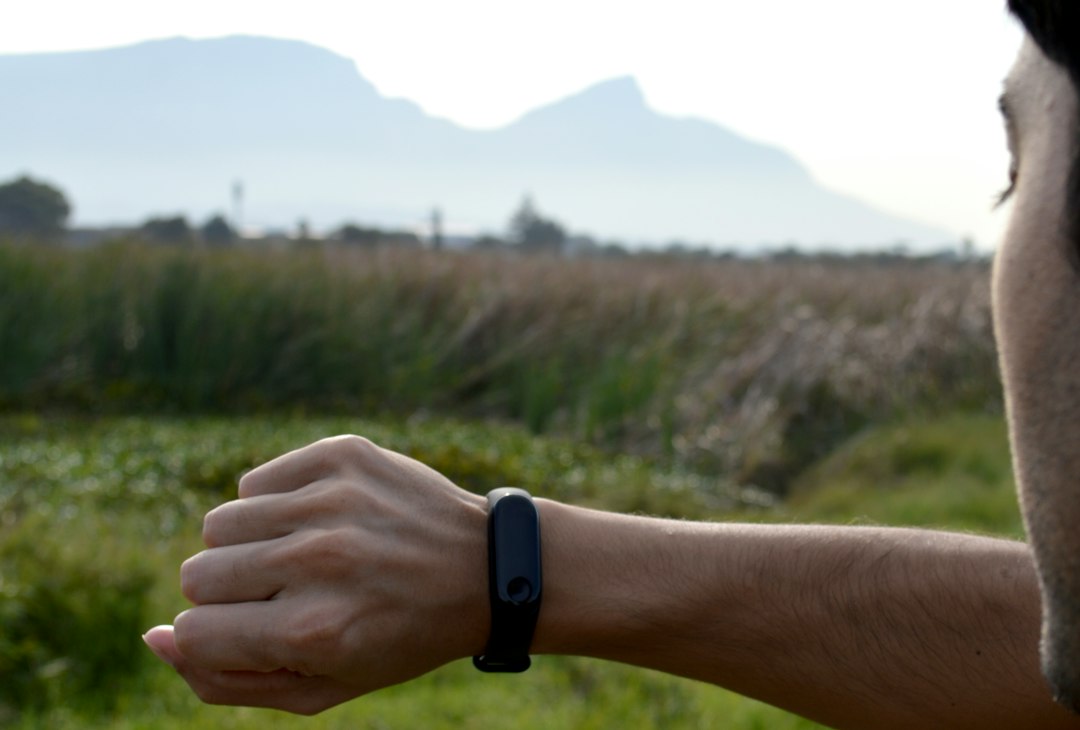
There’s a specific moment I replay for every athlete who asks me whether their watch is good enough for heart rate training. It’s 6:14 on a Tuesday morning, I’m ninety seconds into the third round of rope slams, and I glance at my wrist: 132 beats per minute. Meanwhile, the elastic band strapped around my chest says 174. One of them is lying, and my legs already know which one. That gap — forty-two beats at the exact moment the data mattered most — is what kicked off a month-long experiment my team and I now call the dual-wear project.…
-
-
Last Tuesday at seven in the evening, I laced up for my usual neighborhood loop and made it exactly four blocks before I noticed the streetlights flickering on above me. Two months ago, that same run happened under a sky so bright I wore sunglasses. Now I was squinting at cracked sidewalks and dodging shadows I couldn’t quite judge. My training partner laughed when I grumbled about it, but my coaching brain was already doing the math: we are entering the six-week stretch where daylight disappears at roughly two minutes per day, and most people don’t adapt until their routine…
-
Here is something twenty years of competitive training never taught me: my legs have been lying to me. Not on purpose — they simply report effort the way a gossip reports news, with a delay and a bias. Heart rate, that gold-standard metric I have worn on my chest since my heptathlon days, has the same problem. It lags. It drifts with heat, caffeine, sleep debt, and plain old anxiety. So this summer, when a researcher I work with kept mentioning muscle oxygen monitors — the little infrared sensors that sports scientists have been strapping to elite cyclists for a…
-
My smart ring tracks my sleep stages, my continuous glucose monitor watches my metabolic response to a sweet potato, and my watch nudges me when my heart rate variability dips. I love all of it. And yet the single most predictive number for my long-term health — the one my doctor actually leans forward for — is completely invisible to every gadget I own. Blood pressure. It took an annual physical, a slightly elevated reading in a freezing exam room, and a nurse who said “you always spike in here” for me to finally close that gap at home. Six…
-
The cramp hit at kilometer nine, in the middle of a tempo run last August, and it hit like someone had snipped a wire in my left calf. I grew up as the kid who crawled early and never stopped moving, spent a decade chasing a heptathlon dream that ended a fraction of a point short of the Olympic trials, and I still learned about sodium the dumb way — face-down on a hot trail, texting my assistant to cancel my afternoon clients. Here is the part that took me three summers to accept: water was never the problem. I…
-
I spent three months testing creatine powder, gummies, and capsules. Here is the real cost per dose, the label trick to avoid, and which format actually fits your life.
-
There’s a moment every evening around 8:47 p.m. when my kitchen goes quiet. The dishes are done, the laptop is closed, and the only decision left is what happens between now and lights-out. For years, that decision was nothing — I’d scroll, answer one last email, and wonder why my sleep scores looked like a roller coaster built by a toddler. Then I started building what my coaching team now affectionately calls “the 9 p.m. elixir,” and six weeks of wearable data later, I’m honestly a little annoyed at how simple it was. The drink itself takes four minutes to…
-
I have a confession that my coaching clients already know: I don’t trust any recovery tool until I’ve lived inside it. So when infrared sauna blankets started showing up in my feed — promising spa-grade heat therapy from the couch, for the price of a few months of gym dues — I did what I always do. I cleared my calendar, strapped on my favorite wearable, and told my team to hold me accountable for thirty consecutive nights of data. No vibes. No wishful thinking. Just sweat, spreadsheets, and a slightly bewildered cat. The Setup: Why I Let a Sleeping…
-
There is a particular kind of humiliation that only happens in a packed yoga studio: your hands slowly sliding forward in downward dog while you smile at your neighbor like everything is fine. I lived that scene years ago on a bargain-bin mat that cost less than my post-class smoothie, and I remember thinking, surely the mat isn’t the problem. Reader, the mat was absolutely the problem. Since then I have practiced on, sweated on, rolled up, and thrown out more mats than I care to admit — fifteen at last count, not including the loaners my coaching team keeps…
-
I spent two decades coaching athletes who could tolerate brutal training loads, and I still believe the biggest threat to most people’s health isn’t a missed workout — it’s the chair. The average desk worker sits for nearly ten hours a day, and no amount of evening exercise fully cancels that. So when walking pads started blowing up all over my feed last year, my skeptical coach brain had two simultaneous reactions: “gimmick” and “but the physiology is actually sound.” I let it marinate for months. Then, in July, my team and I decided to run the experiment properly —…