I’ll be honest — when a friend slid a pair of Bala Bangles across the table at brunch and said, “Just wear these around,” I laughed. Two pounds. On my wrists. During normal life. I’ve deadlifted twice my body weight and sprinted alongside near-Olympic-level athletes. What could a wrist weight the heft of a bag of coffee beans possibly do for someone like me?
Thirty days later, I’m writing this with slightly sore deltoids and a completely different relationship with the concept of “incidental fitness.” Let me explain.
The Science I Should Have Respected Sooner
NEAT — Non-Exercise Activity Thermogenesis — is the energy your body burns doing everything that isn’t structured exercise. Walking the dog, carrying groceries, gesturing enthusiastically during a conversation (I do this a lot). For most people, NEAT accounts for more daily calorie expenditure than a gym session. Research consistently shows that lean individuals often have NEAT levels up to 350 calories higher per day than their sedentary counterparts.
I’ve coached clients on NEAT for years. I tell them to take the stairs, park further away, pace during phone calls. But I’d never considered what happens when you simply add resistance to the movement you’re already doing. It’s like turning your entire day into a low-intensity farmer’s carry.
The 1-pound Bala Bangles are the entry point — light enough to forget you’re wearing them, heavy enough to matter. The 2-pound version is what I lived in for this experiment. And yes, they make a 3-pound pair for anyone who wants to feel it immediately.

My 30-Day Protocol (Deliberately Unscientific)
I wanted this to reflect real life, not a controlled study. So I kept my normal training schedule — three strength sessions, two sprint days, one long walk — and simply strapped on the 2-pound Bangles from the moment I finished my morning coffee until I started my evening wind-down. Roughly 10-11 hours per day.
I tracked everything with a basic fitness tracker I’d been meaning to test for months. Steps, heart rate, estimated calorie burn, sleep. I also logged shoulder mobility every third day using a simple wall-reach test I use with my coaching clients.
The rules were simple: wear them during everything. Cooking breakfast. Walking to the mailbox. Vacuuming. That impromptu living-room dance break when a good song came on. No extra workouts. No changes to nutrition. Just weight on my wrists while life happened.

Week One: The Noticeability Phase
Days one through three, I was hyper-aware of the weight. Not because it was heavy — two pounds per wrist is genuinely comfortable — but because my body kept trying to figure out what was different. My arms felt like they were moving through slightly thicker air. By day four, I stopped noticing entirely.
What I did notice was my step count. Without changing my routine, I was taking roughly 600-800 more steps per day. The reason? I’d started fidgeting more. Tapping my fingers, gesturing while on calls, doing little shoulder rolls while waiting for the kettle. The extra weight had made me more restless, not less. My nervous system was treating the Bangles like a low-grade workout that never ended.
I also found myself doing micro-movements I wouldn’t normally do: reaching for things on high shelves, doing a quick arm circle when I stood up from my desk. Nothing dramatic. Just… more. The kind of movement that disappears when you spend eight hours at a computer.
Week Two: The Shoulder Awakening
By day ten, something shifted. My shoulders felt — and I know how this sounds — alive. Not sore in the traditional DOMS sense. More like the low-grade fatigue you get from a long day of swimming in the ocean. A pleasant hum of constant engagement.
My mobility test confirmed it. My wall reach — how far I could slide my hand up a wall behind me without arching my back — improved by about two inches on each side. Fifteen years of athletic training, and two weeks of wearing wrist weights while folding laundry moved the needle more than three months of dedicated shoulder stretches.
The explanation is straightforward: sustained low-level loading. Your deltoids, rotator cuff muscles, and traps are designed to work all day at low intensities. Modern life lets them sleep. The Bangles woke them up gently and kept them working for hours. It’s the same principle behind why I recommend building a dedicated training space at home — accessibility drives consistency.

Week Three: The Accidental Strength Gain
Here’s where it got interesting. On day nineteen, I hit a PR on my overhead press. Not a massive one — five pounds — but I hadn’t changed my programming. My shoulders were simply stronger from three weeks of all-day micro-loading.
This tracks with what researchers call “the greasing the groove” effect. High-frequency, submaximal loading builds neurological efficiency and connective tissue resilience. It’s why gymnasts get absurdly strong without touching weights — their bodies work against resistance constantly. I’d inadvertently created a similar effect with two pounds of silicone and steel.
I started recommending the experiment to my coaching clients that same week. Several of them already had adjustable ankle weights gathering dust in their closets. I told them to stop thinking of weighted wear as a workout accessory and start treating it like a daily habit. The response was immediate: people who’d been stuck in sedentary ruts suddenly had a reason to move more.

Week Four: The Calorie Data I Didn’t Expect
My tracker reported an average daily calorie burn increase of approximately 180-220 calories. Over 30 days, that’s roughly 5,400-6,600 additional calories — close to two pounds of body fat, if the math were perfectly linear (it isn’t, but the direction matters).
More importantly, my NEAT score — the tracker’s estimate of non-exercise energy expenditure — climbed steadily throughout the month. I wasn’t burning more because the weights themselves were heavy. I was burning more because the weights made me move more. They turned standing still into a mini-activity. They made me choose the longer walking route. They made grocery shopping feel like a training session for my upper body.
If you spend any part of your day at a desk, this is where the domino effect matters. The biggest contributor to NEAT loss in modern adults isn’t the absence of gym time — it’s the hours of complete stillness. A walking pad under your desk solves the lower body half of that equation. Wrist weights handle the upper body. Together, they transform a sedentary workday into something that at least resembles movement.

Who This Actually Works For (and Who Should Skip It)
After a month of living with weighted bangles, here’s my honest assessment.
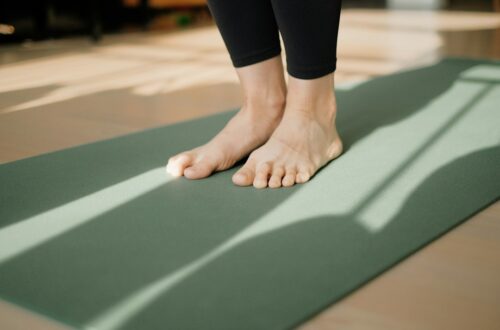
This works for: Anyone with a sedentary job who struggles to hit daily movement goals. People recovering from injury who need ultra-low-intensity muscle engagement (with clearance from their doctor). Walkers who want to squeeze more out of their daily stroll without adding time. Anyone who’s already built a solid fitness foundation — similar to how I describe the progression from barefoot training — and wants to layer in passive resistance.
Skip it if: You have acute shoulder, elbow, or wrist injuries. You have tendinitis in your forearms or rotator cuff. You’re so deconditioned that two pounds feels genuinely heavy during normal activity (start with bodyweight movement first). And please, for the love of your joints, don’t jump straight to the 3-pound pair if you’ve never worn weighted gear before.
Building a Full Incidental-Fitness Stack
Once I saw how well wrist weights worked as a passive training tool, I started experimenting with stacking other low-friction resistance options. Here’s what earned a permanent spot in my rotation and what didn’t:
The Zeerun weighted vest became my walking companion. Ten pounds distributed across my torso turns a 30-minute neighborhood loop into genuine cardio. The ZELUS weighted vest is another solid option if you want something more budget-friendly, though the fit isn’t quite as snug for smaller frames.

A set of resistance bands with handles lives in my desk drawer now. Three minutes of rows between meetings keeps my posture honest. They pair beautifully with the Bangles — bands for active breaks, weights for passive loading. If you’ve already got a home gym setup, these aren’t replacements — they’re supplements that fill the gaps between sessions.
For lower-body days, a Pilates ring adds targeted inner-thigh and glute engagement while I’m watching TV. I’ll do squeeze sets during commercial breaks — ten reps, rest, repeat. It’s mindless, effective, and far more productive than scrolling my phone.

The Honest Takeaway After 720 Hours
By the end of 30 days, my average daily step count was up 2,100. My shoulders had visible definition that two clients independently commented on. My overhead press PR went up five pounds. I slept slightly better — likely because the extra movement accumulated healthy fatigue. And I’d burned through a surprising amount of mental resistance around the idea that fitness has to happen in designated blocks of time.
Here’s the truth I keep coming back to: the fitness industry has trained us to think in sessions. Forty-five minutes here, an hour there. But your body doesn’t care about sessions. It responds to the total load — mechanical, metabolic, neurological — that you place on it across all 24 hours of a day. Two pounds on your wrists for ten hours is 20 pound-hours of work. That’s not nothing. That’s a training session spread thin across your life.
I still train hard. I still sprint, lift, and push myself in structured workouts. But I no longer pretend those sessions are the whole picture. The Bangles opened my eyes to the vast middle ground between “working out” and “doing nothing” — and that middle ground is where most of our lives actually happen.

If you’re someone who feels like there’s never enough time to exercise, this might be the most efficient fitness decision you make this year. You don’t need to find an extra hour. You just need to make the hours you already have slightly heavier.
Start with one pound. Wear them for a week. See if you don’t start reaching for things a little more enthusiastically. I did. And my shoulders are still thanking me.



2 Comments on “I Strapped Two Pounds to My Wrists for 30 Days — What NEAT Fitness Actually Does to Your Body”