The text came in at 5:52 on a Tuesday morning, which is how I knew it mattered. One of my longtime clients, a 47-year-old who has deadlifted more than her body weight and once out-sprinted her teenage son, wrote: “Same program, same food, same sleep. My squat went backwards, my jeans went tighter, and I woke up at 3 a.m. four nights this week. What is happening to me?”
What was happening was perimenopause, the years-long hormonal transition that can start in a woman’s late thirties or early forties and run right up to the last period. Searches for perimenopause strength training have more than doubled this year, and I am not surprised. My inbox has been telling me the same story for a while. Women who have trained for decades suddenly feel like their bodies switched leagues without telling them, and the most common advice they get is to “go easier on yourself” with lighter weights and more cardio.
I think that advice is backwards. This is the season to lift heavier, more deliberately, and with a plan that respects recovery. With the clocks falling back this Sunday and evenings going dark by five, it is also the season when routines quietly fall apart. So my team and I built the three-day template I now hand to every client in the transition. It fits into three hours a week, works in a spare room, and treats the dark months as a building block instead of a write-off.
What Actually Changes in the Gym During the Transition
Estrogen is not just a reproductive hormone. It helps your muscles respond to training, supports bone remodeling, influences how you handle blood sugar, and plays a role in temperature regulation and sleep. As levels swing and then decline, many women notice a cluster of changes that show up directly in their training logs.
Muscle becomes a little harder to build and a little easier to lose. Body composition tends to shift toward the midsection even when the scale barely moves, which is why I prefer a body-composition reading over a plain weight. My friends over at our sister tech site ran a 90-day experiment with seven smart scales that is worth reading before you trust any single number. Bone loss accelerates in the years around the final period. Recovery can feel slower, especially when night sweats chop sleep into pieces.
None of that means your training stopped working. It means the signal you send has to be clearer. Muscle and bone both respond to load that is genuinely challenging. Twenty reps with a weight you could curl all day is a pleasant workout. It is not a strong enough message to a body that has started listening less.
Why I Push Heavier, Not Lighter
When I was competing in the heptathlon, my coaches never confused being tired with being trained. That lesson matters more at 45 than it did at 22. Fatigue is easy to collect. Adaptation requires the right stimulus and enough recovery to absorb it.
For women in the transition, the right stimulus usually means compound lifts done in the range of roughly 4 to 8 hard reps, where the last one or two reps feel genuinely difficult but your form holds. I wrote about the research behind heavy loading for bone in Bone Is a Verb, including the trial that challenged the old idea that women with low bone mass should avoid heavy lifting. The short version: supervised, progressive, heavy work was not just safe for most participants, it moved the needle where light work did not.
Heavier does not mean reckless. It means you spend a few weeks owning the movement patterns, then nudge the load up in small, honest jumps. Most of my clients are lifting more after six months than they did before the transition started, and the confidence that comes with that is its own kind of hormone therapy.
The Three-Day Template
Three sessions a week, about 50 minutes each, with at least one day between them. Monday, Wednesday, and Friday work for most people. Each session starts with a five-minute warm-up of brisk marching, hip circles, arm swings, and a few bodyweight squats, then moves into the main lifts. Rest two to three minutes between heavy sets. That rest is not laziness; it is how you lift the next set heavy instead of medium.
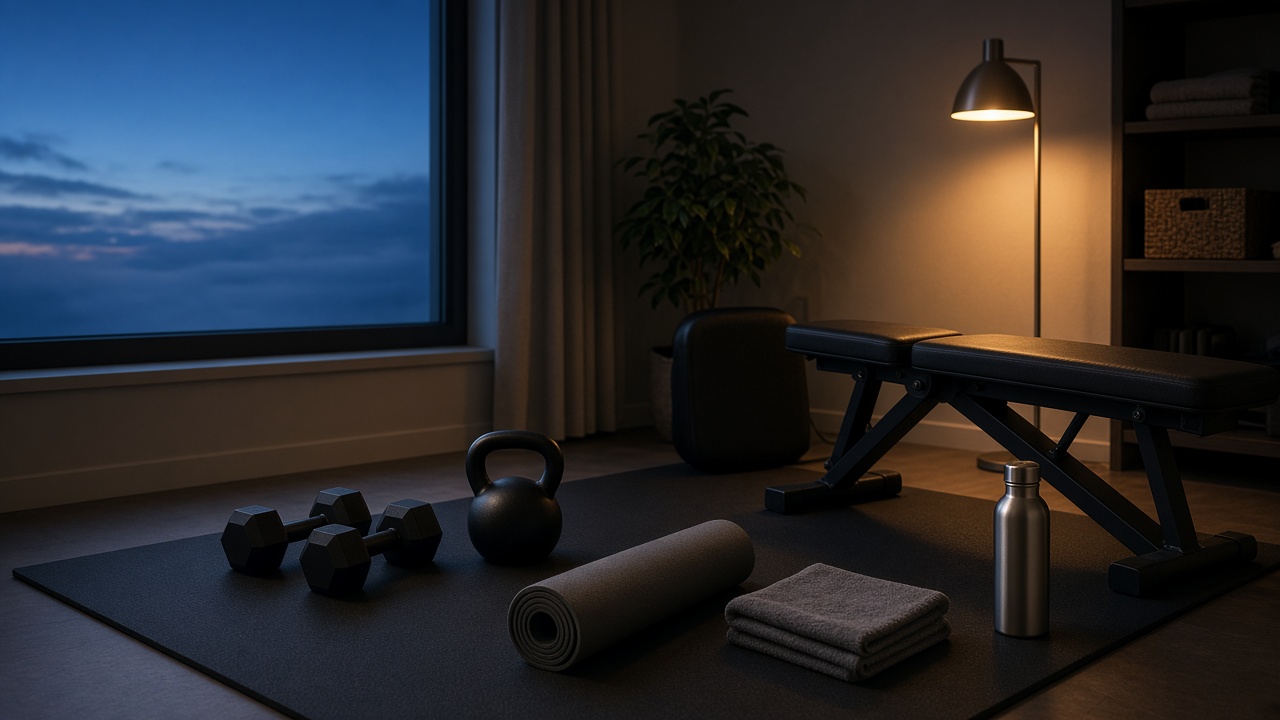
For equipment, a pair of Bowflex SelectTech 552 Adjustable Dumbbells covers almost everything at home, since they dial from 5 to 52.5 pounds and replace an entire rack. Add a sturdy FLYBIRD Adjustable Weight Bench for rows, presses, and step-ups, plus one heavy CAP Barbell Cast Iron Kettlebell for deadlifts and carries. If you train at a gym, use the barbell and machines freely; the template translates directly.
Day A: Lower-Body Strength
- Goblet or dumbbell squat: 4 sets of 5 to 8 reps
- Kettlebell or dumbbell Romanian deadlift: 3 sets of 6 to 8 reps
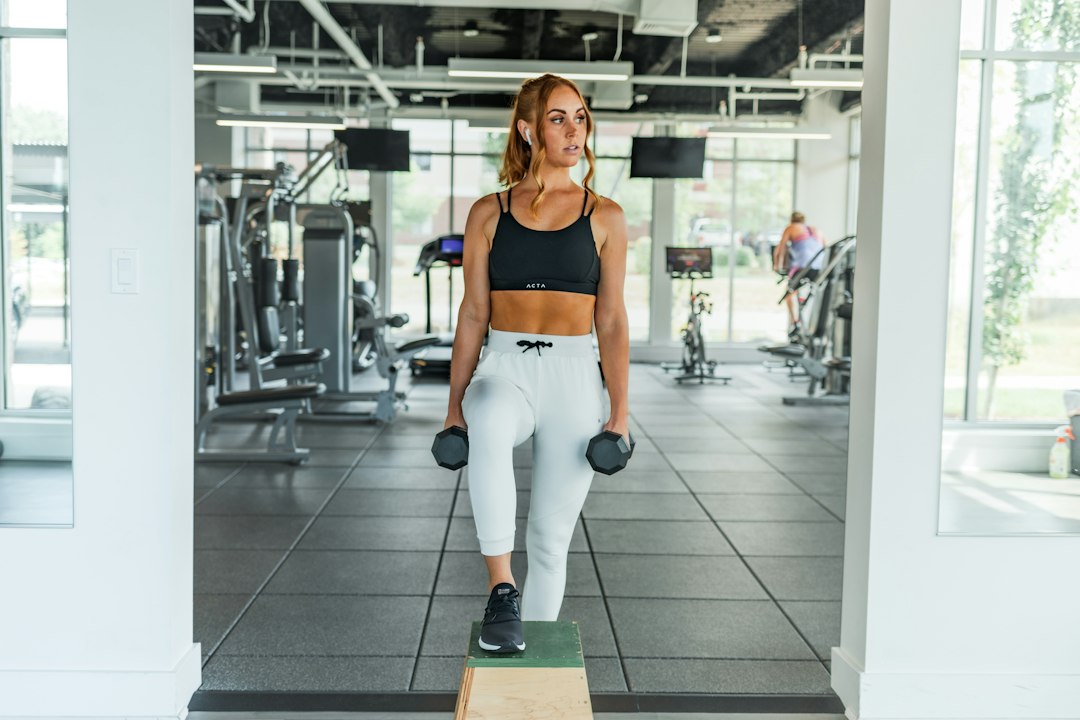
- Weighted step-up onto the bench: 3 sets of 6 per leg
- Suitcase carry with one heavy weight: 4 walks of 30 to 40 steps per side
The carry looks humble, but it trains grip, trunk stiffness, and hip stability at the same time. It is also the exercise my clients say makes them feel the most capable in daily life, from hauling groceries to lugging a holiday turkey.
Day B: Upper-Body Push and Pull
- Dumbbell bench press or floor press: 4 sets of 5 to 8 reps
- Single-arm dumbbell row: 4 sets of 6 to 8 per side
- Half-kneeling overhead press: 3 sets of 6 to 8 per side
- Banded pull-apart and face pull: 2 sets of 15, slow and controlled
I like a set of Fit Simplify Resistance Loop Bands for the finisher work and warm-ups. They are cheap, they live in a drawer, and they give your shoulders some high-rep blood flow without adding joint stress after the heavy sets.
Day C: Full Body and Power
- Trap-bar or dumbbell deadlift: 4 sets of 4 to 6 reps
- Split squat with rear foot elevated: 3 sets of 6 per leg
- Push-ups (incline if needed): 3 sets, stopping two reps short of failure
- Kettlebell swing: 5 sets of 10 crisp reps
- Impact block: see the next section
Day C is where we wake up the fast-twitch fibers that tend to fade first with age. Power, meaning the ability to produce force quickly, drops faster than raw strength, and it is the quality that keeps you from falling when you catch a toe on a curb in the dark.
The Ten Jumps That Talk to Your Bones
Bone likes sudden, varied loads. Lifting gives it the heavy part; a small dose of impact gives it the sudden part. At the end of Day C, and on one or two non-lifting days if you feel good, I have clients do a short impact block: 10 to 20 low pogo hops, a few drop landings from a low step, or a minute of easy rope skipping.
For the step, a classic The Step Original Aerobic Platform is stable, adjustable, and doubles as a step-up box on Day A. For skipping, I like the Crossrope Get Lean Weighted Jump Rope Set because the slightly heavier rope slows the rhythm and makes clean landings easier to learn.
Start small. If you leak urine when you jump, that is common and fixable, not a reason to quit forever. A pelvic floor physical therapist can be one of the best investments you make in this decade. And if you already have an osteoporosis diagnosis or a history of fractures, get your doctor or a physical therapist to sign off on impact before you add it.

How to Progress Without a Coach in the Room
The plan only works if the load creeps up. My rule is simple: when you hit the top of the rep range on every set with good form, add the smallest jump available next session. For adjustable dumbbells, that is often 2.5 pounds per hand. Then work back up through the rep range again.
Write it down. Memory is a terrible training partner, especially when sleep is patchy. I keep my own numbers in a Clever Fox Fitness Journal because paper does not ping me with notifications at 6 a.m. Record the weight, the reps, and one word about how it felt. Over a few weeks, that one word becomes incredibly useful. “Sluggish” on three consecutive Wednesdays tells you something your spreadsheet will not.
Plan a lighter week every fourth or fifth week where you keep the same exercises but drop the load by about a third. In the transition, this deload is not optional. It is the release valve that keeps a rough patch of sleep from turning into a nagging injury.
Fuel the Work: Protein, Creatine, and the Magnesium Question
You cannot out-lift an empty plate. For most active women in this stage, I aim for roughly 1.2 to 1.6 grams of protein per kilogram of body weight per day, spread across meals rather than piled into dinner. If that sounds like a lot, my piece on spreading protein across the day walks through what that actually looks like on a plate. Greek yogurt, eggs, cottage cheese, fish, and lean meat do most of the heavy lifting.
When food falls short, a scoop of whey isolate is the most efficient patch. Whey isolate sales nearly doubled this year for good reason: it mixes clean, is low in lactose, and lands around 25 grams of protein per serving. I like Momentous Essential Grass-Fed Whey Protein Isolate because it is third-party tested for sport, which matters when you cannot verify what is in the tub yourself.

Creatine is the supplement I most wish someone had handed me at 40. Three to five grams a day of plain creatine monohydrate supports strength gains and is one of the most studied supplements in sport, with growing research in women. I covered my own conversion story in the supplement nobody told women about. My go-to is Thorne Creatine Monohydrate, unflavored, stirred into morning coffee or that yogurt bowl.
Magnesium is the question I get asked most. It will not fix hormones, but many women do not get enough from food, and a glycinate form at night is gentle on the stomach. A bottle of Pure Encapsulations Magnesium Glycinate sits on my nightstand, and several clients tell me it helps them settle. Check with your doctor first if you have kidney issues or take other medications.
Recovery When Sleep Is the Weakest Link
Here is the uncomfortable truth: the transition often hits sleep first, and sleep is where adaptation happens. You can run a perfect program and still stall if you are waking up drenched at 3 a.m. Treat your bedroom like part of your training plan. Cool, dark, and consistent beats any gadget, but the right tools help. I put together my hot-flash sleep kit last week with exactly this in mind.
On days after a rough night, I do not skip the session. I keep the exercises and the first working set, then cut the remaining sets in half. That keeps the habit alive and the signal present without digging a deeper recovery hole. Three mediocre nights in a row? Swap Day C for a brisk 40-minute walk and come back next week.

Running the Plan Through the Dark Months
The biggest threat to this program is not your hormones. It is November. When it is pitch black at 5:15 and the couch is warm, motivation evaporates. So we design around it instead of hoping willpower shows up.
Pick your three training slots now, before the clocks change, and put them in your calendar like appointments. Leave the dumbbells set up where you can see them, not in a closet. Lay out your training clothes the night before. If you train in the morning, turn on a bright light immediately to tell your body the day has started. If you train in the evening, finish at least two hours before bed so your core temperature has time to drop.
Between now and the New Year, the goal is not a transformation photo. It is twenty-four sessions logged, three a week for eight weeks, with the numbers slowly climbing. Hit that, and you walk into January stronger than most people who wait for a resolution.
When to Bring Your Doctor In
Strength training is powerful, but it does not replace medical care. If your periods have become very heavy, if you are dealing with palpitations, crushing fatigue, or mood changes that scare you, talk to your doctor. Ask about a bone density scan if you have risk factors, and ask whether menopausal hormone therapy is appropriate for you. That is a personal conversation with real benefits and real risks, and lifting fits beautifully alongside either choice.
And if you have a heart condition, uncontrolled blood pressure, or a recent injury, get cleared before ramping up loads. A good clinician will be thrilled you are asking how to lift, not whether to.
My Starter Cart, in Buying Order
If you are building from scratch, this is the order I would buy in, so every dollar goes toward the program first:
- The one non-negotiable: Bowflex SelectTech 552 Adjustable Dumbbells, which cover every lift in all three days.
- The daily habit: Thorne Creatine Monohydrate, about the price of a few lattes for a full month.
Everything else on this page can wait until you have three solid weeks in the log. The transition is not the end of your strong years. Handled with heavy weights, honest recovery, and a plan that survives the dark, it can be the beginning of your strongest ones. I will be cheering for every logged session.