Last Tuesday, after the early class at the Y, I watched one of my favorite members cross the parking lot with a pie carrier in one hand, her phone in the other and her gym bag swinging off one shoulder. The asphalt was dry that morning, so nothing happened. But I knew exactly what I was looking at. Picture that same walk on Thanksgiving Day, at 4:30 in the afternoon, on a driveway that melted at noon and refroze the minute the sun dropped. That’s how a wrist gets broken.
We’re about two weeks from Thanksgiving, which lands on November 26 this year. For a lot of the country, the next six weeks bring the first hard freezes, the first glaze of freezing rain and the first time you’ll step out of a warm car onto something that looks wet but isn’t. Every winter I give my clients the same short plan before that happens. It’s not complicated, and it costs less than one urgent-care copay. Here’s the whole thing: what to put on your feet, how to walk when the ground turns on you, how to keep your hands free, what to fix at your own front steps, and the ten minutes of balance work that makes all of it stick.
The Injury Nobody Puts on Their Holiday Calendar
When people think about winter injuries, they picture the dramatic stuff: a ski crash, a sledding hill, a heart attack behind the snow shovel. The boring truth is that ordinary slips on ordinary pavement fill emergency rooms every time the weather turns. One large analysis of winter emergency visits found that falls on snow and ice ran about three times higher in states with freezing winters than in milder ones, and that more than one in five of those falls came with a real injury: a sprain, a fracture or a dislocation. During a single icy week in Virginia last winter, the state health department counted more than 12,000 people who sought care after slipping on ice.
The most common injury in that data wasn’t a hip. It was a wrist. That makes perfect sense to anyone who’s ever fallen. Your hand shoots out to catch you, all your body weight lands on a small joint, and the bone at the end of your forearm gives way. Ankles came next, then shoulders. And here’s the part that surprised my clients: adults between 45 and 64 made up about a third of the people who fell, a bigger share than the over-65 crowd. This isn’t just a grandparent problem. It’s a “busy adult carrying too many things in the dark” problem.
I spent years as a heptathlete learning how to land, and ice still humbles me. Your reflexes are only as good as the surface under your feet, so the plan starts there.
Black Ice Lives in Predictable Places
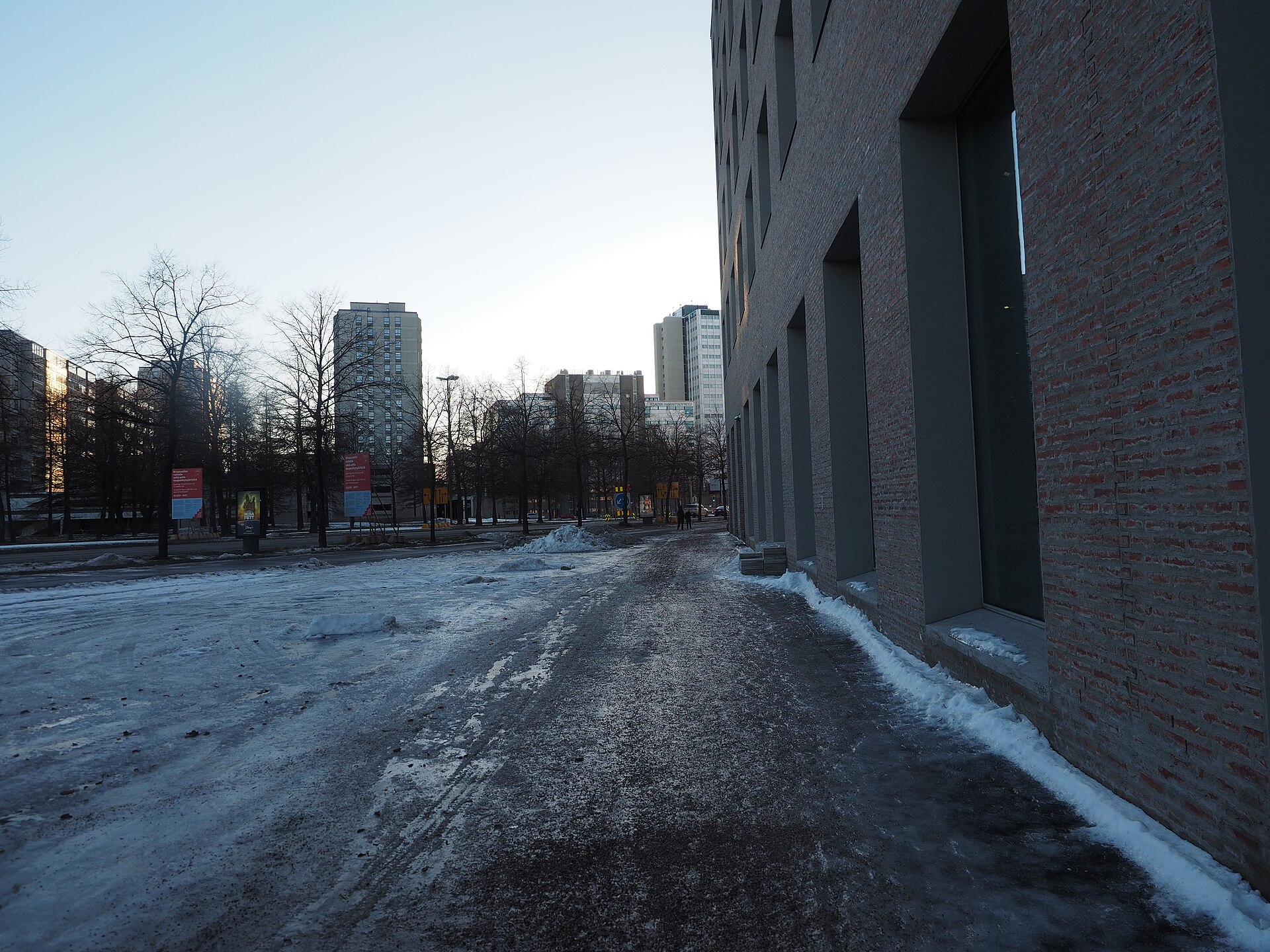
Black ice isn’t actually black. It’s a thin, clear glaze that lets the dark pavement show through, so it looks like a puddle or just a damp spot. It forms when meltwater, drizzle or fog freezes on a cold surface, and it loves a few specific places. Once you know them, you start seeing them everywhere.
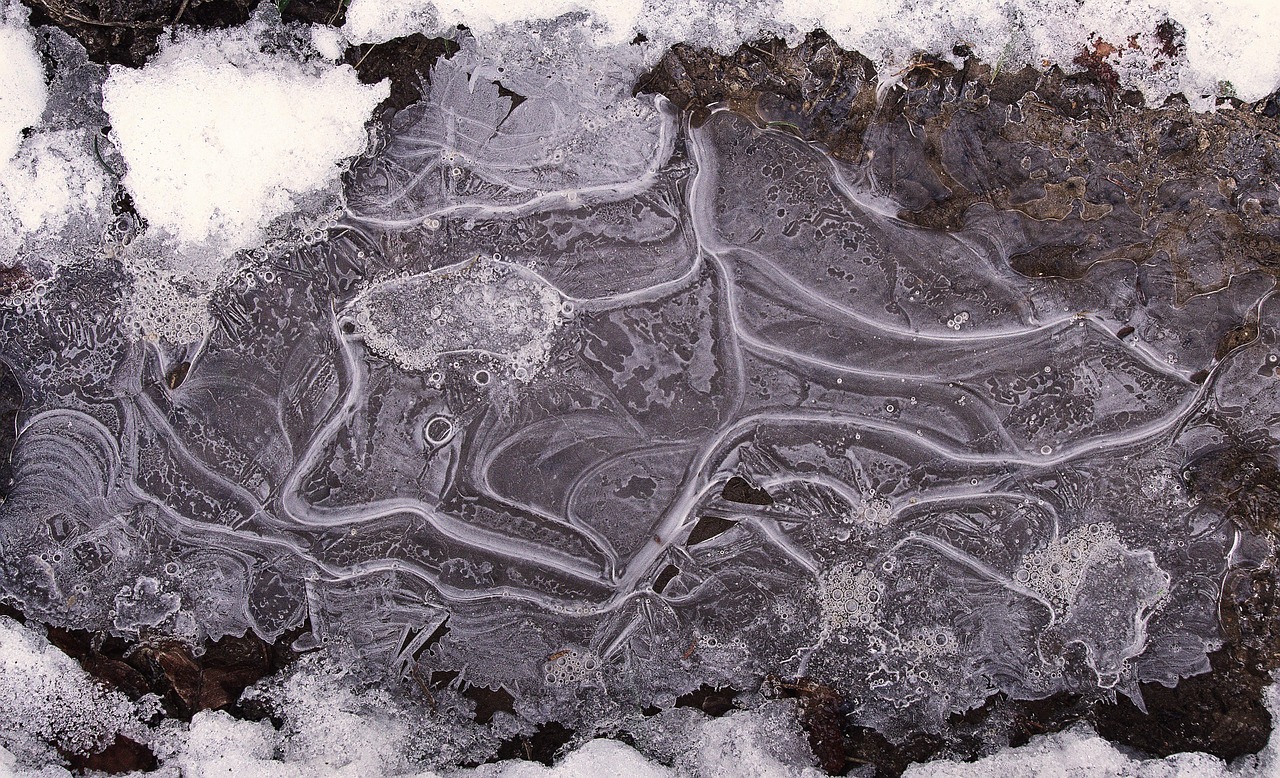
- Anything shaded. The north side of the house, the strip of sidewalk under the neighbor’s pine, the stretch of driveway beside the garage. Sun melts snow in the afternoon, and shade keeps it frozen or refreezes it first.
- Downspout outlets. Gutters dump meltwater straight across walkways. That fan-shaped glaze at the bottom of a downspout is one of the most common fall spots I hear about.
- Bridges, ramps and elevated walkways. Cold air underneath freezes them before the ground around them.
- Parking lots after dark. Plowed snow piles melt during the day and run across the lot. By evening it’s a skating rink with painted lines.
- Your own entryway. Snow tracked in on boots melts on tile or wood floors and makes a slick surface indoors, too.
My rule for clients is simple: if a dark patch on the pavement looks wet and the temperature is anywhere near freezing, treat it as ice until proven otherwise.
Traction You Can Pull On in Ten Seconds
This is the part of the plan with the best evidence behind it, and it’s the cheapest. Slip-on traction devices stretch over the shoes or boots you already own and put coils or small metal spikes between your sole and the ice. A randomized trial in Wisconsin gave one group of fall-prone adults over 65 a slip-on coil device and let the other group wear their usual winter footwear for the whole season. The group with the device had less than half as many outdoor falls on snow and ice and far fewer injurious falls. Even better, most of the falls in the traction group happened on days people weren’t wearing the device. It works when it’s on your feet.
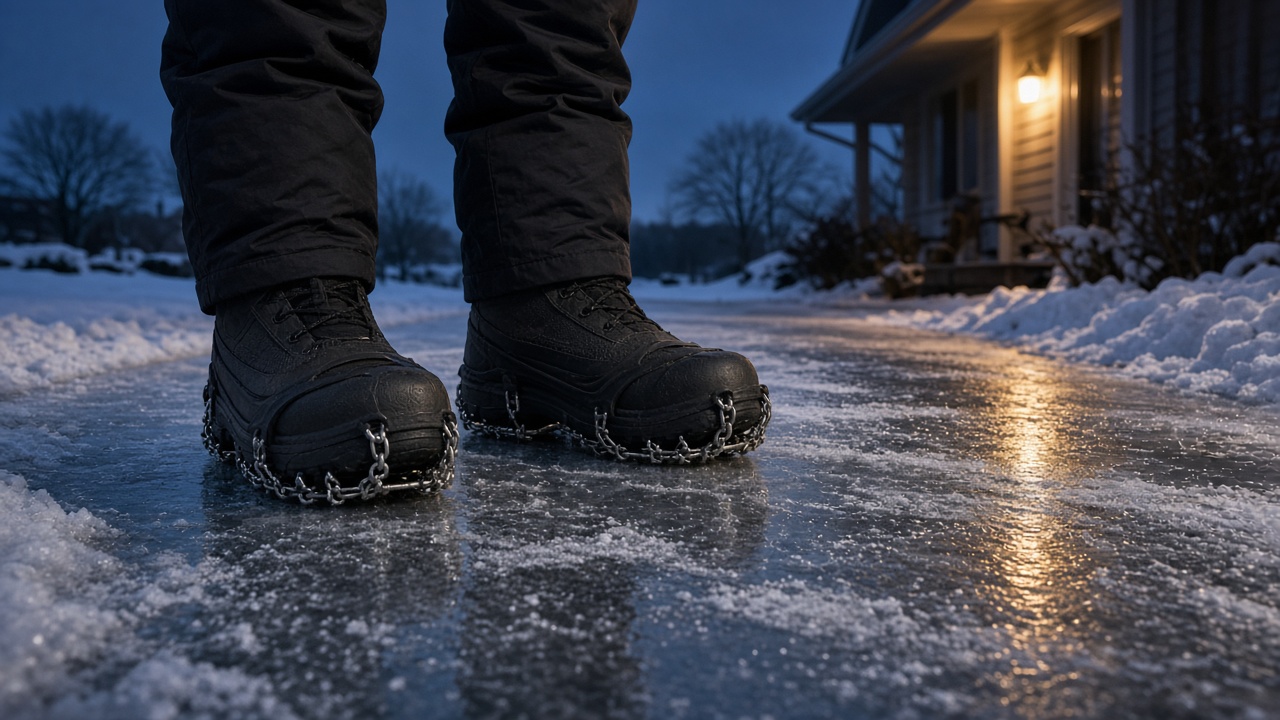
There are three styles I recommend, and the right one depends on where you walk.
Coil cleats for sidewalks and driveways. For most people, most of the time, something like Yaktrax Walk Traction Cleats is all you need. Rubber frame, steel coils, easy on and easy off, and gentle enough to wear for a quick walk to the mailbox. They’re the closest thing to the device in that trial.
Small spikes for runners and walkers who keep going all winter. If you run or power-walk through the cold months, low-profile spikes give you more bite without feeling like you’re wearing hardware. I like Kahtoola NANOspikes for this. The studs are short, so they handle packed snow and thin ice on roads and paths without tripping you up on bare patches.
Chain-and-spike traction for hills, trails and serious glaze. When the dog-walking loop has a hill, or you hike all winter, step up to Kahtoola MICROspikes. Small stainless spikes on chains grip real ice, not just packed snow. They’re overkill for a flat driveway, but on a frozen slope they’re the difference between walking and crawling.
Two warnings I repeat every year. First, take traction devices off before you walk inside. Metal on tile or a polished store floor is slippery. Second, keep a pair where you’ll actually grab it: by the front door, in the car and in the gym bag. A pair in the hall closet behind the vacuum isn’t helping anyone.
Boots Are the Base Layer for Your Feet
Traction devices are a layer, and they work best over a decent boot. You don’t need a mountaineering boot. You need three things: a sole that stays soft in the cold, a tread with deep, wide lugs that shed slush, and enough ankle support that you aren’t rolling over when one foot slides.
The rubber compound matters more than most people realize. Many soles get hard and slick as the temperature drops. Some newer winter soles are built specifically to grip wet ice. Boots with a Vibram Arctic Grip Winter Boots sole are the ones I point people to when they want everyday boots that do better on ice even before they add cleats.
If your favorite winter boots have soles worn smooth at the heel, this is the year to retire them. Flip them over and look. If the lugs at the back of the heel are gone, that’s exactly the spot that hits the ice first when you stride out long.
Walk Like a Penguin, and Mean It
Every safety office in the snow belt hands out the same advice, and they’re right: on ice, walk like a penguin. It sounds silly until you see why it works. Normal walking puts your heel down well in front of your body and pushes off your toes behind you. On ice, that long stride is exactly how your feet shoot out from under you. The penguin shuffle keeps your weight stacked over your feet the whole time.
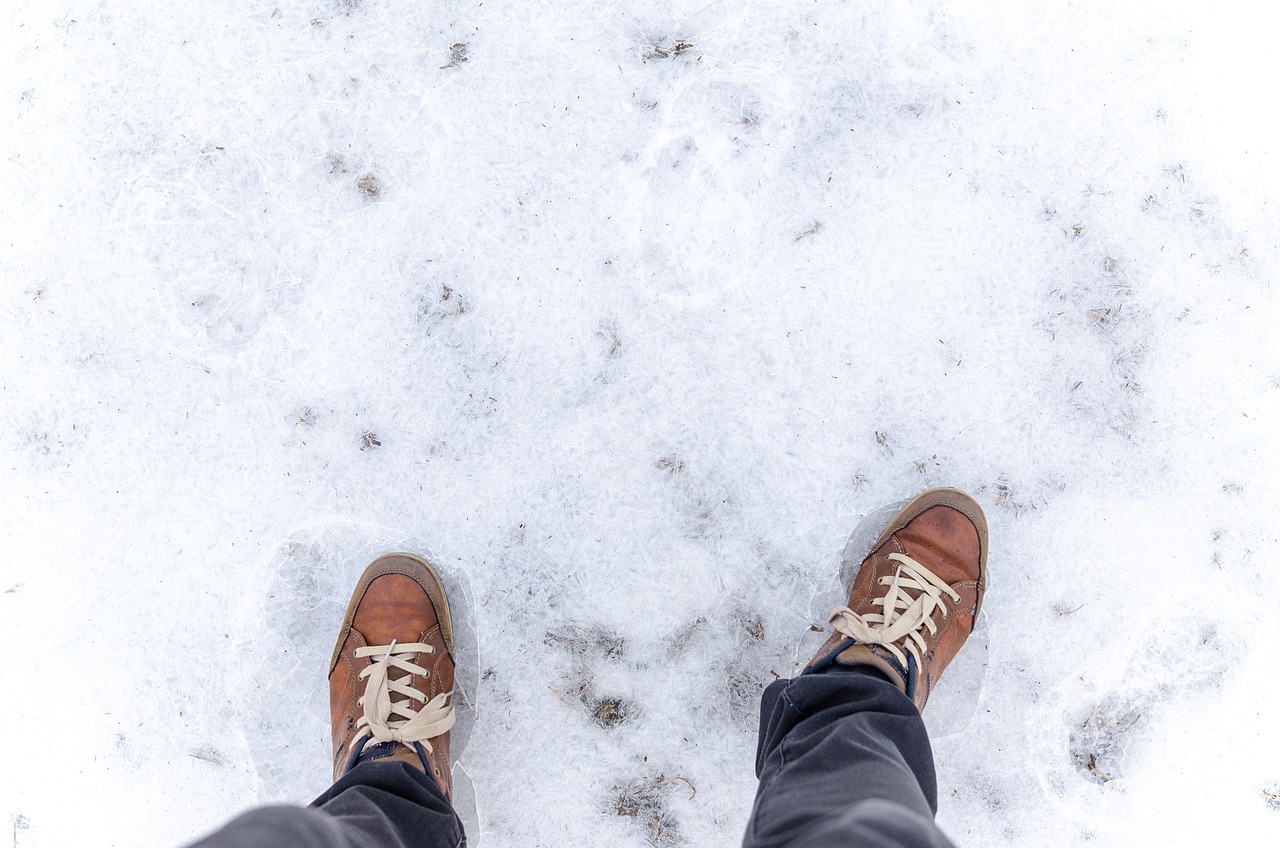
Here’s how I coach it:
- Soften your knees. A slight bend lowers your center of gravity and turns your legs into shock absorbers.
- Lean a touch forward. Keep your chest just ahead of your hips, so your weight is over your front foot instead of behind it.
- Turn your toes out a little. A slightly wider, toes-out stance gives you a bigger base.
- Take short steps and land flat. Put the whole foot down at once instead of striking with your heel. Think “shuffle,” not “stride.”
- Keep your arms out of your pockets. Your arms are your balance poles. Let them hang free and slightly out to your sides.
- Slow down and look down. Glance a few steps ahead, not at your phone. Nobody wins a race across a frozen parking lot.
Practice it on a dry floor first. It feels ridiculous for about thirty seconds, then it feels like a skill.
Free Hands Are a Safety Feature
Go back to that pie carrier in the parking lot. The problem wasn’t the pie. It was that she had zero free hands. When your hands are full, you can’t use your arms to balance, you can’t grab a railing, and if you do go down, you instinctively protect the pie, the phone or the casserole instead of yourself.
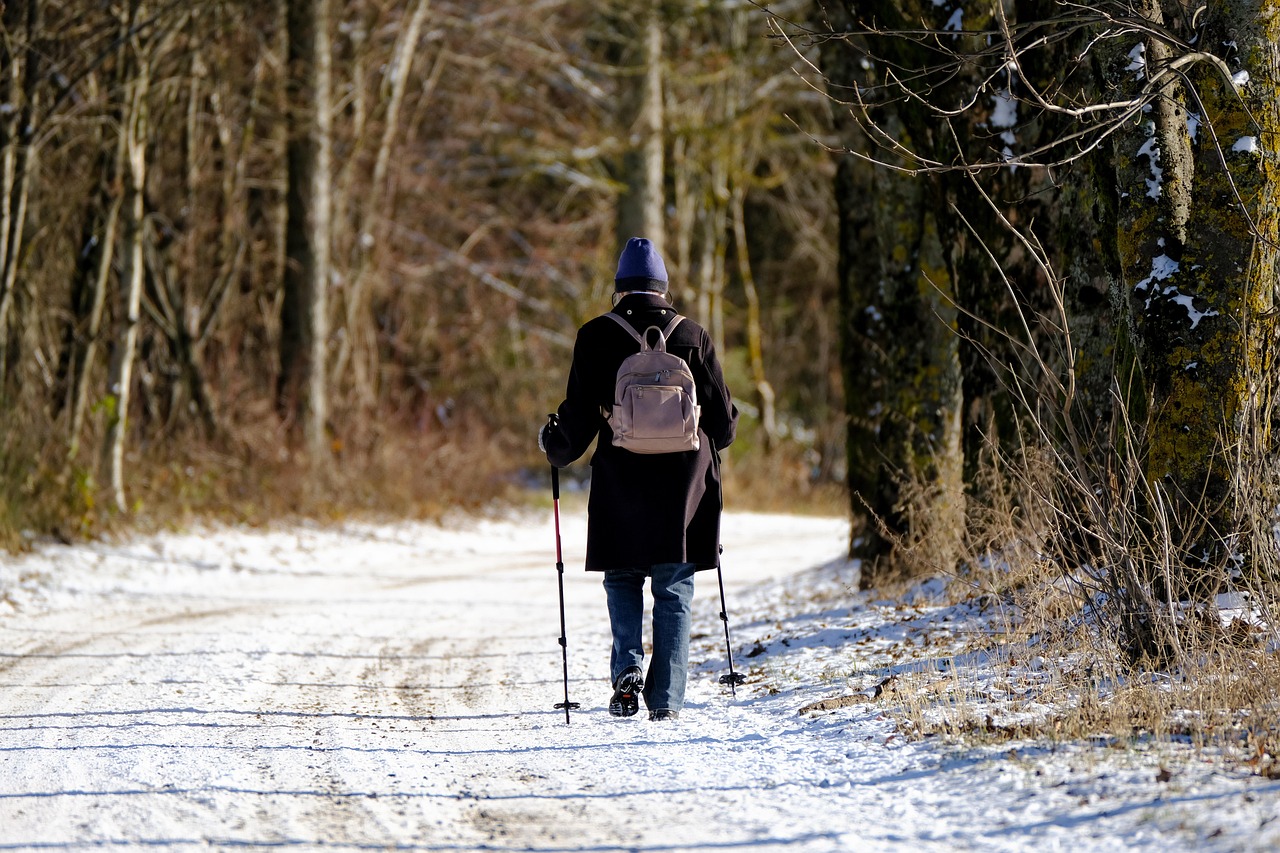
So my holiday rule is: carry it on your back or make two trips. A Packable Lightweight Daypack lives in my car from now until March. Gifts, rolls, my indoor shoes: it all goes on my back. Dishes that have to stay level get their own trip, with nothing else in my hands and my cleats already on.
For a long icy walk, or for anyone whose balance isn’t what it used to be, poles are a wonderful upgrade. A pair of Black Diamond Trail Trekking Poles with the carbide tips exposed gives you two extra points of contact, and that changes everything on a slick hill. If one of your parents already walks with a cane, a Retractable Cane Ice Tip is the gift I’d buy before anything else on their list this year. It flips down for ice and flips up for indoor floors, so the cane doesn’t skid at the exact moment it’s needed most.
The Most Dangerous Step Is the First One Out of the Car
Urgent-care nurses say it over and over: a huge share of winter falls happen getting out of a vehicle or crossing a parking lot. You’ve been sitting, the door frame blocks your view of the ground, and you usually stand up on one leg while twisting.
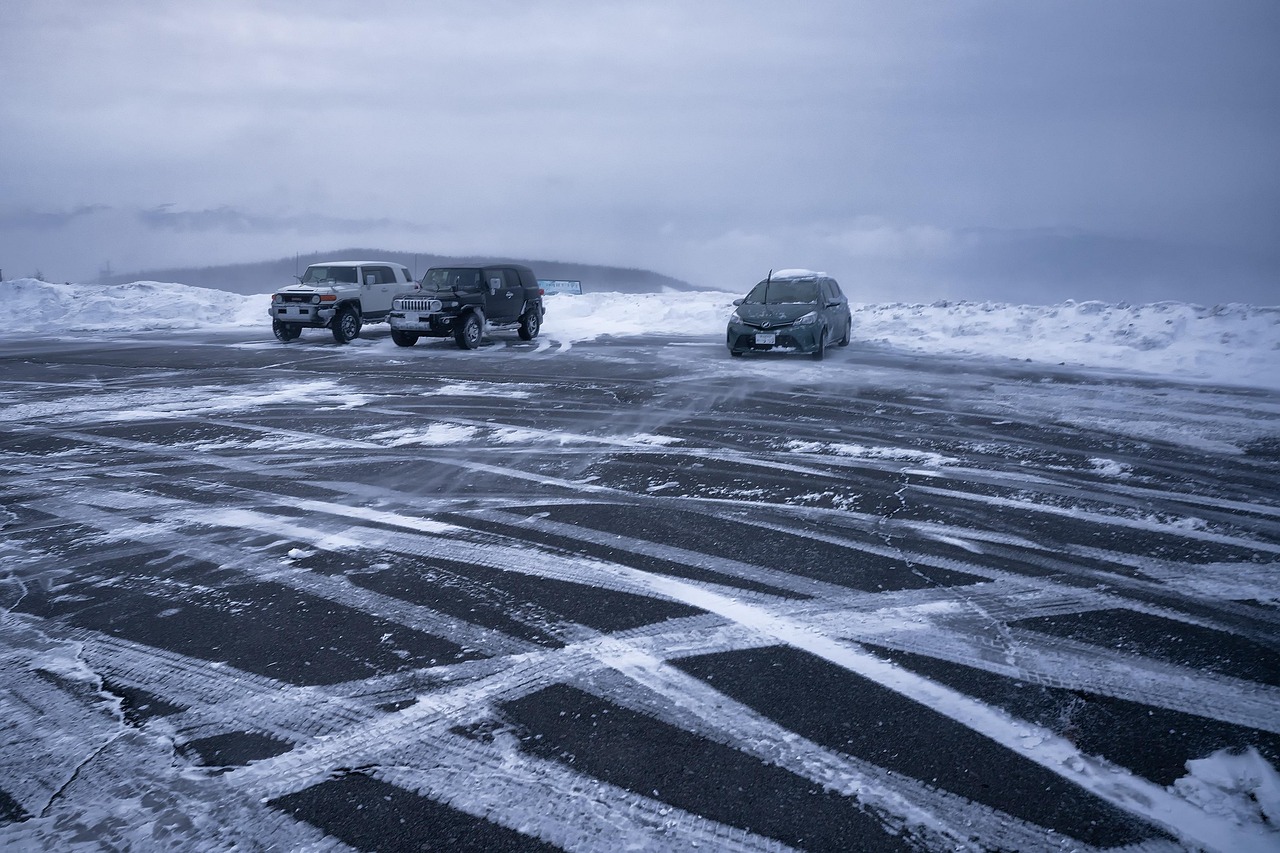
Here’s the exit I teach. Before you open the door, look at where your feet will land. Then swing both legs out together, plant both feet flat on the ground and stand up straight onto both feet while holding the door frame or the seat. Don’t pivot on one foot. Before you let go of the car, take one penguin step and test the surface. If it’s glazed, this is where you pull your cleats on, sitting sideways in the seat with your feet outside. It takes ten seconds.
Park farther away if it means a cleared, salted patch instead of a melting snowbank. If you’re also driving to the mountains this holiday season, the same thinking applies to your tires. The travel side of our family of sites has a great breakdown of snow socks and traction laws for holiday mountain drives. Traction for the car, traction for your feet. Same idea.
Fix Your Own Front Steps Before the Guests Arrive
If you’re hosting Thanksgiving, your front walk is about to get more traffic in one afternoon than it gets all month, a lot of it after dark and a lot of it from people carrying food. This is a ten-minute job that should happen this weekend, not on Thursday at 3 p.m.
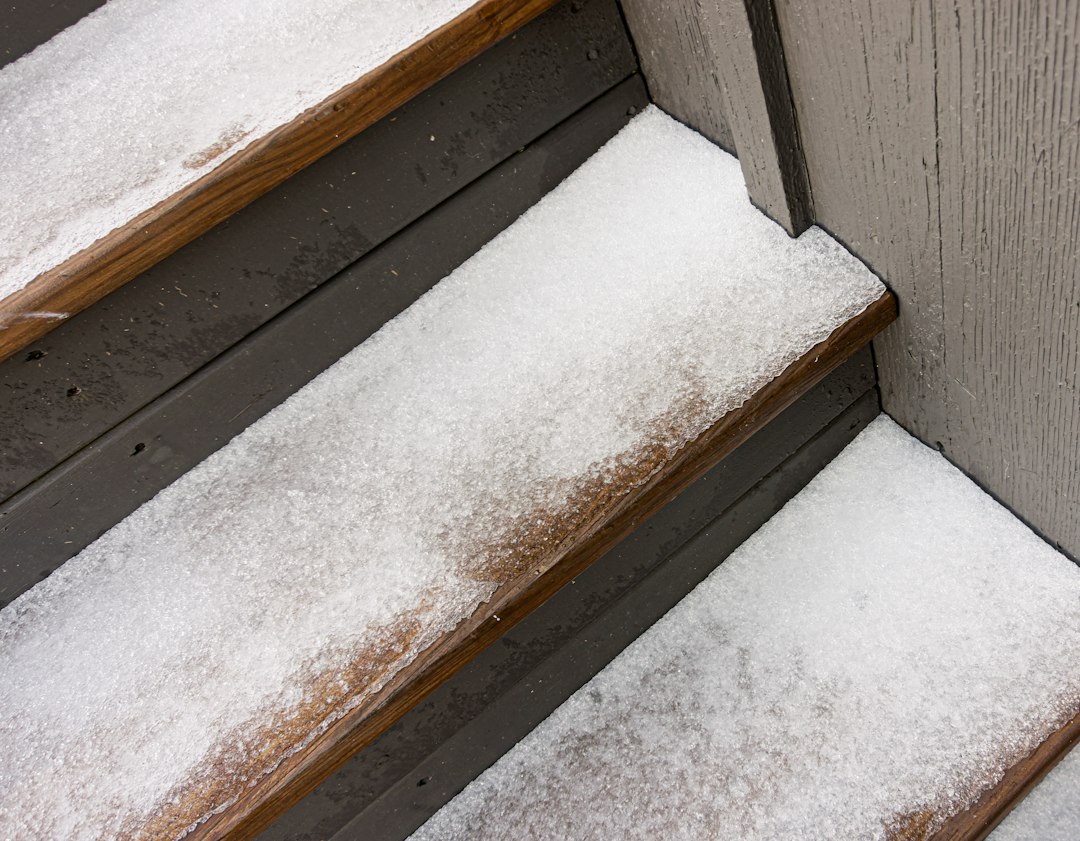
Light the path. You can’t avoid ice you can’t see. I put Solar Motion-Sensor Step Lights along my front steps and walk. No wiring, no switch to remember.
Melt the steps before they freeze. Ice melt works best spread before the freeze or right after you clear, not on top of a two-inch layer. I keep a pet-safe option, Safe Paw Ice Melter, by the door, because my neighbor’s dog and every visiting grandchild end up on that walk. If you’re out of melt, a handful of sand or kitty litter adds grip in a pinch.
Redirect the downspout. If a downspout drains across your walk, a cheap extension that pushes the water into the yard instead will save you a nightly glaze.
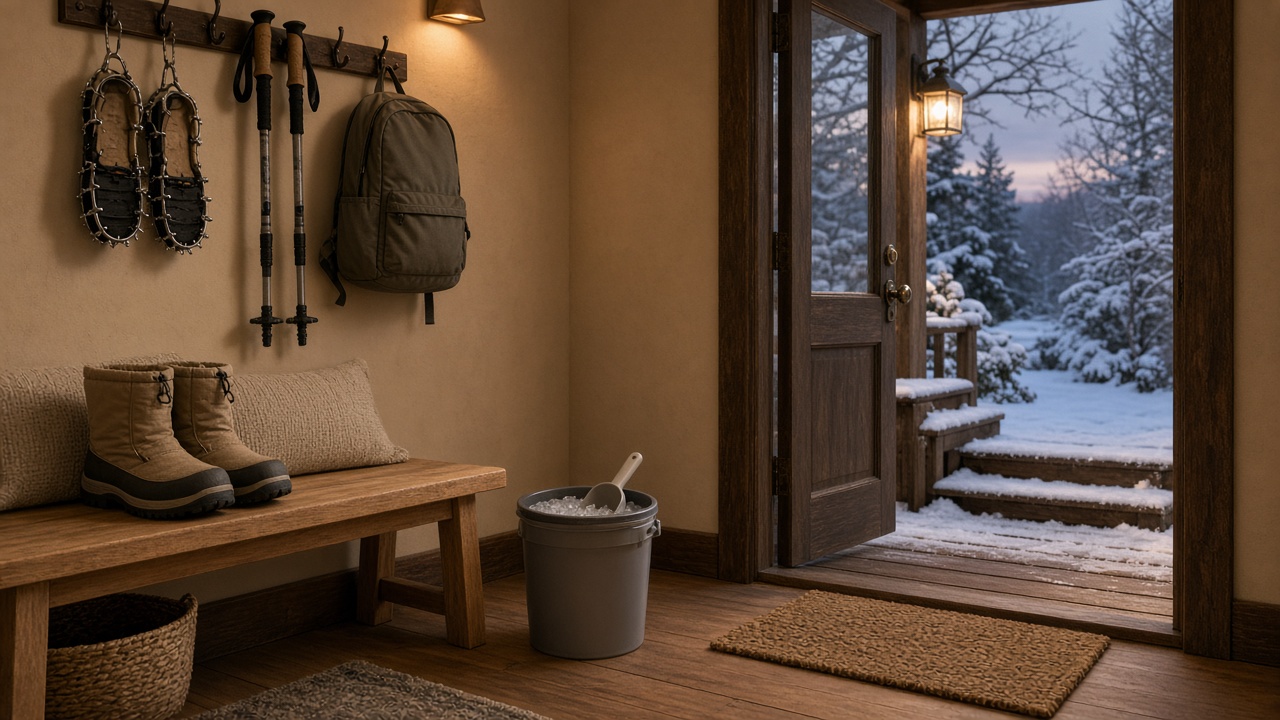
Handle the inside, too. Put a big absorbent mat inside the door and a boot tray beside it. Melted slush on a wood floor is just indoor black ice.
And if a storm does hit before the holiday, please clear it the smart way. I wrote up my whole approach to shoveling like you train, and it pairs nicely with this plan.
If You Go Down, Fall Like an Athlete
Even with every precaution, you might fall. How you land matters a lot. I spent a lot of years learning to land safely, and these are the basics I teach to every age group:
- Don’t fight it once it’s happening. Stiffening up and reaching for the ground is how wrists and shoulders break.
- Tuck your chin. Protecting your head is job one. If you’re falling backward, bring your chin toward your chest.
- Bend and go soft. Bend your knees and try to land on the meaty parts of your body: the side of your thigh, your hip and your shoulder. Roll with it rather than landing on one point.
- Keep your arms in, not straight out. Bent elbows, hands near your chest. An outstretched, locked arm is exactly what breaks.
- Get up slowly, and get checked if anything hurts. Sit for a moment and take stock. Roll to your hands and knees, then come up one foot at a time near something solid. Wrist pain that doesn’t settle, any head bump, or new hip or back pain deserves a doctor’s look. Don’t brush it off.
Ten Minutes of Balance Work Is Your Real Insurance
Gear cuts the odds of slipping. Balance training improves the half second after you slip. That reflexive catch, where your ankle, hip and core fire fast enough to keep you upright, is trainable at every age. And it’s the part of this plan that keeps paying off long after the snow melts.
Start where I start everyone: the simple single-leg stand. If you haven’t tried it, read my guide to the ten-second one-leg test. It’s one of the most honest balance check-ins there is. Once you can hold it steadily, make the ground less predictable. A foam Airex Balance Pad turns a regular single-leg stand into ice practice, because your ankle has to keep making tiny corrections. Stand near a counter, and keep a hand hovering over it.
Here’s my ten-minute winter balance circuit, three or four days a week:
- Single-leg stand on the pad: 30 seconds per side, twice. Progress by turning your head slowly side to side.
- Penguin shuffle drill: 60 seconds of short, flat, toes-out steps across the room, then backward.
- Side steps with a slight squat: 10 steps each way, knees soft, chest up.
- Heel and toe raises: 15 of each, slow, to wake up your shins and calves.
- Wobble board rocks: 60 seconds front to back and 60 seconds side to side on a Wooden Wobble Balance Board, holding the counter at first.
If you’d rather practice balance through slow, flowing movement, my four-week tai chi start was written for exactly this time of year. Tai chi is one of the best-studied ways to reduce falls in older adults, and it fits in a living room.
Who Should Take This Extra Seriously
Everyone benefits from this plan, but some people should treat it as non-negotiable:
- Anyone with low bone density, or anyone over 50 who has never had it checked. A fall that bruises one person can fracture another. If that’s on your mind, my piece on training for stronger bones lays out what to do about it.
- Anyone who has fallen in the last year. That’s the group in the cleat trial, and it’s the group most likely to fall again.
- People taking medications that cause dizziness or drowsiness, including some blood pressure, sleep and pain medications. Ask your pharmacist whether yours is on the list.
- Anyone with numbness in the feet, such as from diabetes, because you can’t feel the surface changing under you.
- Your parents and grandparents. If you’re picking them up for the holiday, bring their cleats, offer an arm on the walk in, and pick the cleared door, even if it’s the long way around.
My Ice-Season Short List
If you only read this far, here’s the whole kit, in the order I’d buy it:
- Everyday traction: Yaktrax Walk Traction Cleats for sidewalks, driveways and parking lots.
- For winter runners: Kahtoola NANOspikes for packed snow and thin ice on roads.
- For hills and trails: Kahtoola MICROspikes when the glaze is serious.
- The base layer: Vibram Arctic Grip Winter Boots with soles that stay grippy in the cold.
- Hands-free carrying: a Packable Lightweight Daypack that lives in the car.
- Extra contact points: Black Diamond Trail Trekking Poles for long icy walks.
- For cane users: a Retractable Cane Ice Tip that flips down for ice.
- Light the path: Solar Motion-Sensor Step Lights for the steps and walk.
- Treat the steps: Safe Paw Ice Melter, spread before the freeze.
- Train the catch: an Airex Balance Pad and a Wooden Wobble Balance Board for ten minutes a few times a week.
Win the Season by Not Falling In It
I love this time of year, and I want you at that table with two working wrists, not in an urgent-care waiting room with a bag of frozen peas on your arm.
So here’s your homework for this weekend. Buy one pair of cleats per person and put them where you’ll grab them. Walk your own path at dusk and look for the shady spots, the downspouts and the dark bottom step. Practice the penguin walk in your kitchen until it feels normal. Start the ten-minute balance circuit tonight. Then, on Thanksgiving, when you step out of the car with that pie, put it in a bag on your back, keep both hands free and walk in flat-footed and smiling. You’re ready.