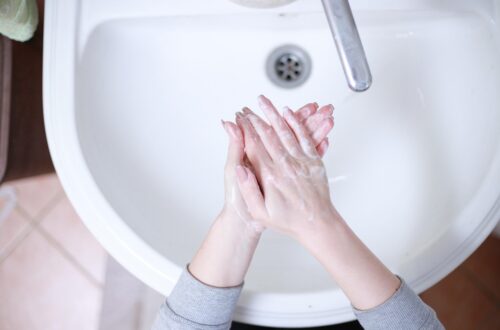
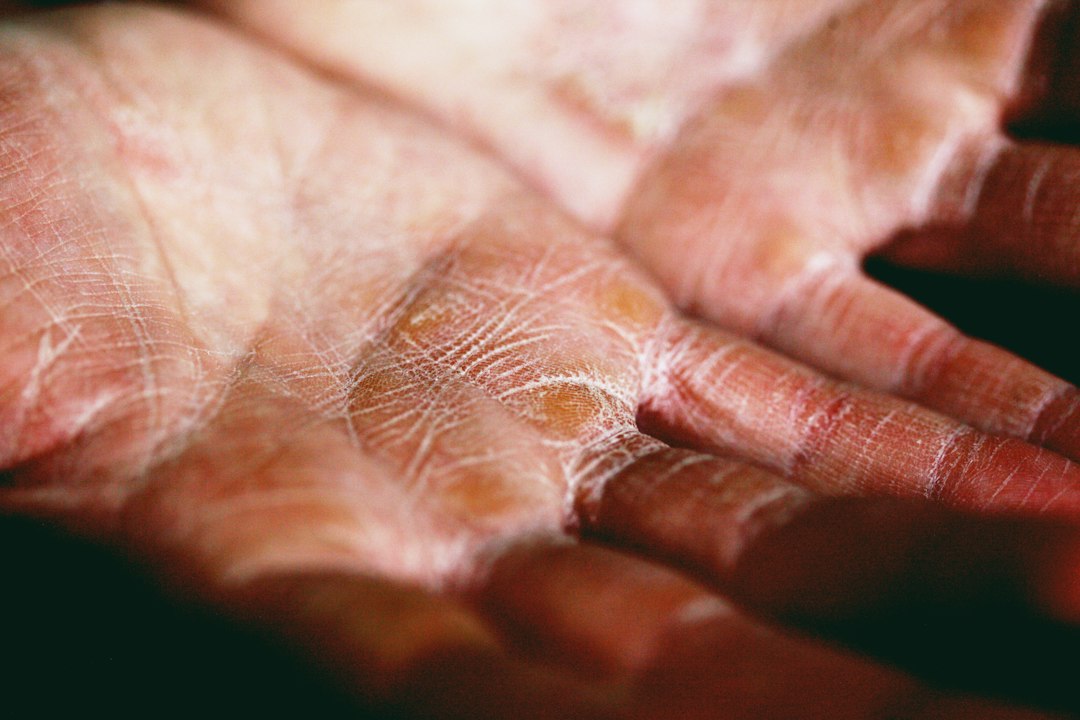
Two Saturdays ago, after the early class at the Y, one of my regulars held out her hands to me like she was showing me a splinter. Red knuckles. A thin, angry split at the corner of her thumbnail. Little white flakes in the webbing between her fingers. “I’m washing like you told us,” she said, half laughing and half accusing. She was. Ever since I started preaching soap and water before the holiday gatherings, she’d been scrubbing with soap and warm water every time she came in from outside, every time she touched raw chicken, every time her grandkids handed her something sticky. Her hands were cleaner than they’d been all year. They were also falling apart.
That’s the trade nobody mentions in November. The heat comes on, the air inside goes dry, the wind outside picks up, and right when we’re told to wash more often, our skin has the least to give. Thanksgiving is November 26 this year, which means the next two weeks are the best time to fix this before the dish duty, the cold-weather runs and the long drives begin. Here’s the routine I hand my clients every winter. I call it the sixth step at the sink, and it covers hands first, then lips, cheeks and the rest of the body that the season keeps sanding down.
Why Your Hands Crack Right When You Need Them Most
The outer layer of your skin works like a brick wall. The bricks are flattened skin cells, and the mortar is a mix of fats, mostly ceramides, cholesterol and fatty acids, that holds water in and keeps irritants out. When that mortar is intact, your hands feel soft and flexible. When it thins, water escapes, the bricks curl at the edges, and you get the tight, shiny, papery feeling that turns into cracks at the knuckles and fingertips.
Winter attacks that mortar from three directions at once. Cold outdoor air holds very little moisture. Forced-air heat dries out indoor air even more, and on a frosty morning the humidity in a heated house can drop into the teens or twenties. Then there’s washing. Every round of soap and water lifts some of those protective fats off with the dirt and germs. Hot water speeds it up. Rough paper towels finish the job. Dermatologists at Ohio State point to the same early warning signs I saw on my regular: redness and dryness in the webs between the fingers and itching across the tops of the knuckles. That’s a barrier asking for help before it splits open.
Here’s the part I want you to hear clearly: the answer is not to wash less when it matters. Before meals, after the bathroom, after handling raw meat and whenever someone in the house is sick, you still wash with soap and water. The answer is to put back what the sink takes away, every single time.
Five Steps Everyone Learned, and the One Nobody Did
Most of us know the five-step handwashing routine by heart now: wet, lather, scrub, rinse, dry. A letter in the Journal of the American Academy of Dermatology made the case for adding a sixth step, moisturize, after hand eczema cases surged among health care workers and the general public who were washing more than ever. The authors noted that regular moisturizer use is one of the most practical ways to cut the risk of hand dermatitis, and that it doesn’t undo the cleaning you just did. The American Academy of Dermatology says the same thing in plain language: every time you wash or sanitize, follow it with moisturizer.
That’s the whole idea behind this plan. I don’t ask anyone to buy a ten-step routine. I ask them to make the sixth step as automatic as the first five, and to make it easy by putting the right products in the right places.
Set Up the Sink So the Sixth Step Happens
When I wrote about building a soap station before the guests arrive, the point was that norovirus shrugs off hand sanitizer, so soap and running water have to do the work. This is the companion piece. If you’re going to wash that often, the sink has to protect your skin as well as clean it.
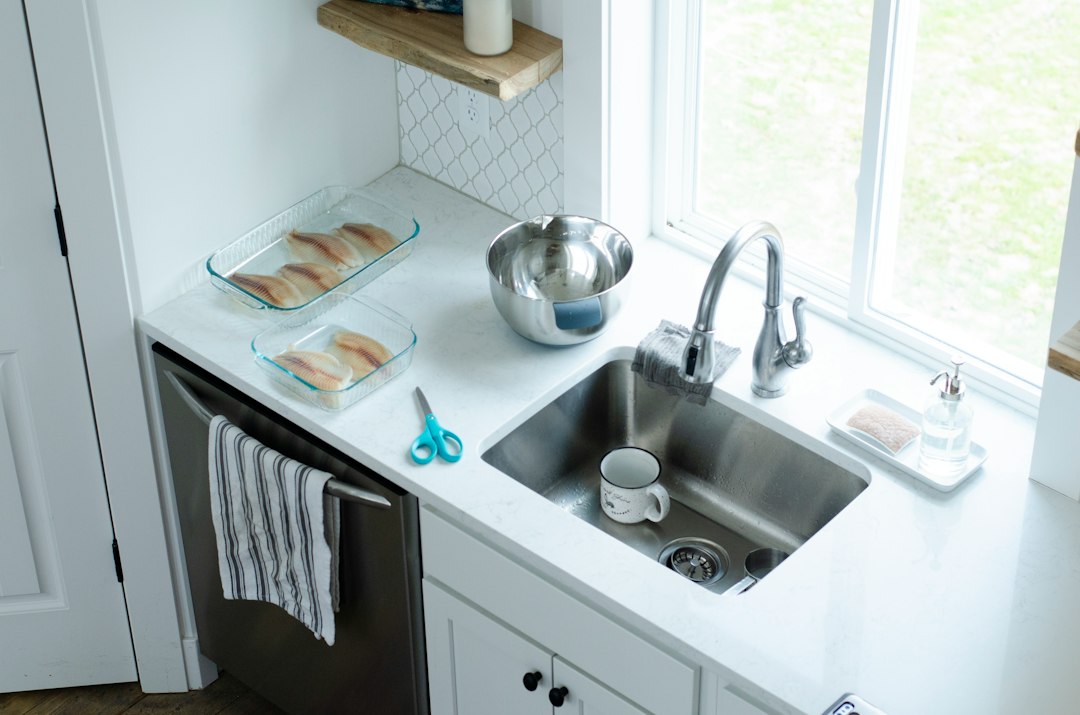
Start with the soap. Strongly scented antibacterial soaps and deodorant bars are some of the harshest things you can put on dry skin, and the AAD recommends looking for products labeled “fragrance-free” rather than “unscented,” since unscented products can still contain masking chemicals. At my kitchen and bathroom sinks I keep a Vanicream Cleansing Bar. It’s plain, it lathers enough to do the job and it doesn’t leave that squeaky, stripped feeling behind. If your household insists on liquid soap, look for a gentle, fragrance-free, non-foaming formula, which is the kind dermatologists keep recommending for people with hand eczema.
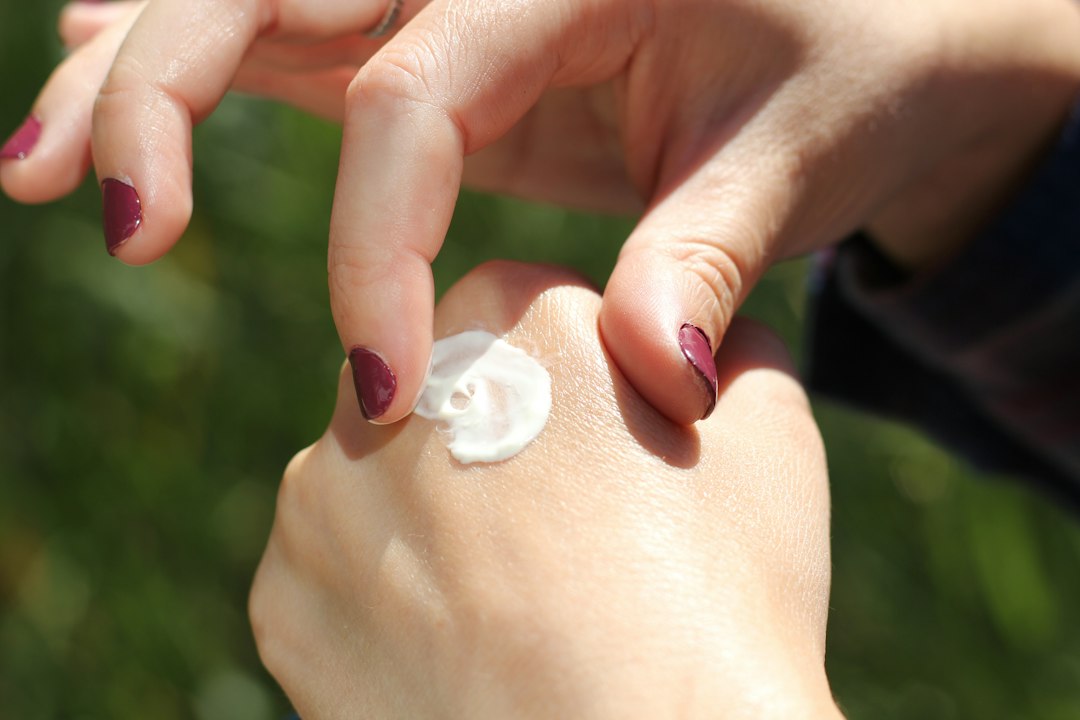
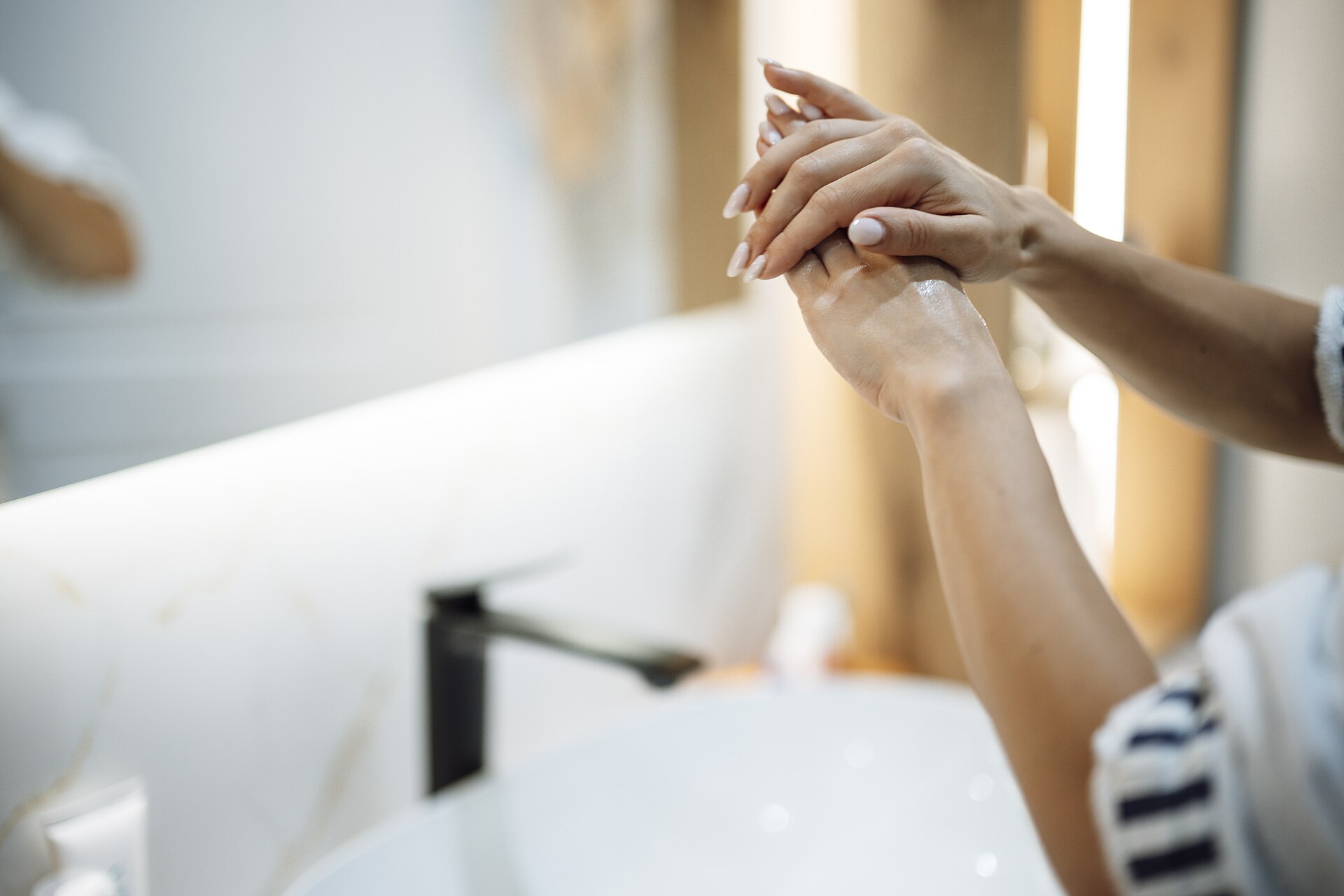
Next, change the water. Lukewarm cleans just as well as hot for handwashing, and it’s much kinder to the barrier. Pat dry with a soft towel instead of rubbing. Then, while your hands are still slightly damp, reach for the cream. Damp skin holds onto moisturizer better, and that thirty-second window right after drying is when the sixth step pays off most.
Tube, Not Pump
The AAD’s advice on this surprised a lot of my clients: products that squeeze out of a tube or come in a tub tend to work better than thinner lotions that pump out of a bottle. Thicker means more oil and less water, which means a better seal. I look for three kinds of ingredients working together. Humectants, like glycerin and hyaluronic acid, pull water into the skin. Lipids, like ceramides, patch the mortar. Occlusives, like petrolatum, mineral oil and dimethicone, lay a thin film on top so the water stays put.
My sink-side workhorse is O’Keeffe’s Working Hands Hand Cream. It’s a dense, glycerin-heavy cream that absorbs faster than you’d expect, and a little goes a long way. For clients who want something lighter in their bag or at their desk, I like the Neutrogena Norwegian Formula Fragrance-Free Hand Cream, which comes in a small tube that fits in a coat pocket. Buy two of whichever you choose. One lives at the kitchen sink, one lives at the bathroom sink, and neither ever has to be hunted down.
Gloves for the Wet Work
Here’s a habit that saves more hands than any cream: wear gloves for dishes and cleaning. Long soaks in hot, soapy water strip the barrier faster than any quick handwash, and cleaning sprays add irritants on top. Dr. Bruce Brod, a dermatologist who specializes in hand eczema, told Healio this year that wearing heavier gloves for housework is one of the protective habits that makes the biggest difference.
I keep a pair of Playtex Living Reusable Rubber Gloves hanging on the cabinet door under the sink, so there’s no excuse when the roasting pan comes out. If you’ll be the one running the Thanksgiving dish line, this is the year to hand out jobs early. Elena on our sister home site has a great system for putting a jobs card on the fridge so everybody helps with cleanup, and I’d add one line to that card: whoever washes wears the gloves.
One tip from experience: take the gloves off the moment you’re done and let your hands air out. Sweaty skin trapped inside rubber for an hour can irritate on its own. If your hands get damp inside, a thin cotton liner underneath helps.
The Overnight Repair That Does the Heavy Lifting
If your hands are already cracked, daytime cream is only half the job. The real repair happens at night, when you’re not washing every hour and the ointment can sit undisturbed for eight hours. Ohio State’s dermatologists, Henry Ford Health and Nebraska Medicine all recommend the same simple move: a thick layer of ointment before bed, covered with cotton gloves.
Here’s how I teach it. After your evening shower or last handwash, pat your hands mostly dry. Work a generous layer of CeraVe Healing Ointment into the backs of your hands, between your fingers, over your knuckles and around your nails. It’s petrolatum-based with ceramides added, so it seals and patches at the same time. Then pull on a pair of White Cotton Moisturizing Gloves. They keep the ointment on your skin instead of your sheets and trap a bit of warmth so it works its way in.
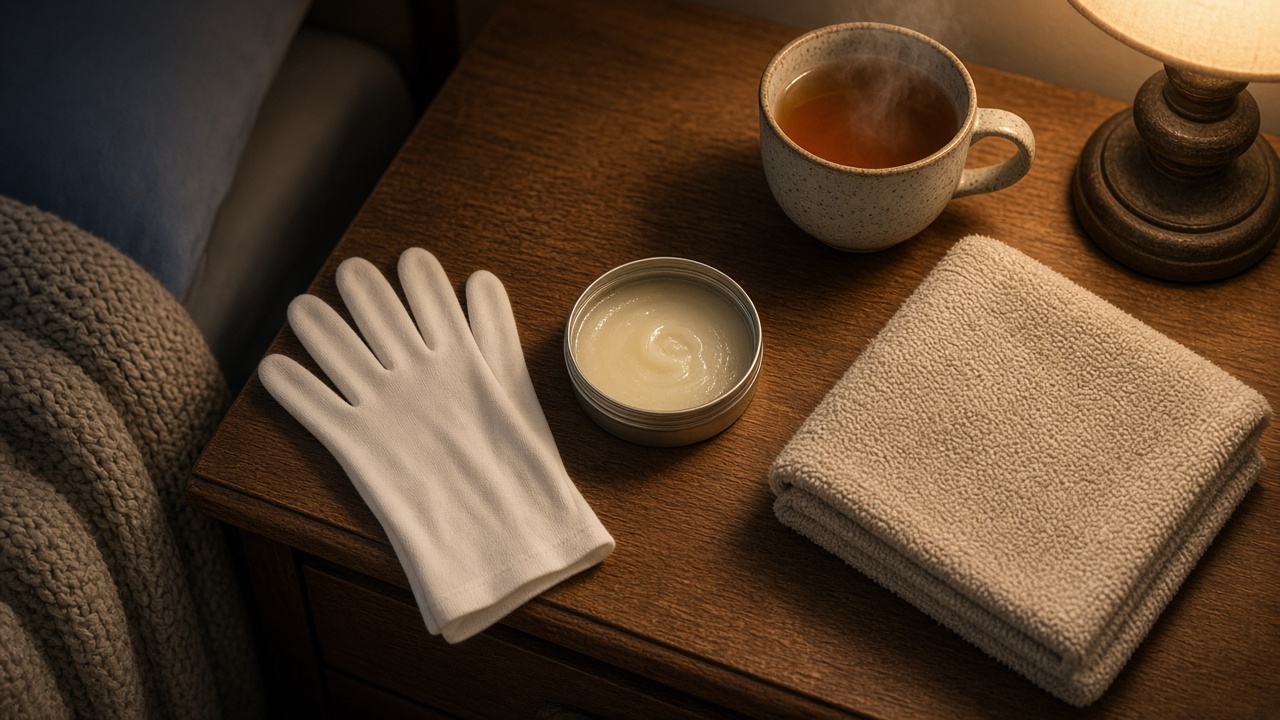
Most of my clients see a real difference in three or four nights. Split fingertips close up, the knuckles stop stinging and the skin loses that tight, shiny look. Once things heal, two or three nights a week is enough to stay ahead. The same ointment works on cracked heels, by the way. Slather your feet, pull on cotton socks and wake up to softer soles.
A word of honesty: if your cracks bleed, crust over, keep getting worse after a couple of weeks of consistent care or itch so much they keep you up, see a board-certified dermatologist. Sometimes what looks like winter dryness is eczema or an allergic reaction that needs a prescription. Crusting, oozing or yellow scabs can signal infection, and that’s a call to your doctor, not another night of ointment.
Lips Take the First Hit Outside
I spent a lot of cold track seasons with chapped lips, and I made every mistake in the book: licking them, peeling the flakes and reaching for balms that tingled because I thought the tingle meant it was working. It doesn’t. The AAD is blunt about this. If a lip product burns, stings or tingles, it’s irritating your lips, and you should stop using it. Menthol, camphor, strong flavors and fragrance are the usual troublemakers.

What helps is boring and effective. During the day, use a fragrance-free lip balm with SPF 30 or higher and a mineral sunscreen like zinc oxide or titanium dioxide, because winter sun still burns, and sunburned lips crack faster. I like the Vanicream Lip Protectant SPF 30 because it’s plain, unflavored and doesn’t tempt you to lick it off. Reapply before you go outside and after you eat or drink. At night, use the same CeraVe Healing Ointment you’re already using on your hands. The AAD notes that a thick ointment like white petroleum jelly seals in water longer than waxes or oils, which is exactly what cracked lips need while you sleep.
Wind, Cold Miles and the Face You Bring Home
If you run, walk, cycle or shovel outside in winter, you already know the stinging pink cheeks and runny nose that come with the first windy mile. That’s windburn, and it’s not really a burn. It’s wind stripping moisture off exposed skin while cold air keeps the surface from recovering. Add a bit of sun reflecting off snow and you can come home with a face that feels raw for days.

My rule for clients is the same one I wrote about in the dressing rule that keeps my clients outside past Thanksgiving: cover what the wind can reach. A Fleece Neck Gaiter pulled up over your chin and cheeks blocks most of the wind on cold runs and folds down when you warm up. For your hands, a pair of Windproof Touchscreen Running Gloves keeps the cold air off your knuckles without making you take them off to check your watch or phone. Gloves protect your hands from cold and wind outdoors just as much as rubber gloves protect them from dishwater indoors.
Before you head out, smooth a thin layer of thick cream or a little ointment over your cheeks, nose and chin, then sunscreen over any exposed skin. When you get home, skip the steaming hot shower, as tempting as it is. Warm water, a gentle cleanser and moisturizer within a few minutes of toweling off will calm the redness faster than anything else.
The Rest of the Body: Shower Rules for Heating Season
Hands, lips and cheeks get the most attention, but shins, forearms and the backs of your arms dry out too. Nebraska Medicine’s dermatologists boil it down to a few habits. Keep showers short and warm, not hot. Pat dry and leave a little moisture on your skin. Then apply a thick moisturizer right away to lock it in.
For body moisturizer, I point clients to Vanicream Moisturizing Cream. It comes in a big tub, it’s fragrance-free and dye-free and it’s thick enough to count as a real cream rather than a watery lotion. Keep it in the bathroom where you’ll see it the second you step out of the shower. That’s the same principle as the sink: put the product where the habit happens.
Fix the Air You’re Breathing All Night
All of this works better when the air in your home isn’t pulling moisture out of you around the clock. Ohio State’s dermatologists suggest keeping indoor humidity between 40 and 50 percent to reduce water loss from your skin. That’s the same range I talked about in my bedroom-air fix before the furnace wakes up, where I walked through choosing and cleaning a humidifier.
The cheapest tool in this whole plan is a ThermoPro Digital Hygrometer. It costs about as much as a tube of good hand cream, sits on a dresser and tells you whether your bedroom is a desert or a swamp. Most of my clients are shocked the first morning they check it. If it reads below 30 percent, a humidifier is worth adding. If it reads above 50, back off, since dampness invites mold and dust mites.
My Winter Skin Kit, Room by Room
When clients ask me what to actually buy, I give them this list. You don’t need all of it on day one. Start with the cleanser, one hand cream and the ointment, then fill in the rest as the season goes on.
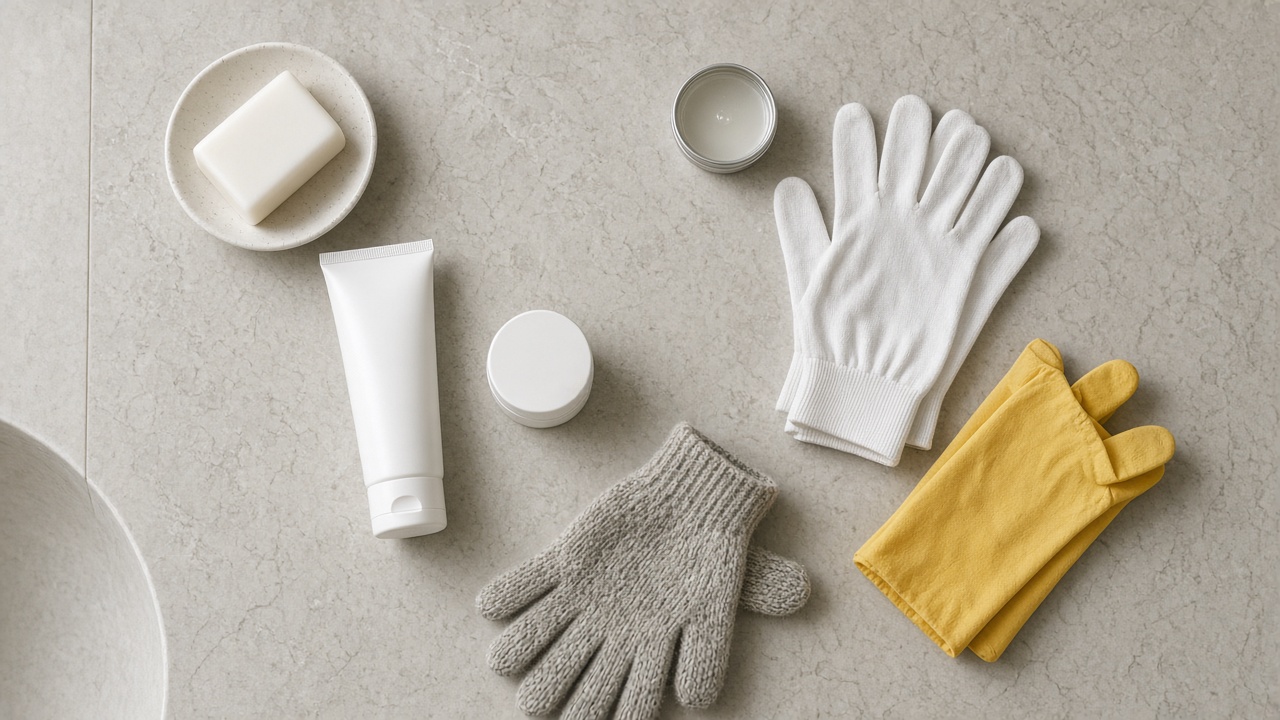
- Kitchen and bathroom sinks: Vanicream Cleansing Bar plus a jar of O’Keeffe’s Working Hands Hand Cream right beside it.
- Coat pocket and desk drawer: Neutrogena Norwegian Formula Fragrance-Free Hand Cream and Vanicream Lip Protectant SPF 30.
- Under the sink: Playtex Living Reusable Rubber Gloves for dishes and cleaning.
- Nightstand: CeraVe Healing Ointment and White Cotton Moisturizing Gloves for the overnight repair, plus a ThermoPro Digital Hygrometer to keep an eye on the air.
- Bathroom shelf: Vanicream Moisturizing Cream for the two minutes after every shower.
- By the front door: a Fleece Neck Gaiter and Windproof Touchscreen Running Gloves for cold, windy miles.
The Two-Week Countdown Before the Feast
If you start today, you’ll have healthy hands by the time the turkey comes out. Here’s how I’d lay out the next eleven days.
This week: Swap your sink soap for a fragrance-free option, set a tube or jar of cream beside every sink and turn the water temperature down a notch. Check your bedroom humidity for a few mornings. Start the overnight ointment and gloves routine every night if your hands are already cracked.
Next week: Hang rubber gloves under the sink before the holiday cooking starts. Pack lip balm with SPF and a small hand cream in your coat and your travel bag. Pull out the neck gaiter and running gloves before your Turkey Trot or your first cold morning walk.
Thanksgiving week: Keep washing with soap and water, especially around the food and anyone who’s sick. Just never let the five steps end without the sixth. After the last dish is dried, take ten minutes for yourself: ointment, cotton gloves, a cup of tea and your feet up.
When my regular came back to class yesterday morning, she held out her hands again. The split at her thumbnail had closed. The knuckles were pink instead of red. “So it was the cream,” she said. It was the cream, and the cotton gloves, and the cooler water, and the rubber gloves she finally hung under her sink. None of it was complicated. It just needed a place to live in her day. Give your skin the same respect you give your training, and it’ll carry you through the whole washing season without cracking.