
I have a confession that might surprise you. After twelve years of coaching, after testing every wearable, supplement stack, and recovery gadget that crossed my desk — the five habits that moved my health markers the most were embarrassingly simple. No cold plunge required. No $400 device. No supplement that tastes like damp cardboard. Just five boring, unglamorous, repeatable practices that I almost dismissed because they seemed too basic to actually work.
My team and I spent the better part of this past spring pulling apart my last decade of training logs, sleep data, and bloodwork. We wanted to know which interventions actually shifted the needle. The results were humbling. The fancy stuff helped at the margins. But the foundation — the thing that made everything else possible — was a handful of habits so ordinary that I’d been overlooking them in my own writing.
Habit One: Walk Like Your Life Depends On It (Because It Does)
I know, I know. Walking is the most generic wellness advice on the planet. But here’s what changed my mind: when my team analyzed my WHOOP data from January through May, the single strongest predictor of my next-day recovery score wasn’t my training intensity, my supplement routine, or even my sleep duration. It was my step count. specifically, whether I crossed 8,000 steps. The days I hit that threshold, my HRV climbed. The days I didn’t, everything flatlined.
The research backs this up. A 2023 study published in the Journal of the American College of Cardiology found that walking approximately 7,000-9,000 steps per day was associated with a 50-70% lower risk of cardiovascular events. And a more recent meta-analysis from British Journal of Sports Medicine pooled data from over 227,000 participants and confirmed that the biggest longevity jump happens when sedentary people move from 3,000 to 7,000 daily steps. Not 15,000. Not marathon training. Just consistent, everyday walking.
I’m not talking about power-walking in matching athleisure sets, either. I mean the kind of walking that happens when you return a phone call on foot, take the stairs to your fourth-floor office, or wander your neighborhood after dinner instead of collapsing onto the couch. If you work from home like I do two days a week, a compact walking pad under your desk quietly stacks steps without eating into your schedule. I tested one through the entire month of June and averaged 11,000 steps on work-from-home days without a single dedicated “walk.”

The people who consistently hit 8,000+ steps aren’t necessarily more disciplined. They’ve just engineered their environment to make walking the path of least resistance. Park further away. Take the long route to the restroom. Walk during every phone call. A solid pair of cushioned walking shoes makes those extra miles feel like nothing. It’s not glamorous. It works anyway.
Habit Two: Lift Something Heavy Twice a Week
When researchers at Harvard’s T.H. Chan School of Public Health published their findings on strength training and longevity earlier this year, my inbox flooded with messages from former clients. The study, which followed participants over decades, found that roughly 90-120 minutes of resistance training per week — that’s two 45-to-60-minute sessions — was linked to a 13% reduced risk of premature death. Combined with aerobic activity, the benefit jumped to nearly 30%.
Two sessions. That’s it. Not six days a week in the gym. Not a body part split that requires a spreadsheet to track. Two focused, challenging, full-body workouts each week.
I’ve been preaching this for years, but it took watching my own mother transform at age 64 to really cement it. She started lifting twice weekly last September — nothing crazy, just compound movements with adjustable dumbbells in her spare bedroom. By March, her bone density scan showed improvement for the first time in a decade. Her doctor actually called her to confirm the results were accurate because he’d never seen a post-menopausal patient reverse bone loss at that rate.
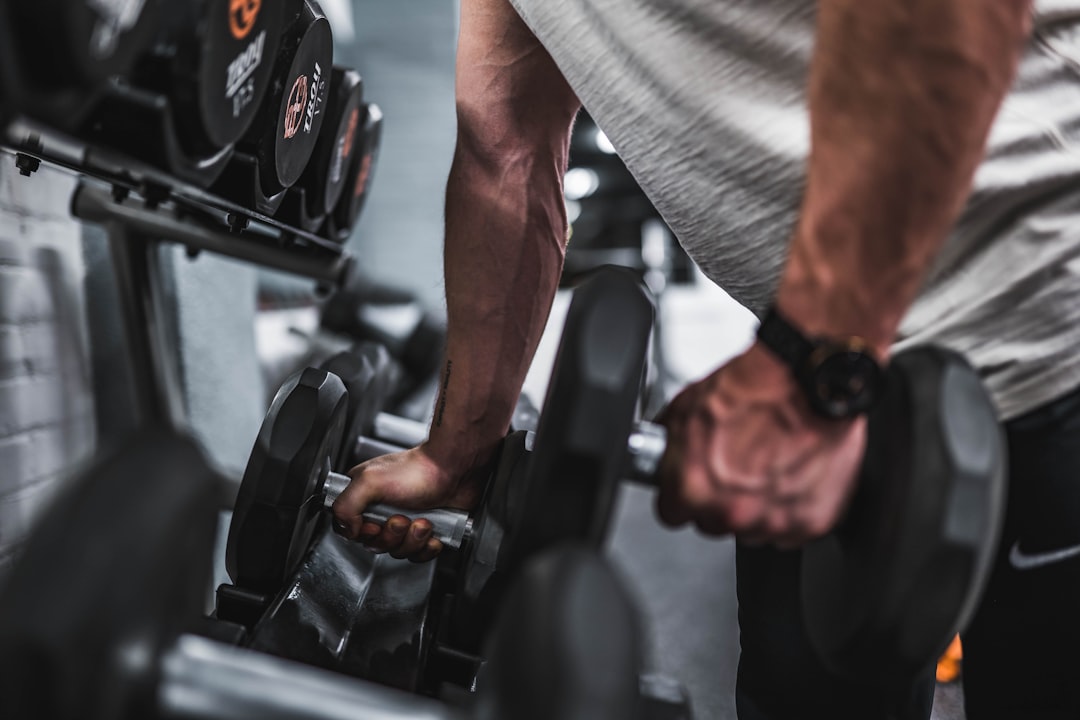
The beauty of twice-weekly strength training is its sustainability. You can do it forever. I’ve written before about how adjustable dumbbells replaced my entire wall of iron, and that setup still holds. One pair of weights, a small corner of your home, two sessions a week. If you’re traveling or short on space, a quality set of resistance bands delivers a surprisingly effective full-body stimulus that fits in a carry-on.
If you want the Cliff’s Notes version: pick five movements — a squat, a hinge, a push, a pull, and a carry. Do three sets of each, twice a week, with enough weight that the last two reps feel challenging but not impossible. That’s the whole protocol. I’ve given it to executives, stay-at-home parents, and a 72-year-old who’d never touched a weight in his life. It works for all of them.
Habit Three: Defend Your Sleep Window Like It’s a Non-Negotiable Appointment

This is the habit I violated for years, even as a wellness coach. I’d train hard, eat well, and then undo half of it by staying up until midnight scrolling research papers or answering client messages. My sleep was inconsistent — 6 hours one night, 8.5 the next, then 5.5 after that. My WHOOP recovery scores were a rollercoaster.
What finally fixed it wasn’t a new mattress or a fancy supplement. It was a rule so boring I almost resisted it: same bedtime, every night, within a 30-minute window. That’s the intervention. Not magnesium glycinate (though I still take it). Not a weighted blanket. Not mouth taping. Just consistency.
Your circadian rhythm thrives on predictability. When you go to bed and wake up at roughly the same time daily, your body learns when to release melatonin, when to drop core temperature, and when to initiate deep sleep. A study from Harvard Medical School found that irregular sleep schedules were associated with higher cardiovascular risk independent of total sleep duration — meaning even if you’re getting enough hours, an inconsistent schedule still damages your health.
I treat my 10:15 PM bedtime the same way I treat a client session. It goes on the calendar. The phone goes in another room at 9:45. I’ve found that blue light blocking glasses in the hour before bed helps signal to my brain that it’s wind-down time, and a quality contoured sleep mask blocks the ambient light from my neighbor’s security floodlight that used to wake me at 5 AM. Neither of these products is revolutionary. Together, they made my sleep 40% more consistent in one month.
If you want a deeper dive into the sleep-recovery connection, I wrote about how your bedroom setup might be sabotaging your gains earlier this summer, and the principles still hold.
Habit Four: Mobilize for Ten Minutes Every Single Day
Ten minutes. That’s the entire ask. Not an hour-long yoga class. Not a full mobility assessment with a physical therapist. Ten minutes of intentional movement through ranges that your daily life doesn’t naturally provide.
Here’s why this matters more than you think: most of us spend our days in what I call “three-position life.” We sit (desk), we sit differently (car), and we lie down (couch/bed). That’s it. Our hips never fully extend. Our thoracic spine never rotates. Our ankles never dorsiflex past 90 degrees. Over months and years, those restricted ranges become permanent — until one day you can’t reach overhead without pain or you tweak your back picking up a laundry basket.
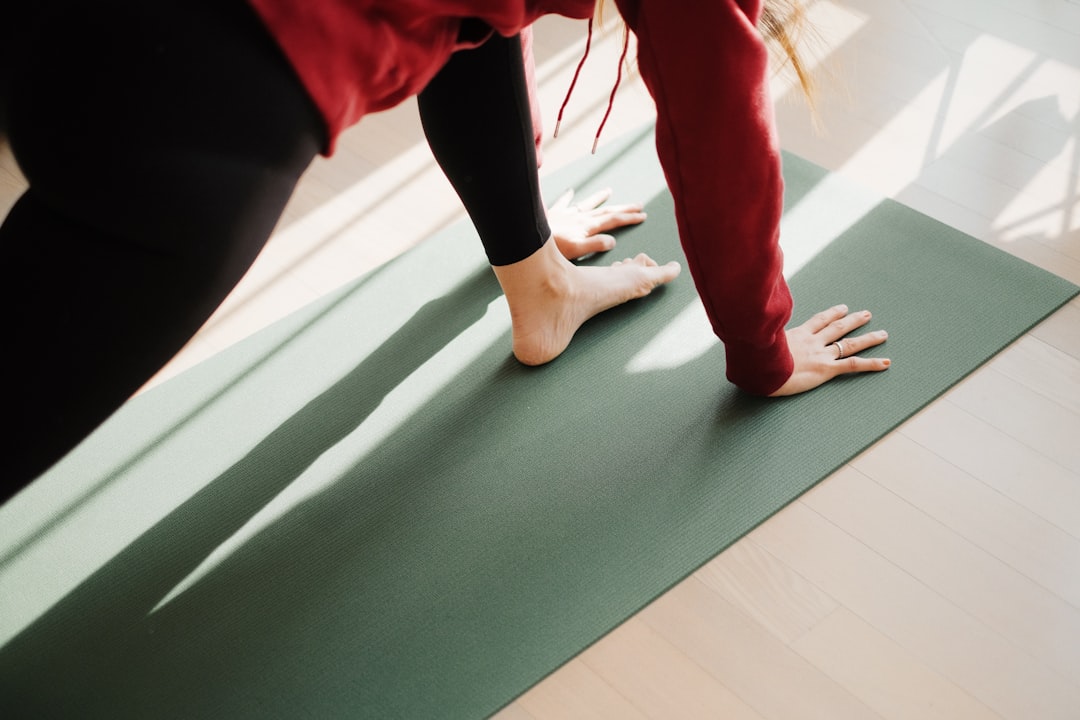
I spend ten minutes every morning on a thick yoga mat going through a simple routine: cat-cow, hip flexor stretches, thoracic rotations, ankle circles, and a deep squat hold. It’s not Instagram-worthy. It’s the same five movements every day. But my movement quality at 40-something is better than it was at 30, and I attribute that entirely to this habit.
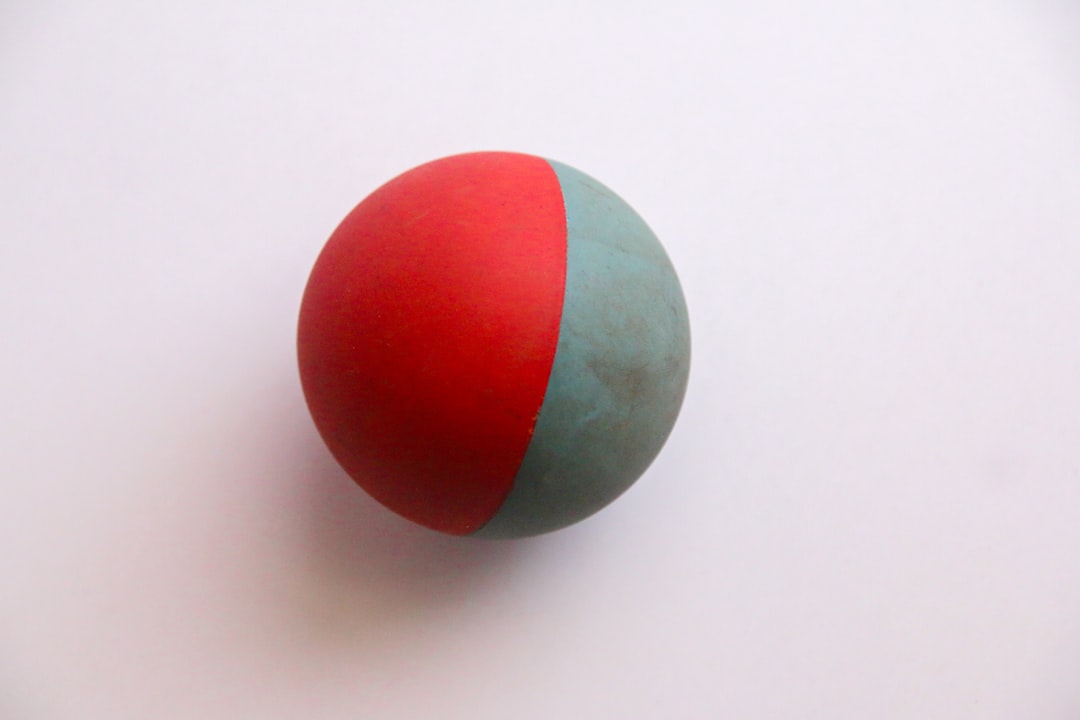
On training days, I add five minutes of soft tissue work with a high-density foam roller before lifting. On recovery days, I spend those same ten minutes with lacrosse massage balls working the bottoms of my feet, my glutes, and the area between my shoulder blades. If you want to understand why foot mobility matters more than you think, my article about recovery footwear and training results breaks down the kinetic chain from the ground up.
The key insight here is that consistency beats intensity. Ten minutes daily adds up to 60 hours of mobility work per year. A weekly 60-minute yoga class gives you 52 hours but with six-day gaps where stiffness creeps back in. The daily practitioner wins every time.
Habit Five: Eat 30 Grams of Protein, Three to Four Times Daily
This was the habit I resisted the longest, mostly because I thought I was already doing it. When my team actually tracked my intake for two weeks — weighing food, logging every snack, being genuinely honest about portion sizes — we discovered I was averaging maybe 70 grams of protein per day. For a 135-pound active woman, that’s barely above the RDA, which was designed to prevent deficiency, not optimize anything.
Current research suggests 1.6 to 2.2 grams of protein per kilogram of bodyweight daily for active individuals. For me, that’s 98-135 grams. For a 180-pound man, we’re looking at 130-180 grams. The most practical way to hit that number without obsessing over spreadsheets is to structure meals around a 30-gram protein anchor, three to four times per day.
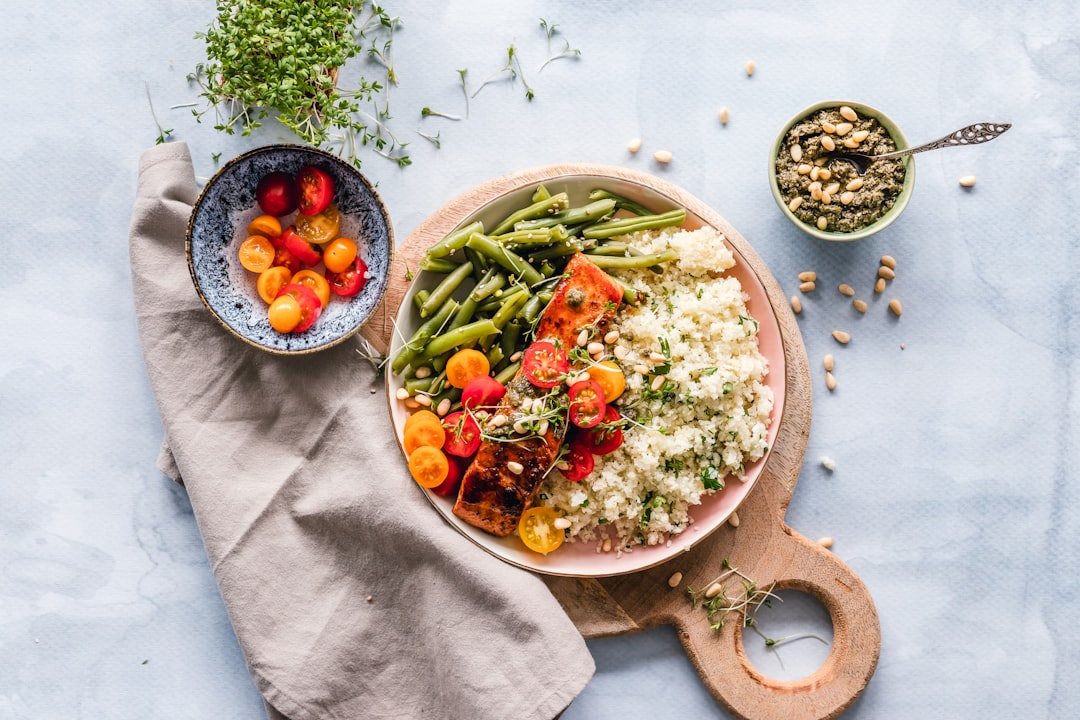
Here’s what that looks like in practice: two eggs with Greek yogurt and a slice of toast for breakfast (roughly 30g). A lunch of leftover chicken, rice, and vegetables (35g). An afternoon snack with a scoop of grass-fed whey protein blended into oats or a smoothie (25-30g). Dinner featuring fish, beef, or tofu with roasted vegetables (35-40g). Nothing exotic. No supplement stack beyond the one protein powder. Just consistent, adequate protein at each eating occasion.
The reason this matters for longevity — not just athletic performance — comes down to muscle protein synthesis. As we age, our bodies become less efficient at utilizing dietary protein. Spreading intake across the day in 30-gram doses maximizes the muscle-building signal at each meal, which preserves lean mass, which protects metabolic health, which correlates strongly with independence and quality of life in our later decades. It’s a domino effect, and protein is the first domino.
If you want to understand how dramatically protein quality varies between brands, my deep dive into why I switched from a premium to a budget protein powder walks through what label detective work actually reveals. Spoiler: price and quality don’t always correlate.
Why Boring Beats Exciting Every Time

Here’s the thing I’ve come to understand after a decade in this industry. The wellness world profits from novelty. Every month brings a new device, a new protocol, a new “revolutionary” approach. And look — I test those things because it’s my job, and some of them genuinely help. I wrote recently about why August is the perfect month for a fitness reset, and I stand behind that. Timing matters. Motivation matters.
But when I look at the clients who’ve maintained their results for five, ten, fifteen years — the ones who are still strong, still lean, still energized — none of them credit a single gadget or supplement. They all say some version of the same thing: “I just kept doing the basics.” They walk. They lift a couple times a week. They sleep on a schedule. They stretch for ten minutes. They eat enough protein.
That’s the whole list. That’s the secret. And the most beautiful part is that none of these habits requires permission, a prescription, or a significant financial investment. A pair of shoes, a set of weights, a yoga mat, a sleep mask, and some protein powder. Maybe a foam roller. That’s the complete toolkit.
If you’ve been waiting for a sign to stop overcomplicating your wellness routine, consider this it. Pick one habit from this list. Just one. Do it consistently for thirty days. Then add the next one. By the end of the year, you’ll have built a foundation that outperforms any biohack I’ve ever tested — and I’ve tested an embarrassing number of them.
The boring stuff works. It’s always worked. The only thing standing between you and the healthiest version of yourself is the willingness to do it on the days you don’t feel like it. And honestly? That’s the most empowering thing I can tell you. No device required. Just begin.



One comment on “The Five Boring Habits That Outperformed Every Wellness Gadget I Tested This Year”